On a modular wall from B+N Industries, an open bay of shelving can give way to a backlit graphic, a row of cabinetry can gain another section as a program grows, and a tidy, symmetrical arrangement can loosen into something freer and more expressive, all without a single tool. Across System 1224, Sorbetti 2.0, and Muro, the company conceives each product line as a built element of the interior, there to organize, illuminate, and define a room, and as a composition that stays open to revision, with enough latitude in materials and casework that no two configurations need look alike.
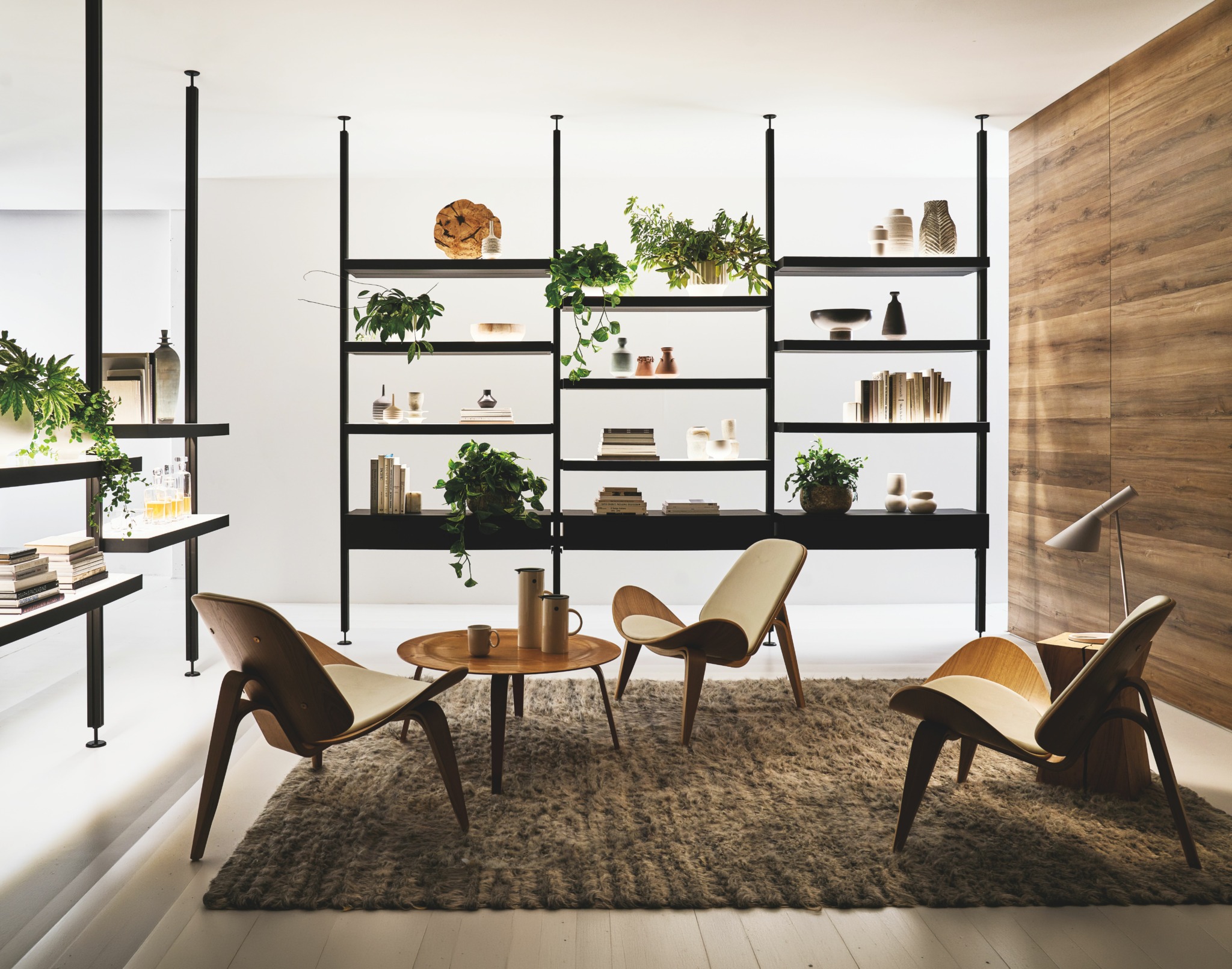
Sorbetti 2.0. Photography courtesy of of B+N Industries
Each speaks its own visual language: System 1224, a crisp panel grid, in the spare vocabulary of Modernism and the International Style; Sorbetti 2.0, which marries a streamlined aluminum frame to refined casework, in a softer, furniture-minded tone; and Muro, an open, skeletal armature, in whatever a space asks of it, from display to media to branding. All three are engineered for the long afterlife of an installation, as a workplace adds people, a store turns over its merchandise, or a lobby takes on a new purpose. “Designers are really asking for systems that can absorb change gracefully, instead of ones that look perfect on day one and dated by year three,” says Elisa Radominski, product manager at B+N Industries.
Grid, Recomposed
System 1224 keeps its rectilinear profile free of ornament, an omission B+N Industries makes deliberately so the structure’s function can stand in for decoration. “We also give specifiers real material and finish choices—veneers, metals, acrylics, fabrics, woods—so a modular framework can be dressed to match a very specific interior language rather than reading as a generic, off-the-shelf solution,” says Radominski. “When the hardware disappears and the materials feel considered, modularity stops feeling like infrastructure and starts feeling like architecture.”
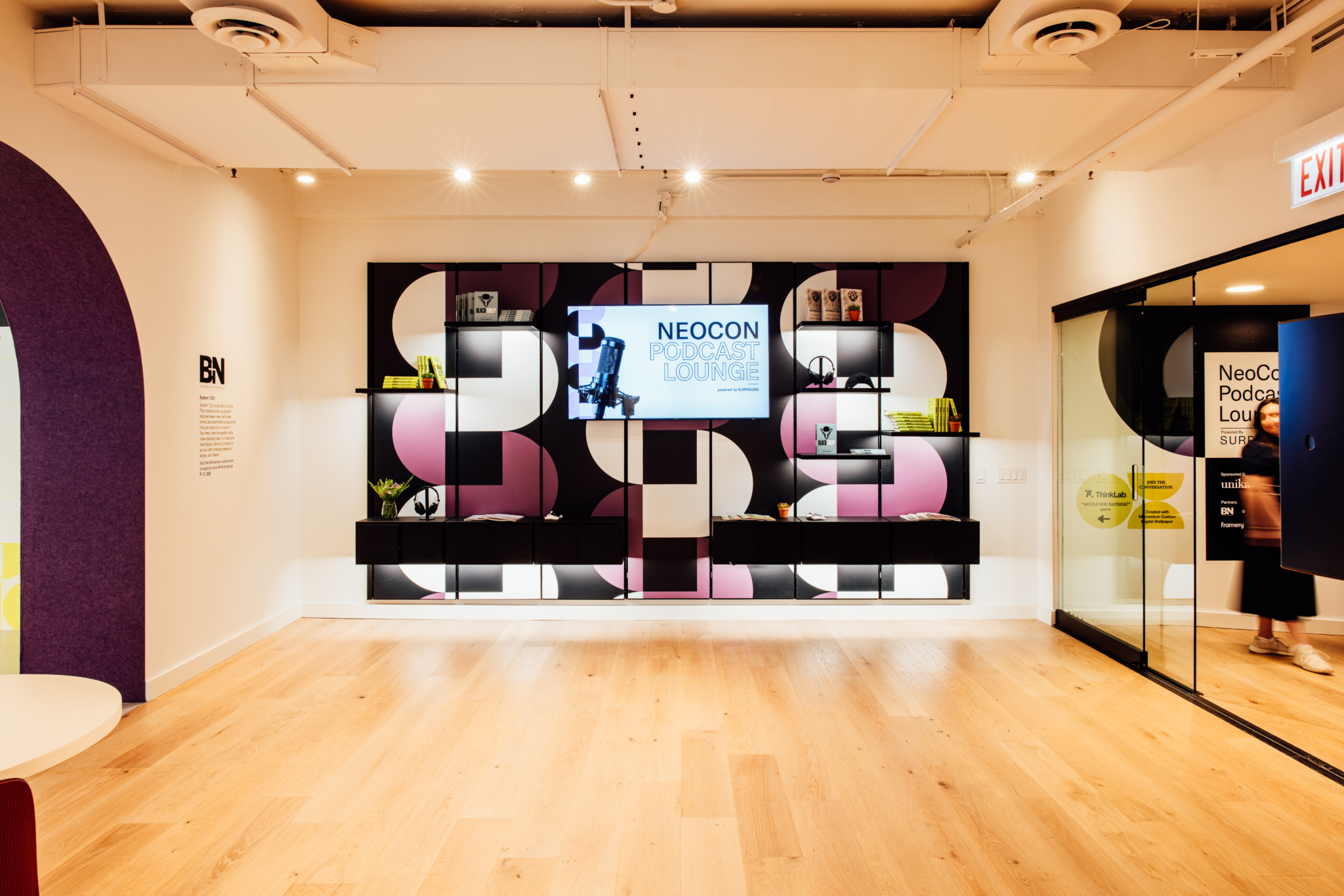
System 1224. Photography courtesy of B+N Industries
Accessories mount and swap from the front, and the grid can be broken outright, letting an installation move from rigorous symmetry to a looser, asymmetrical rhythm as a brand or program shifts. In a collaboration with the British artist Shantell Martin, System 1224 even becomes a canvas, its black and white acrylic panels carrying her signature freehand drawings of faces, objects, and words. Set up as a freestanding display or room divider, the system leaves the perimeter behind entirely.
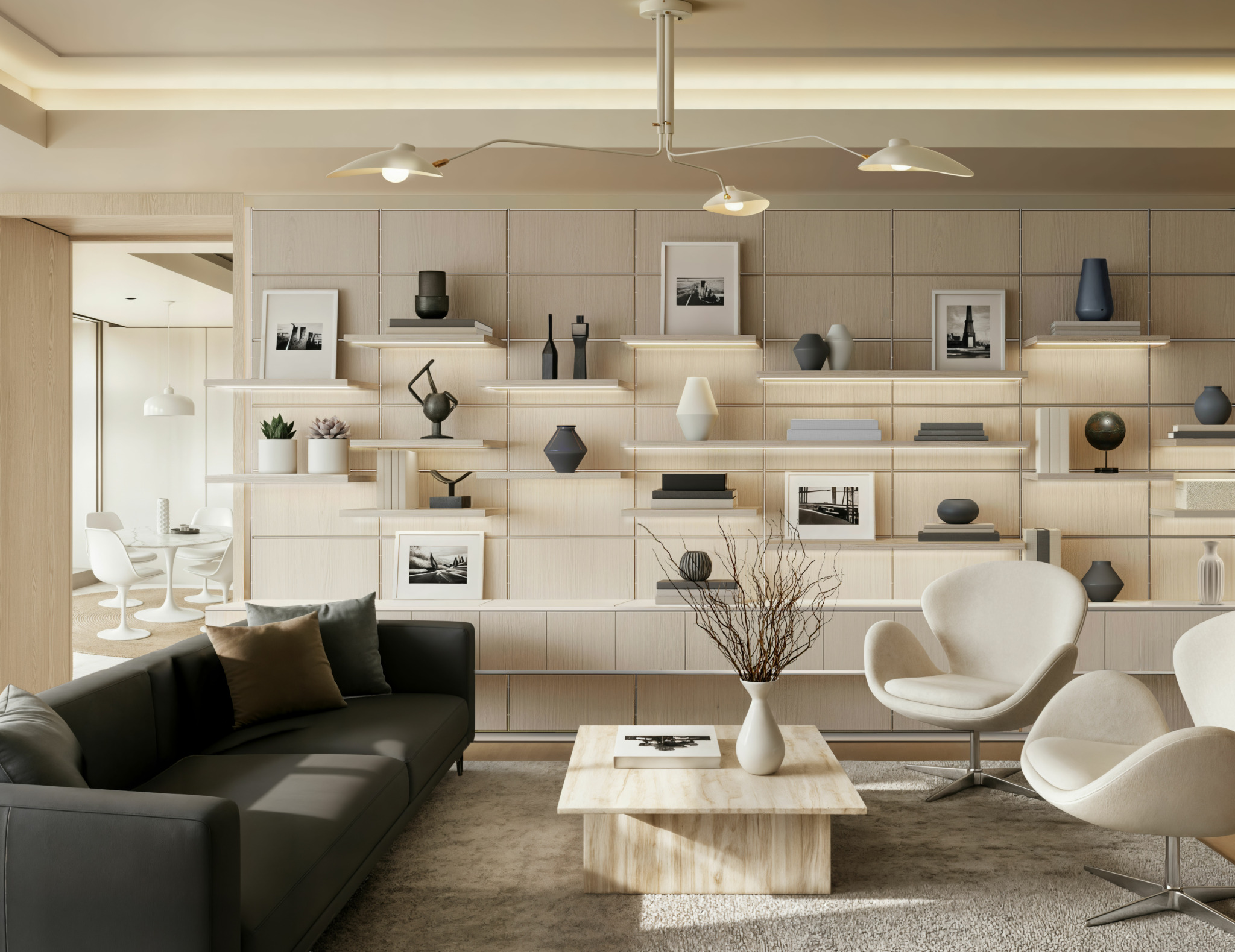
System 1224. Photography courtesy of B+N Industries
“What makes that flexibility usable day to day, though, is that it’s tool-free,” says Radominski. “It’s the ease of reconfiguring walls, without tools, without costly contractors, instead of rebuilding them—so a composition designed today can evolve next quarter without anyone picking up a saw.”
Furniture Character
Sorbetti 2.0 brings a more tailored register to the collection, its frame and cabinetry finished to hold their own in a room. “Designers reach for Sorbetti in spaces where the shelving is meant to be seen and lived with—lobbies, waiting rooms, executive offices, retail environments, even residential closets,” says Radominski. “The black anodized aluminum structure gives it a graphic, architectural line, while the casework brings in warmth and a mid-century sensibility that nods to designers like George Nelson, Jean Prouvé, and Poul Cadovius.”
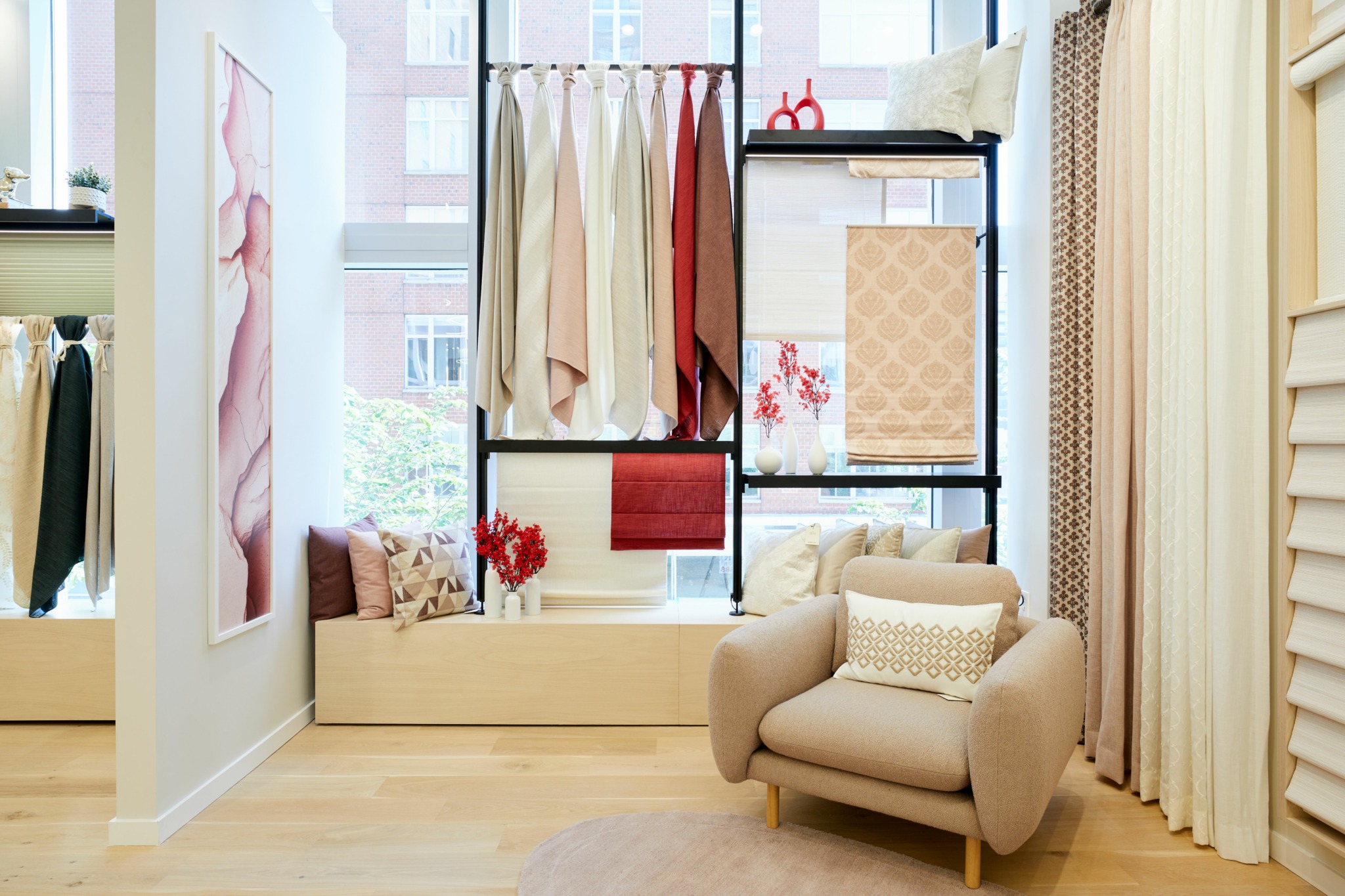
Sorbetti 2.0. Photography courtesy of B+N Industries
Shelves and accessories adjust in fine increments along the uprights, and integrated low-voltage power feeds illuminated shelving, cabinetry, and signage. Pulled away from the perimeter, Sorbetti 2.0 can stand alone as a freestanding installation or room divider, carrying integrated display or concealing storage within.
Room to Evolve
Muro, the third system, is a minimal, open framework asked to cover a wide range of roles. “Muro came from watching how differently teams use a wall system once it’s installed—one client wants storefront display, another wants a power-and-lighting-equipped media wall, another just needs a way to break up an open floor plan without boxing it in,” says Radominski. “Rather than design a separate product for each of those jobs, we reduced Muro to a few core components that recombine into all of them.”
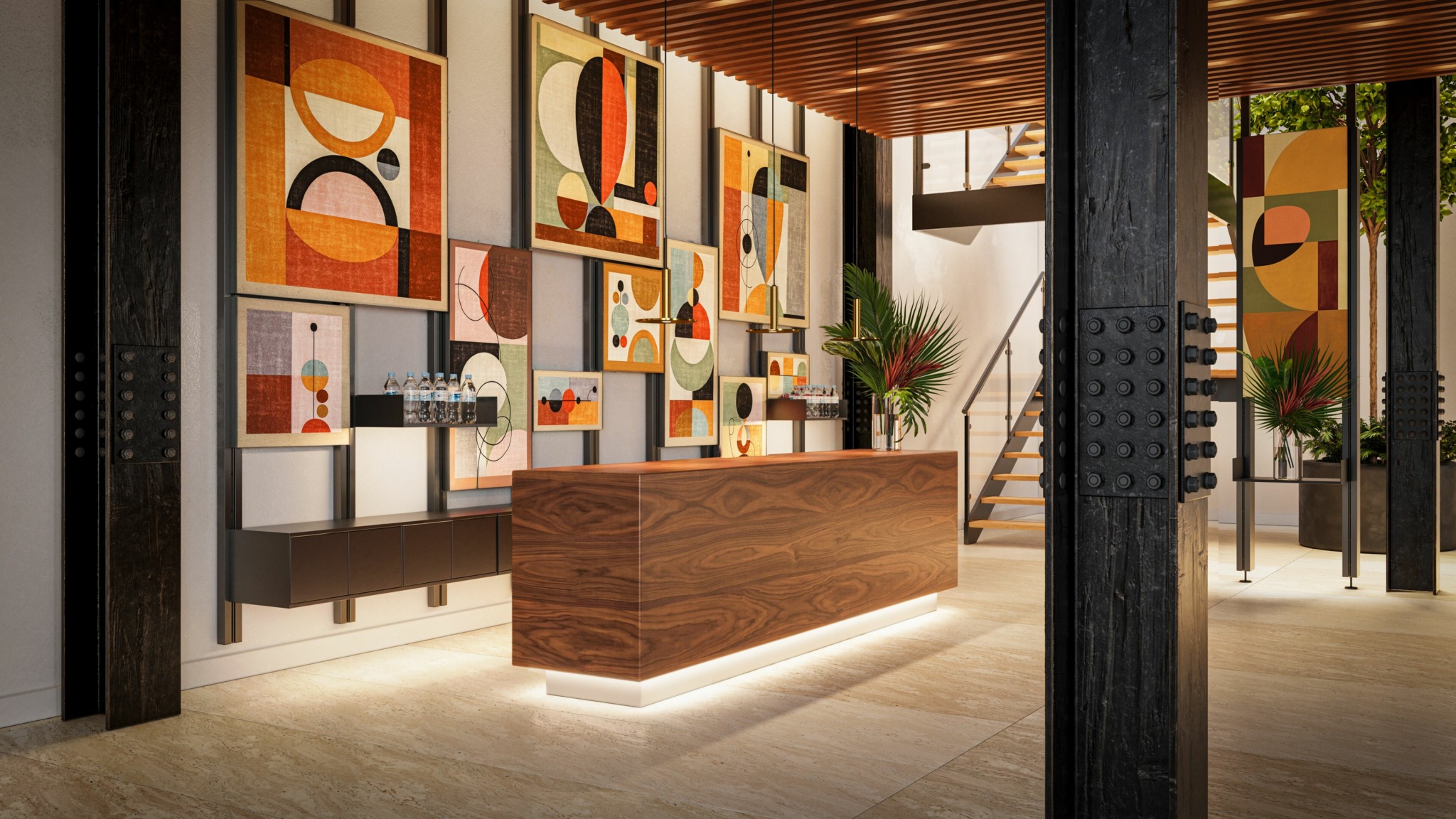
Muro. Photography courtesy of B+N Industries
Its open back carries graphics and signage at scale, its power tracks accept plug-and-play lighting, and it also holds cabinets, SEG light boxes, and digital displays, whether mounted to a wall, standing freely, or rising floor to ceiling. One set of parts can front a store, partition a lobby, or bring order to a healthcare waiting area.
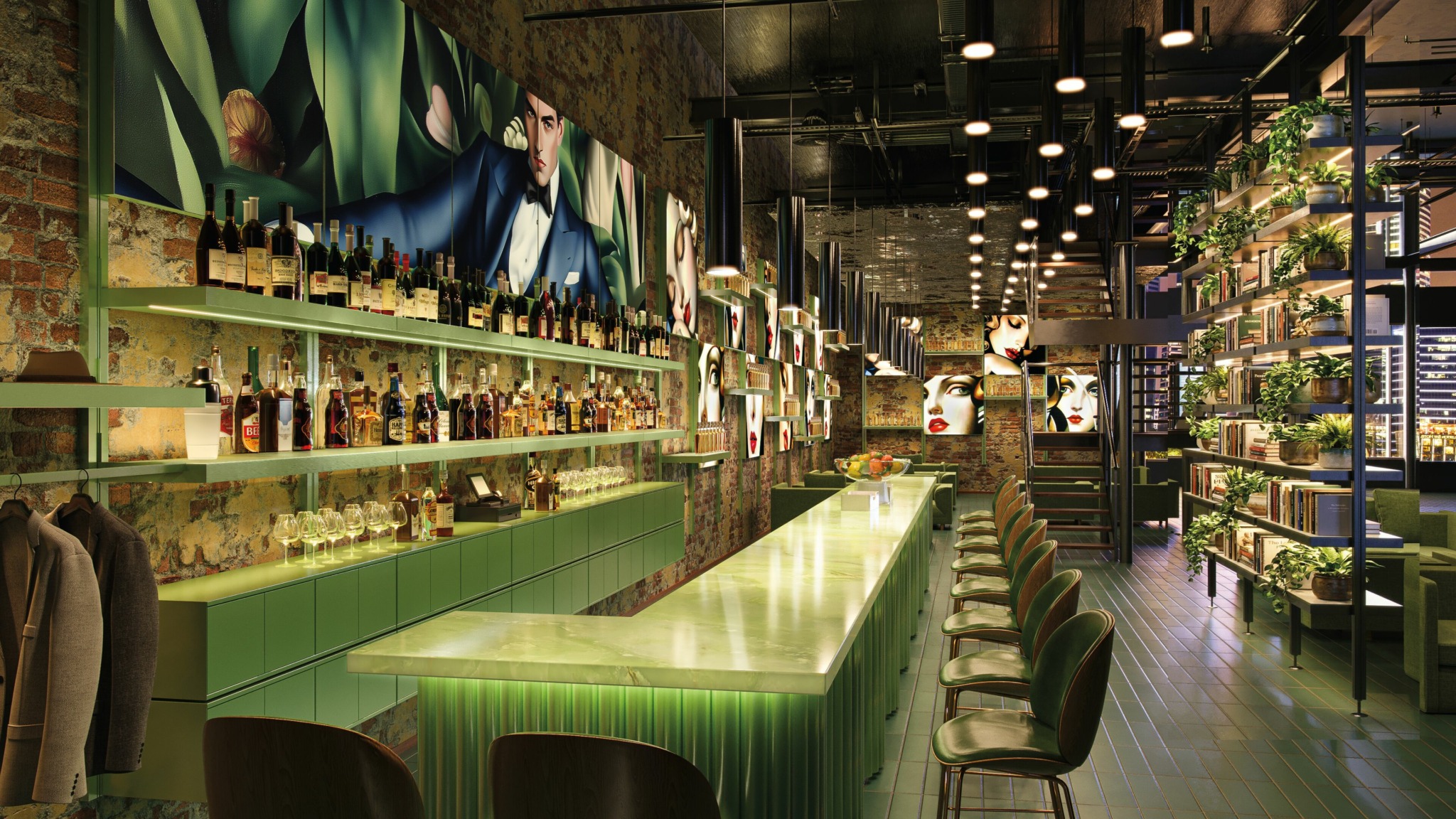
Muro. Photography courtesy of B+N Industries.
Asked what kinds of change these systems need to accommodate today, Radominski is direct. “The honest answer is speed,” she says. “Workplace clients are reconfiguring for headcount and hybrid-schedule changes multiple times a year, not once every lease cycle. Retail and hospitality clients want to refresh branding and merchandising seasonally without a construction permit every time.”
B+N Industries has answered by designing all three to expand from the outset, linking product lines through shared grids and keeping finishes and components in production long enough that new shelving, lighting, or graphics can join an installation years after it first goes up.