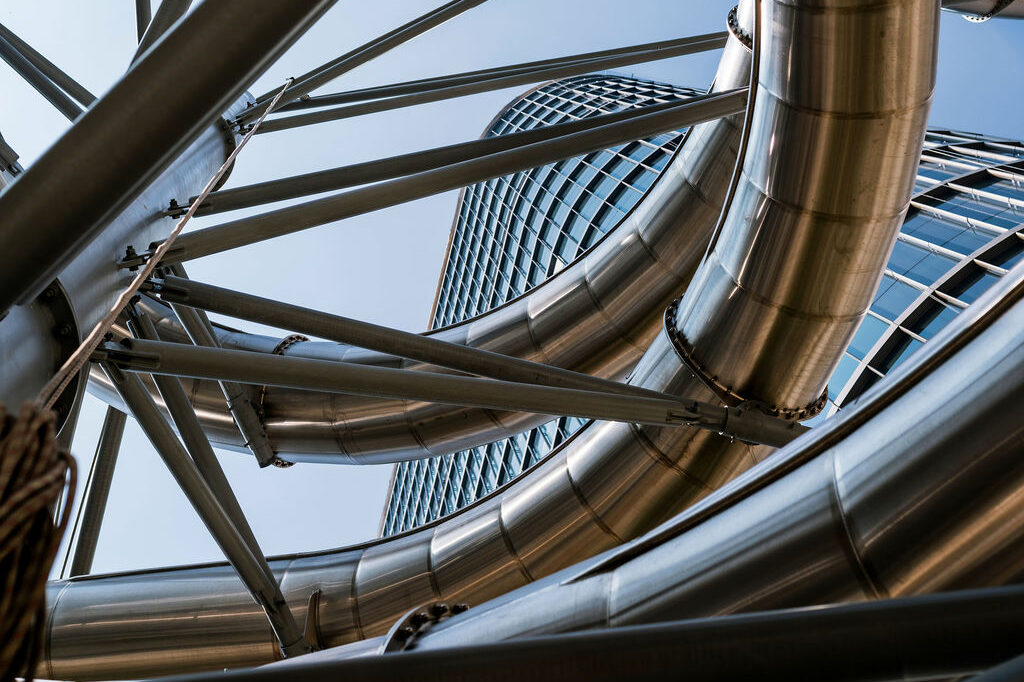
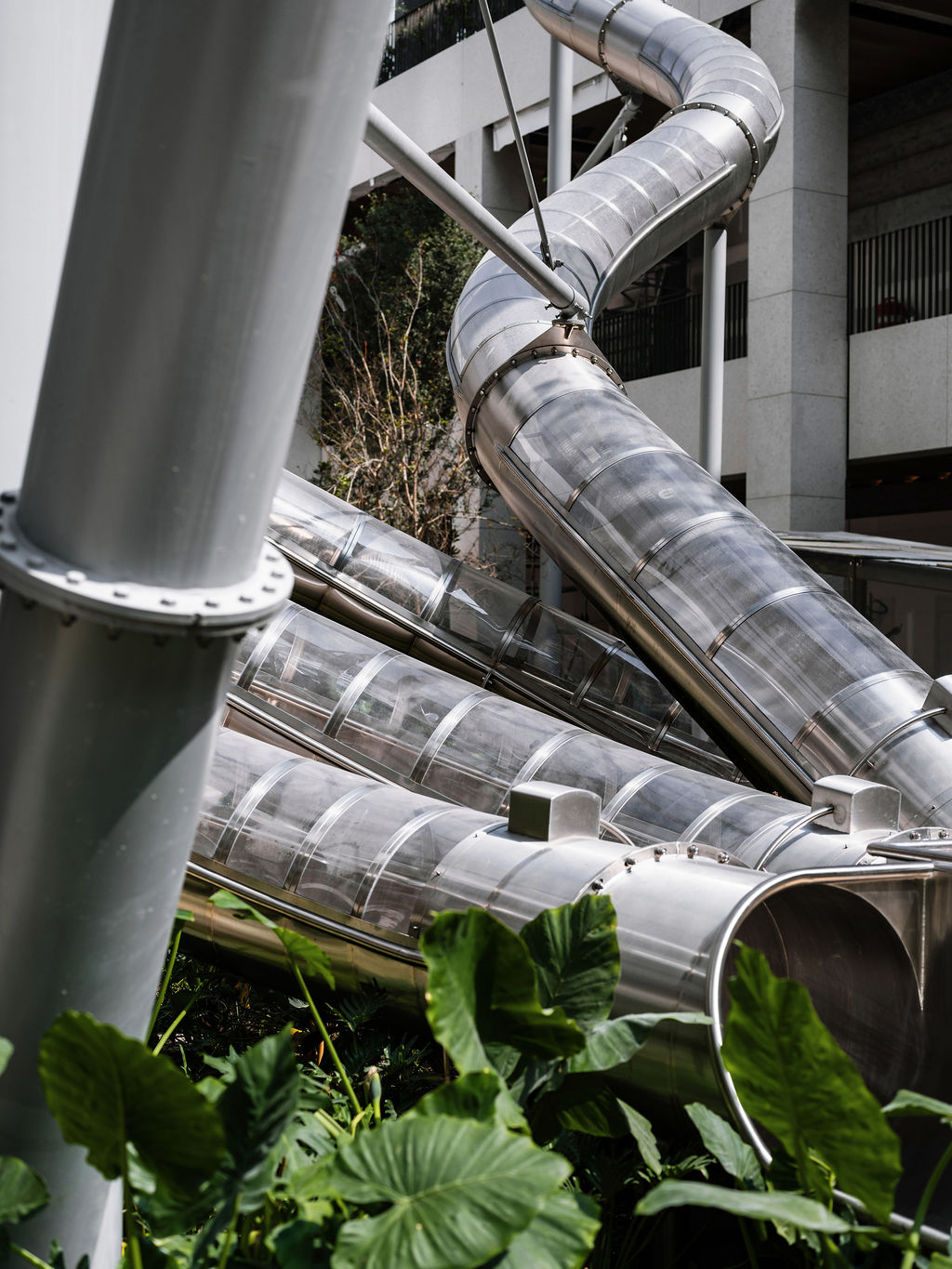
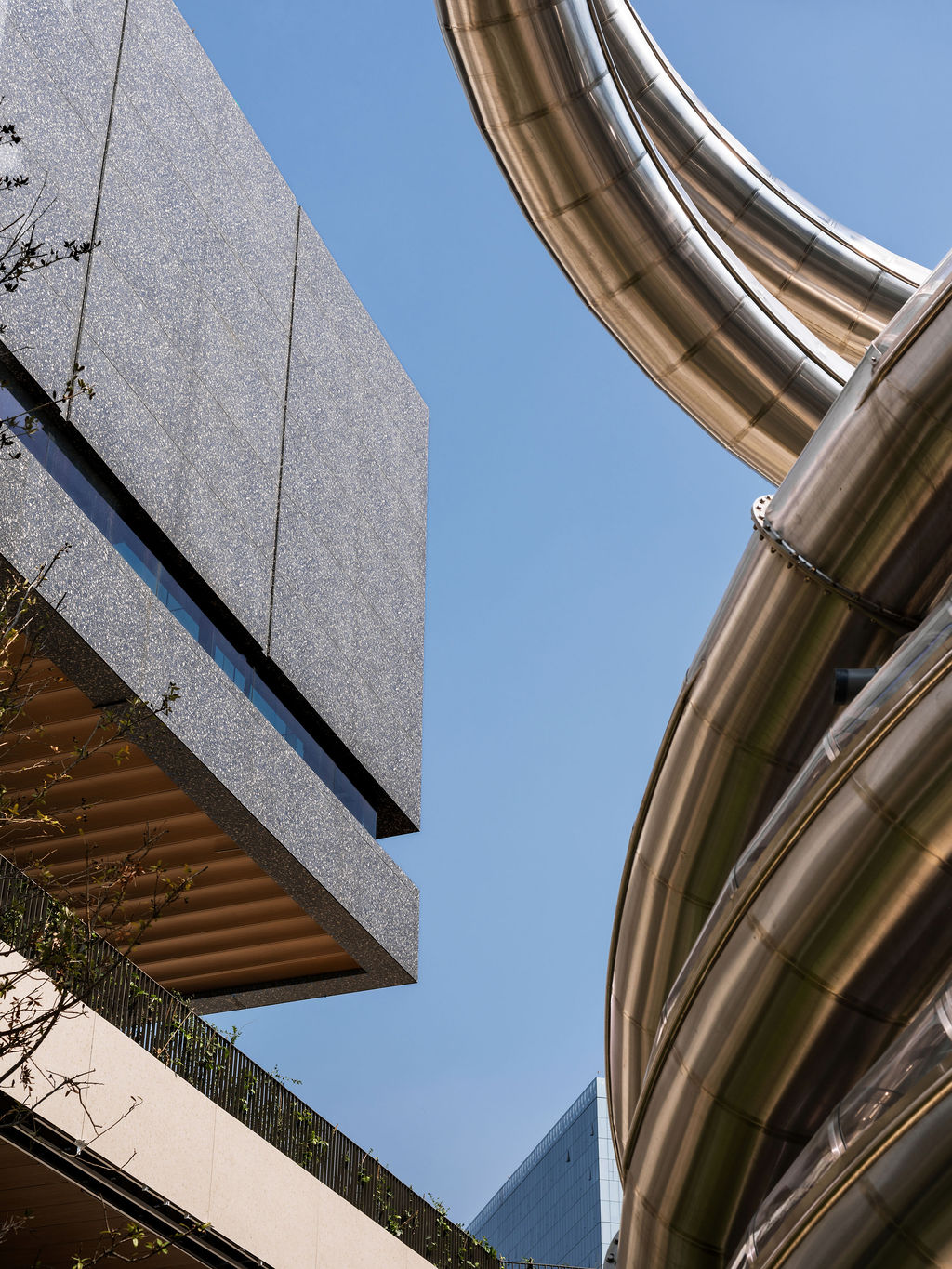
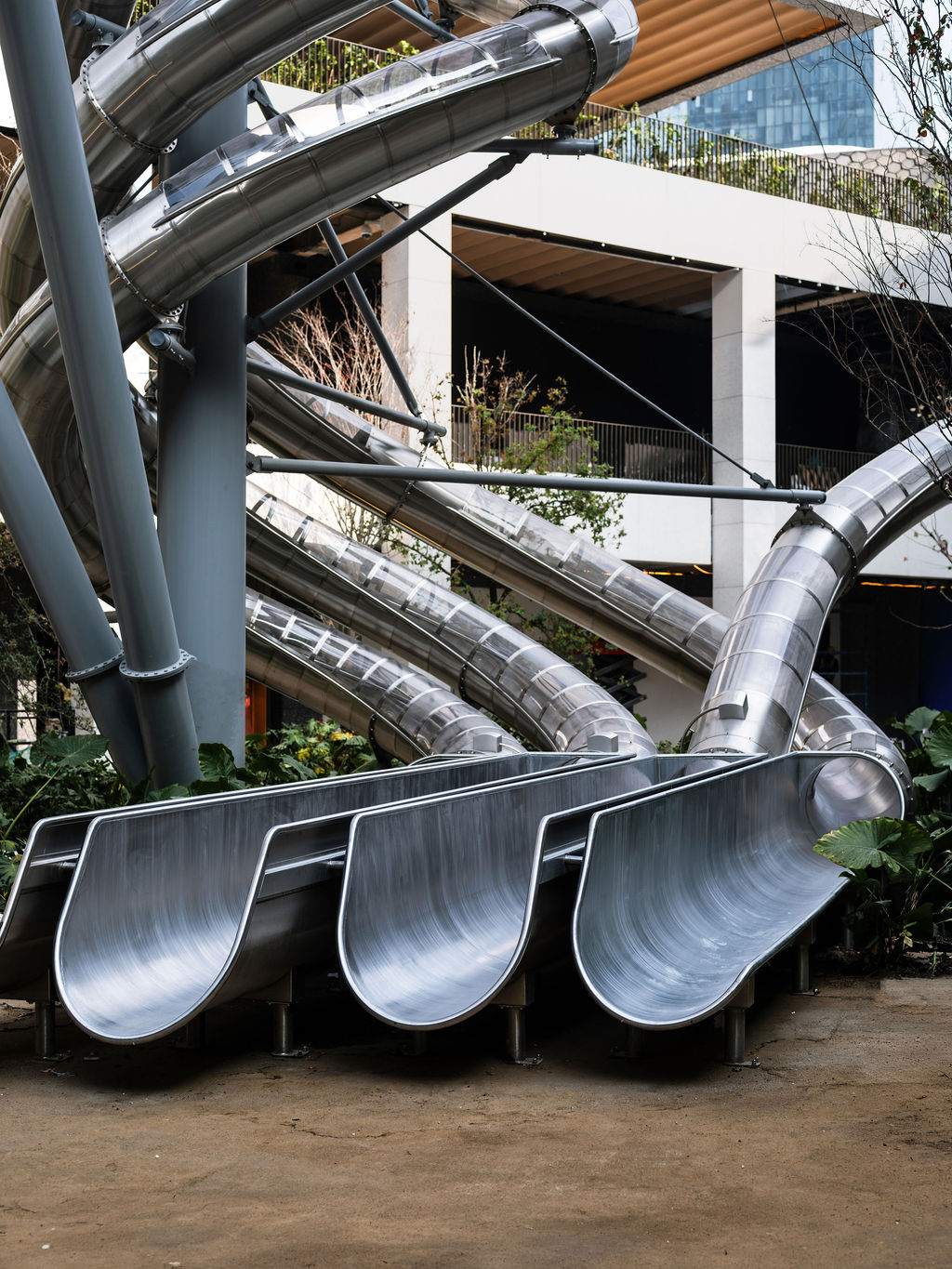

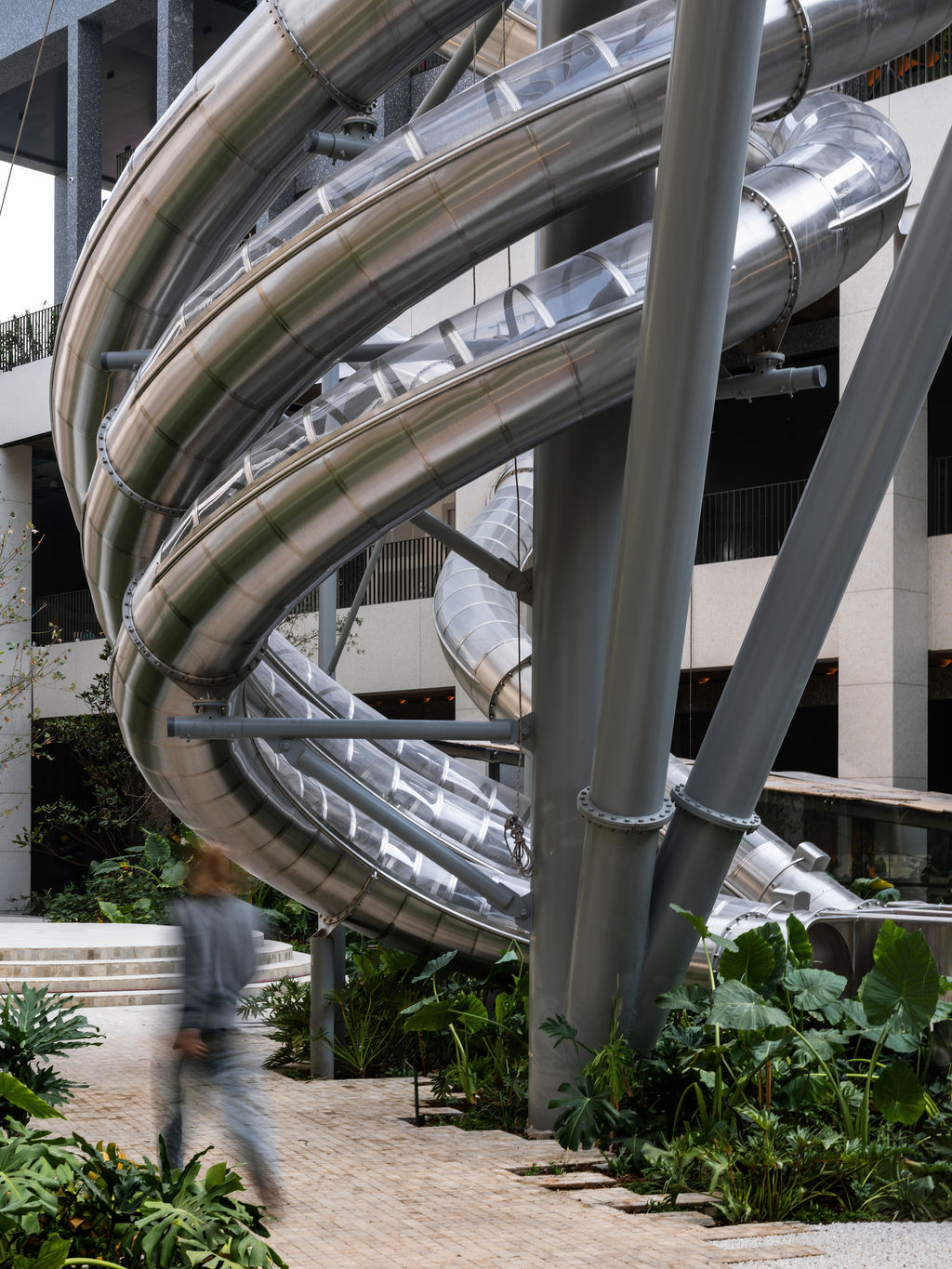
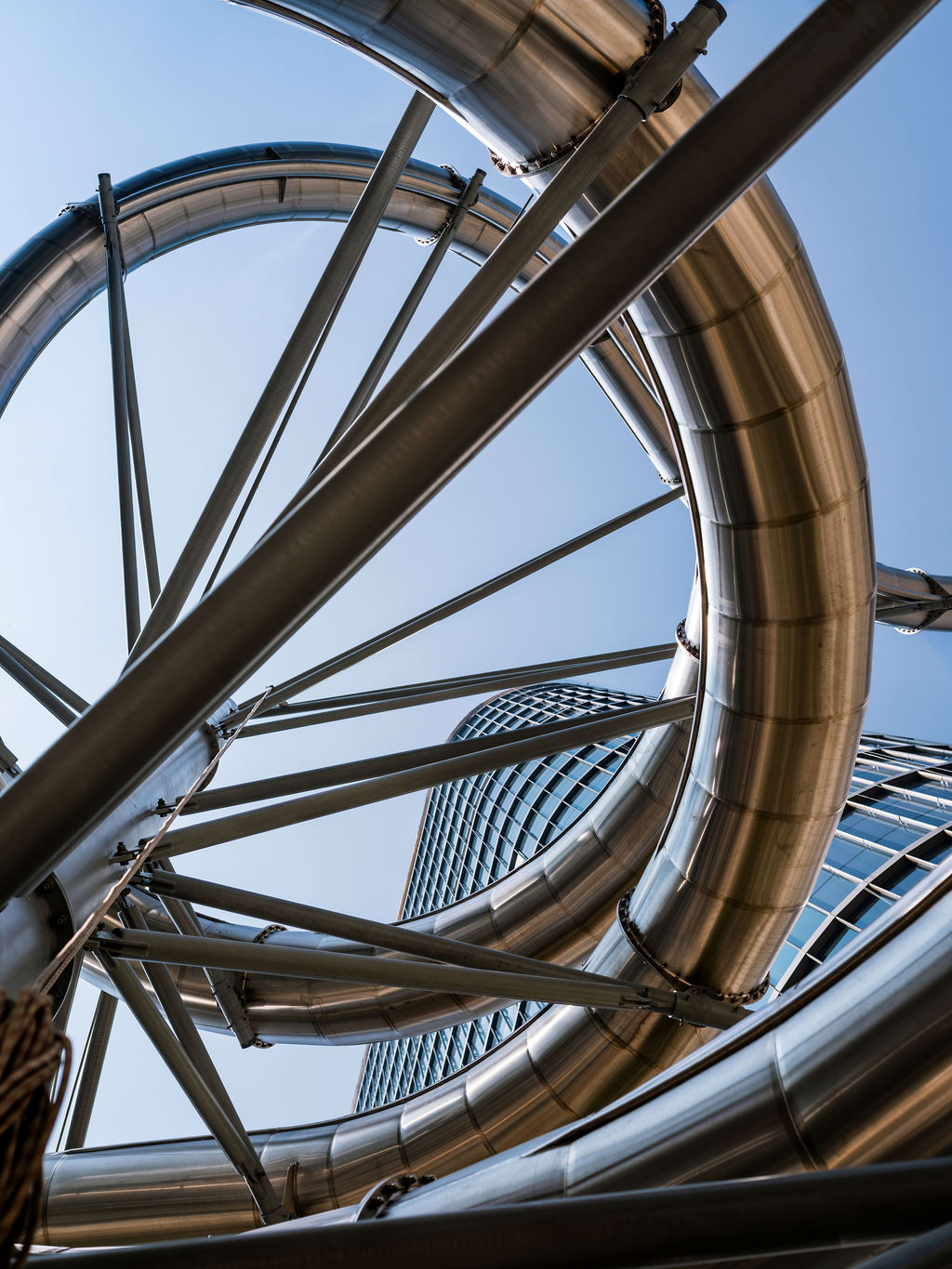
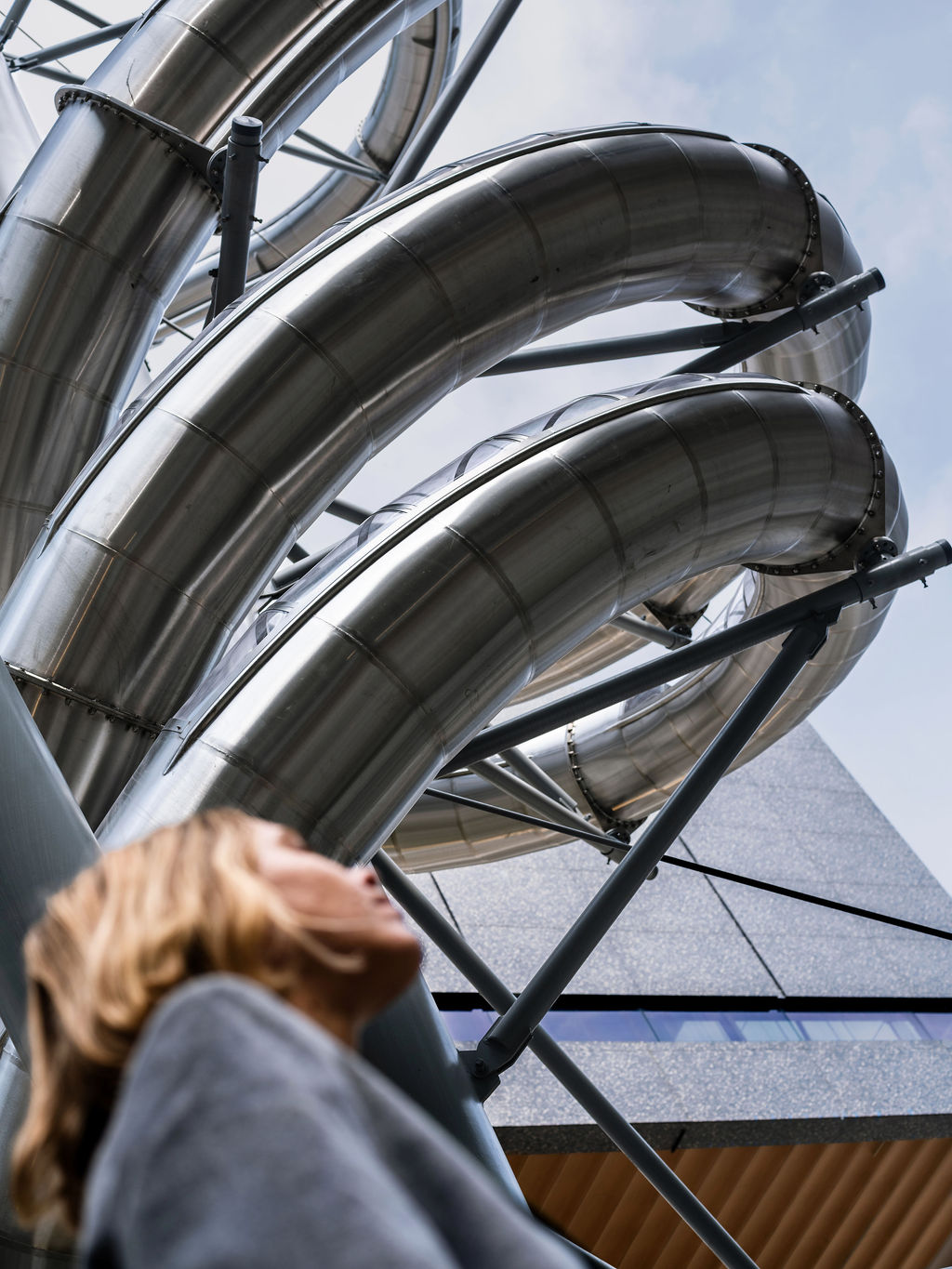
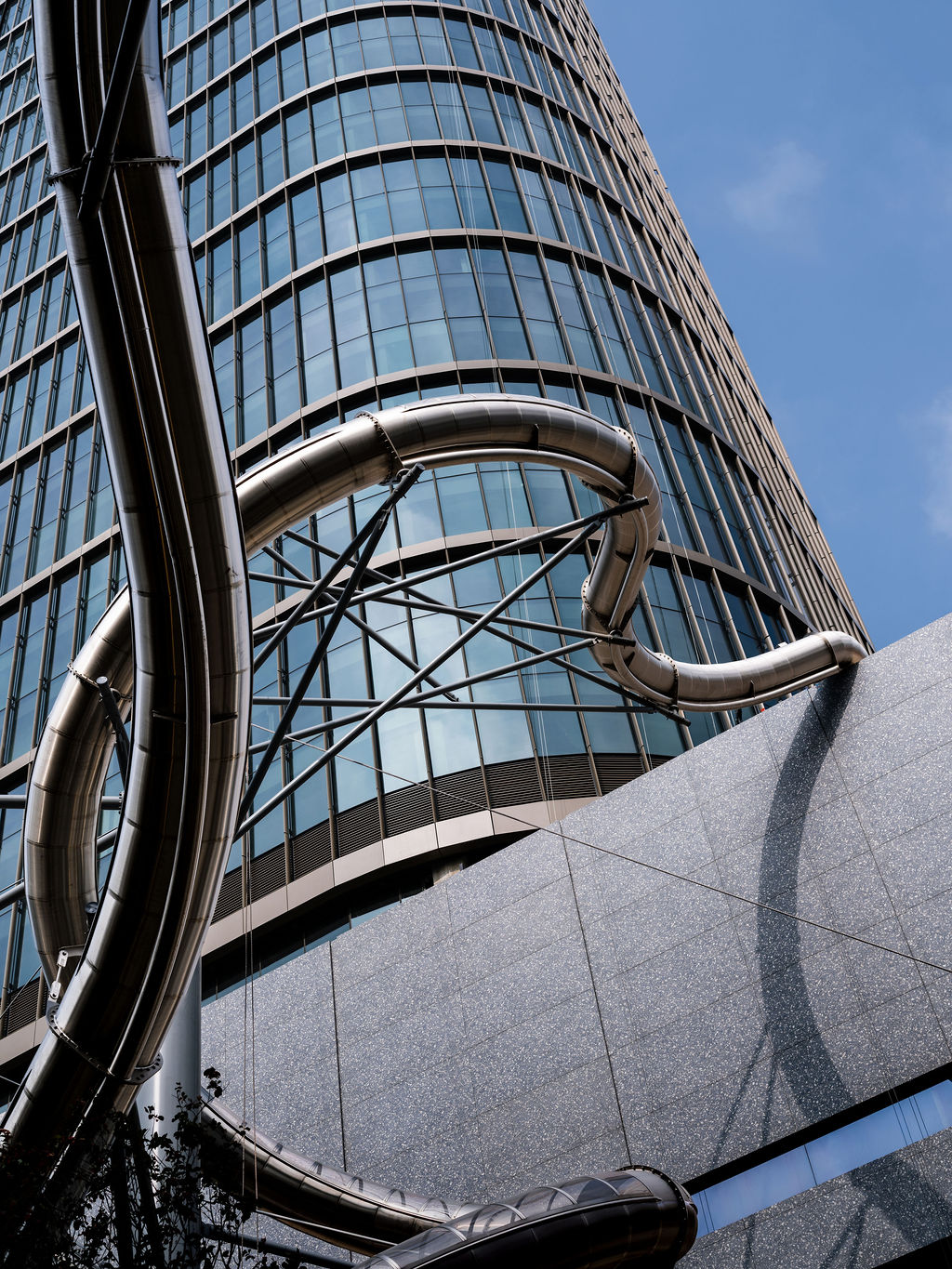
Leaving the office through a 125-foot spiral slide might sound like something out of a dream, but it’s becoming a reality in Mexico City. Four monumental slides by artist Carsten Höller are the centerpiece of a major expansion at Antara, a mixed-use development designed by architecture firm Sordo Madaleno. The interactive installations bring an unexpected element of play to a destination that combines retail, hospitality, workplaces, and contemporary art.
Photography by Fernando Farfan
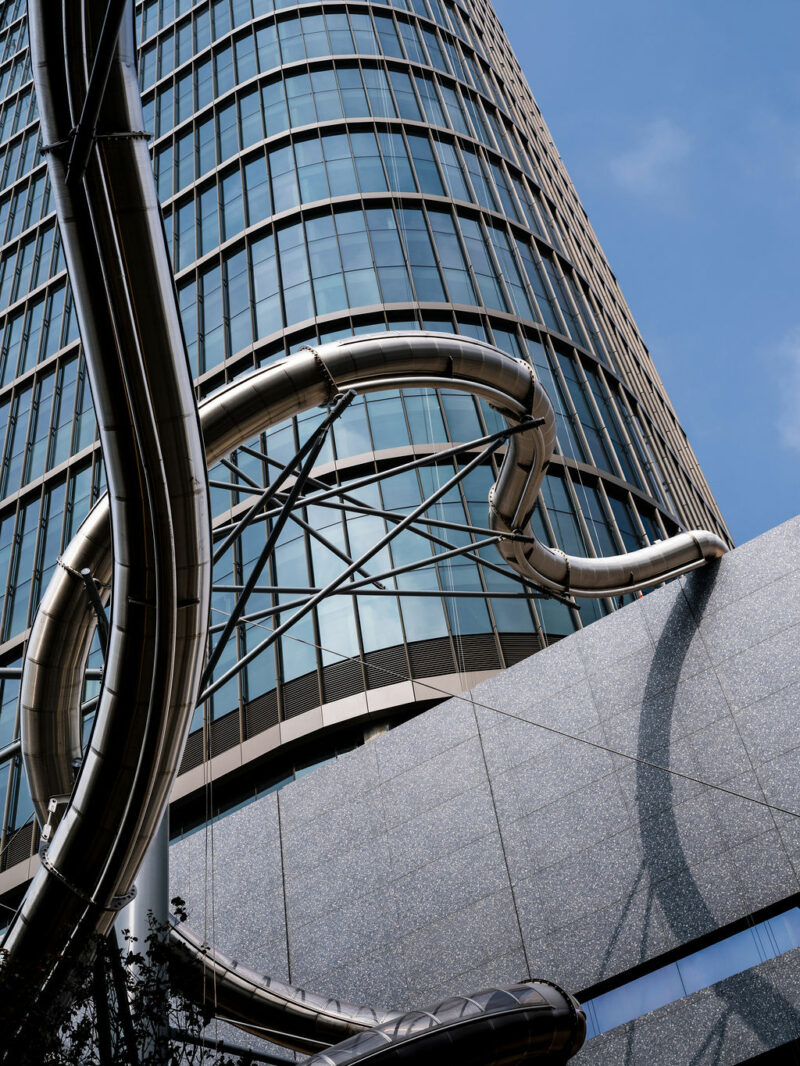
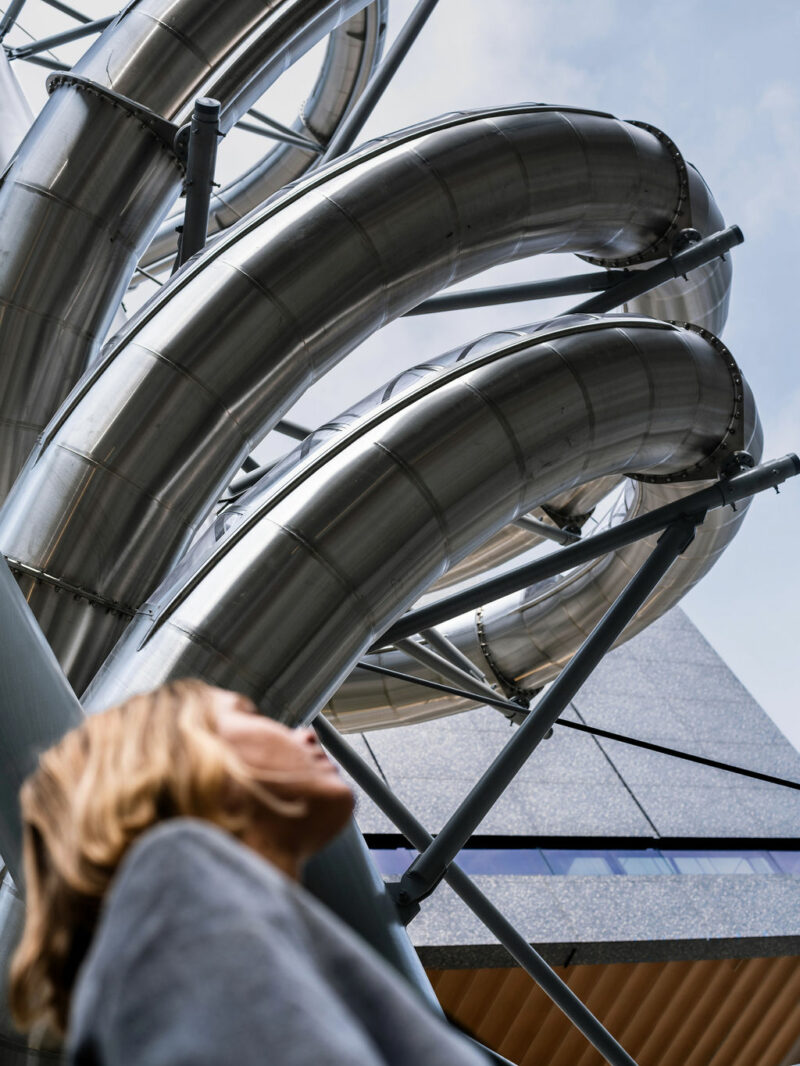
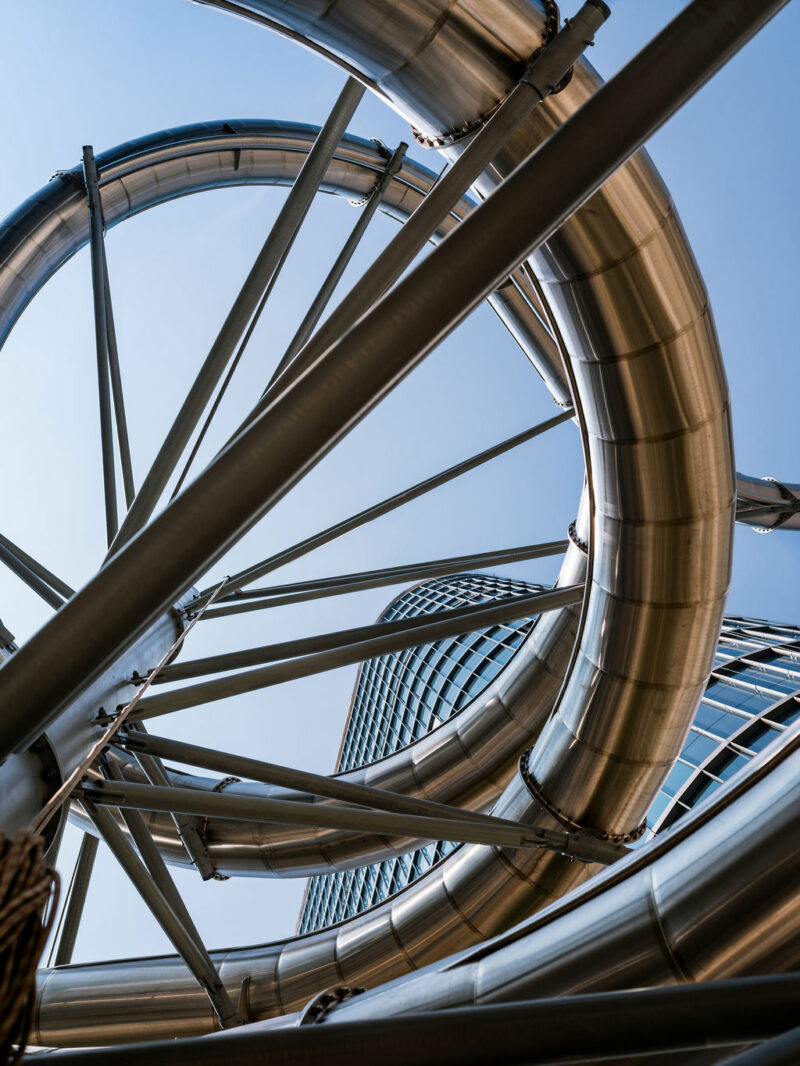
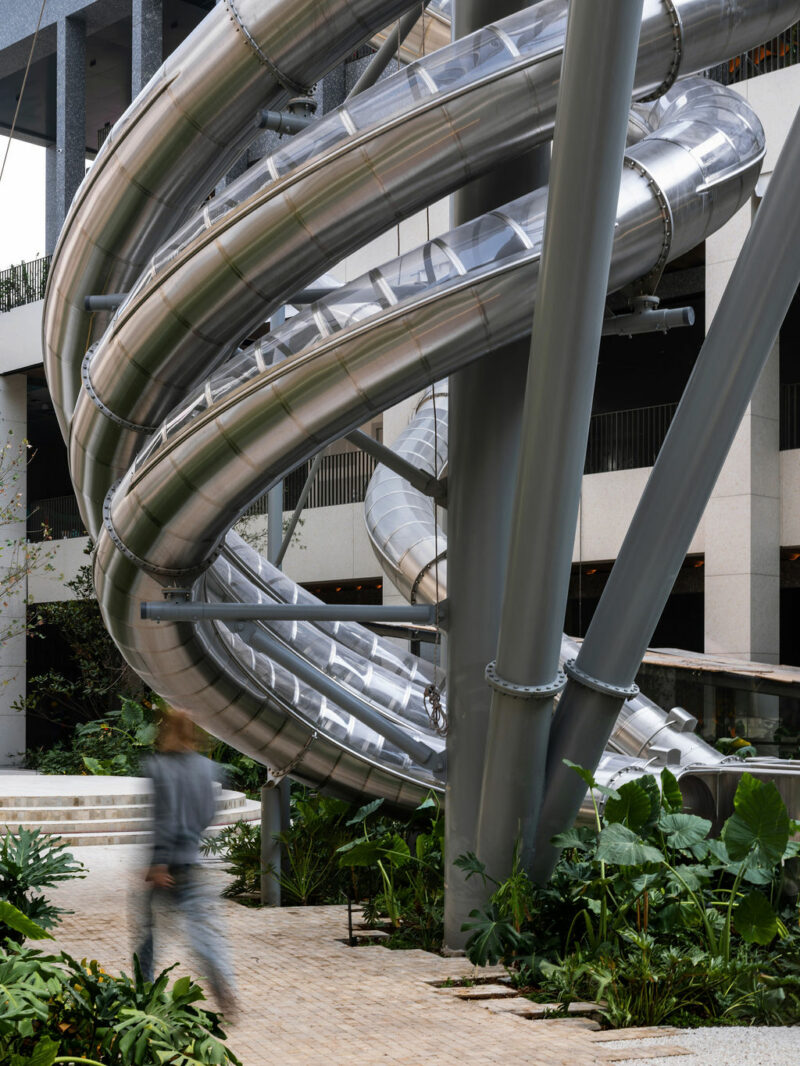
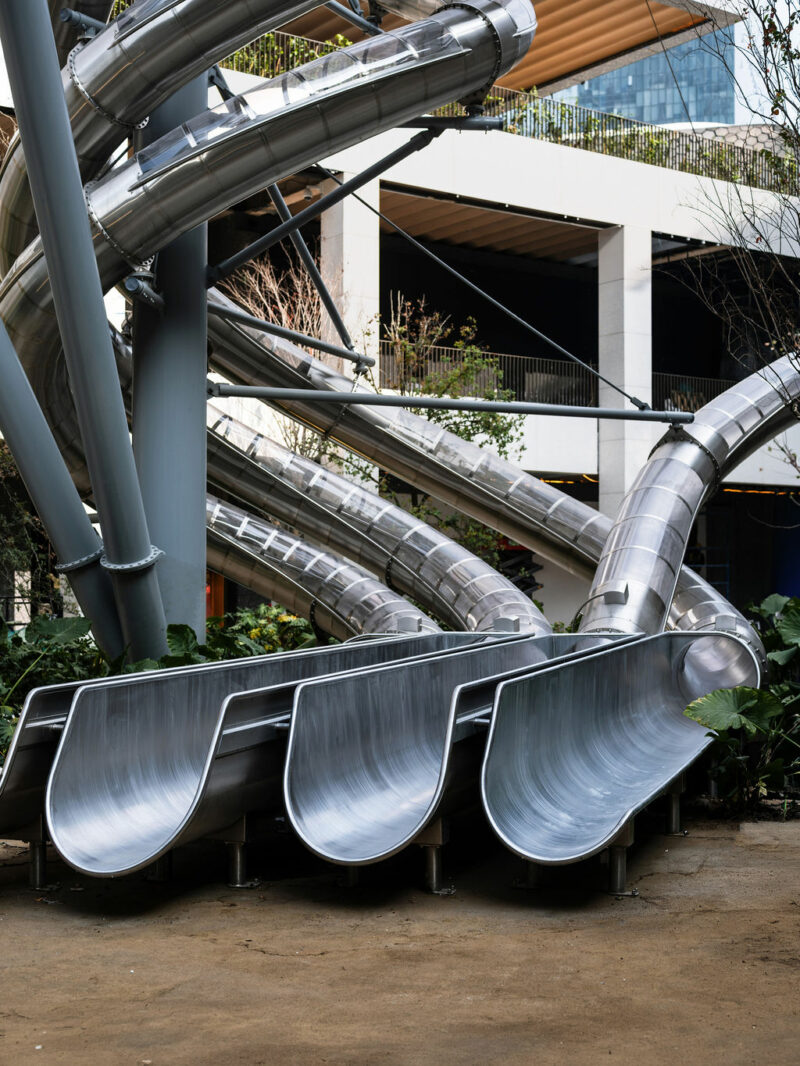
Titled Mexico City Slides (2026), the permanent installation is Höller’s largest slide project to date. The four spiraling structures range from 39 to 125 feet in height, with lengths extending from approximately 102 to 295 feet. Rather than functioning as standalone sculptures, they are integrated into the architecture, connecting different parts of the development while giving visitors a new way to move between them.
The slides descend from retail and dining spaces, offices occupied by Google, and the future Rosewood Mexico City hotel, converging at a common landing area. Their arrangement transforms what might otherwise be separate destinations into a shared experience, bringing people from different parts of the complex together in an unexpected way.
Photography by Fernando Farfan
“People sliding from a hotel, from offices, from restaurants, and from an art center are brought together in the air and land next to each other,” Höller explains. “They share the experience of being taken out of their usual form of being, into the unknown, dreamlike territory of simultaneous joy and fear.”
The installation is part of the latest chapter for Antara, which opened in 2006 on a former industrial site in Mexico City’s Colonia Granada neighborhood. Developed by SOMA and designed by Sordo Madaleno, the original project introduced an open-air retail concept that has since evolved into a larger destination for shopping, dining, and cultural programming.
Photography by Fernando Farfan
Twenty years later, the expansion places greater emphasis on the spaces between buildings and the ways visitors move through them. A new 26,000-square-foot public garden, landscaped pathways, and stepped terraces connect the development’s different components, creating places to gather beyond its commercial spaces.
Art plays a central role in that approach. SOMA’s nonprofit contemporary art foundation, Arte Abierto, will open a new location within Antara, Arte Abierto Polanco, in December 2026. Alongside Höller’s installation, the venue will present Now What (2026), an exhibition by Danish artist collective Superflex that examines the relationship between built environments and natural forces. Combining architecture, sculpture, and text, the exhibition explores how human systems of design and organization influence our relationship with the surrounding world.
Photography by Fernando Farfan
For SOMA president Javier Sordo Madaleno De Haro, the investment in publicly accessible space is fundamental to the development’s long-term value. “I’ve realized that the most valuable thing is not the capital gain of a building itself, but the value it brings to its surroundings,” he says. “Art and public space are how we create that value.”
The expansion also introduces more than 80 new retail brands and concepts, bringing Antara’s total to 260. A forthcoming 43-story tower will house Rosewood Mexico City, with 163 guest rooms and suites, restaurants, a spa, and an outdoor pool deck, along with office space for international companies.

Photography by Fernando Farfan
Yet the most distinctive addition may be the one that challenges how people typically navigate a building. By incorporating Höller’s slides directly into the architecture, Sordo Madaleno and SOMA have made art part of the development’s circulation, turning movement between spaces into an experience in its own right.
The new public spaces and gardens are now open, while Mexico City Slides and the Superflex exhibition are scheduled to open in December. Access to the slides will be free, offering visitors a decidedly unconventional way to experience the evolving development.
Photography by Fernando Farfan
Editorial Transparency: This article was developed with the assistance of AI tools, which may have been used for research, outlining, editing, or copy refinement. Reporting, fact-checking, and editorial decisions were made by the Design Milk editorial team.
Now Trending


Reviving an Enduring Emblem of Simplicity, Loll Designs Launches the Here and There Collection
Developed in collaboration with design studio Argenta Park, the “people and nature first” brand reprises conservationist Aldo Leopold’s humble yet ingenious bench as a family of low-maintenance, sustainable outdoor furnishings.