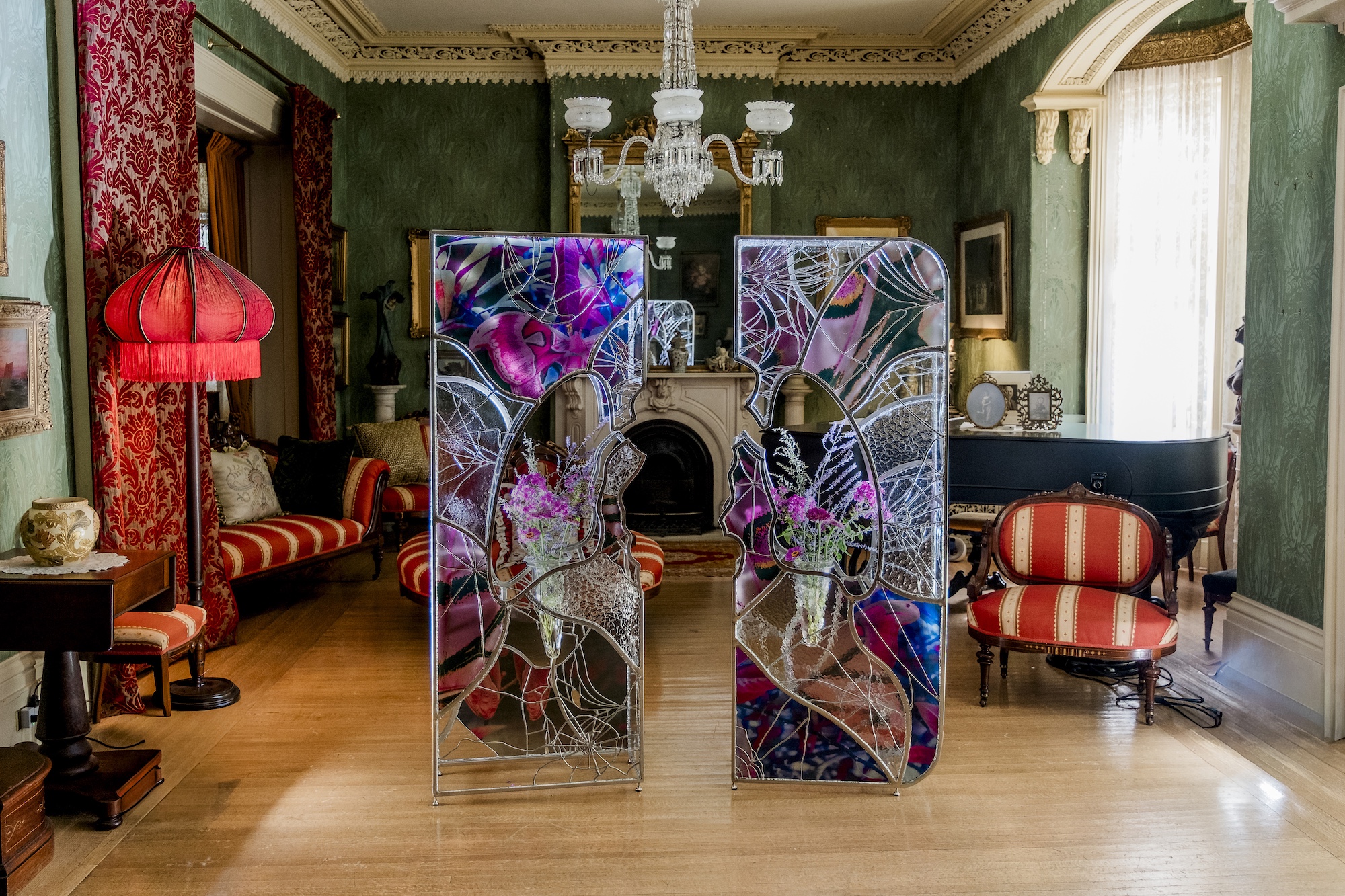
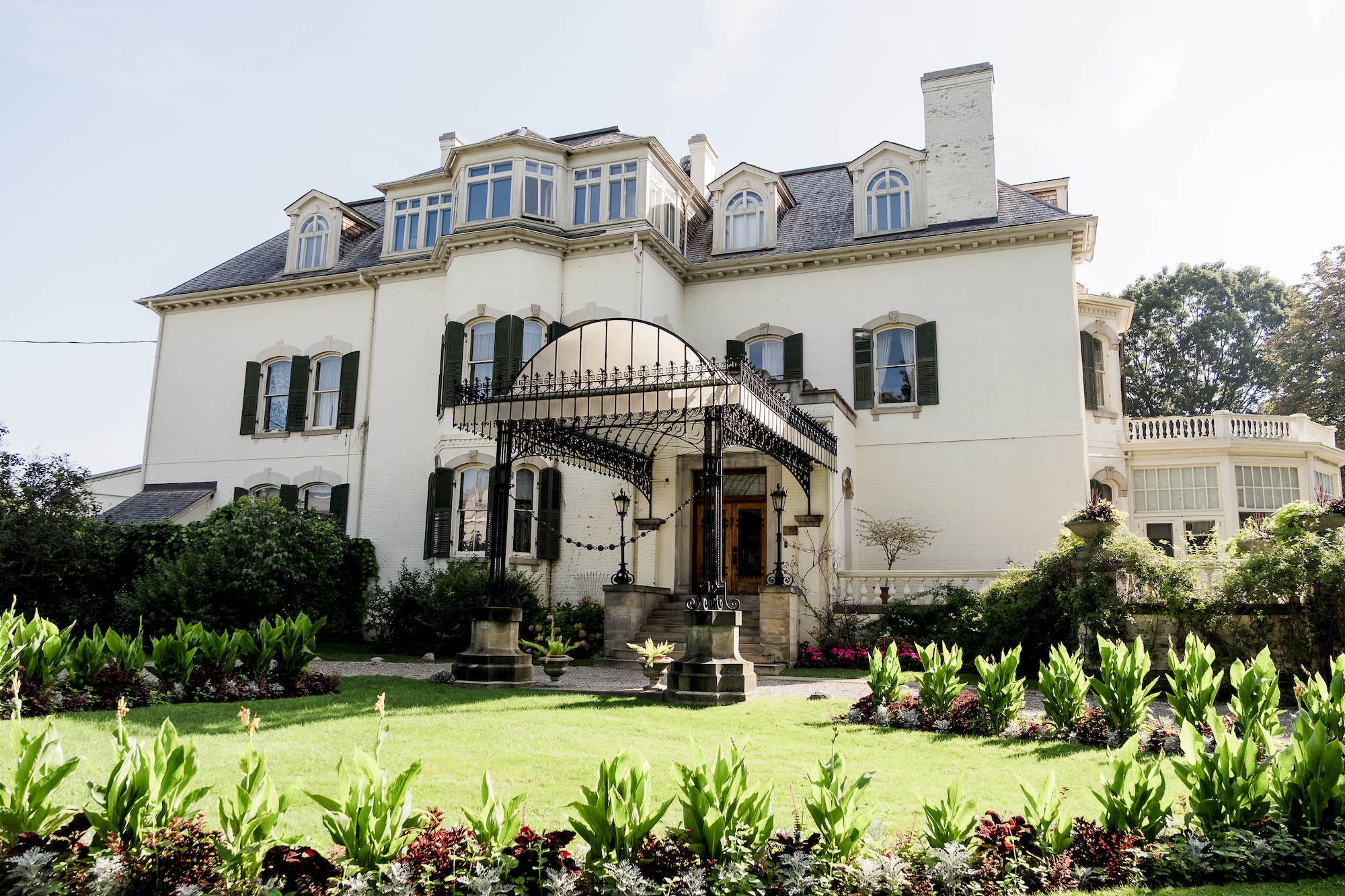
Fragments of mirrored glass split, gather light, then come together as a new whole. In the storied rooms of Toronto’s Spadina Museum, an 1866 mansion, interdisciplinary artist Ry Van Der Hout’s sculptures catch light and open fresh ways of seeing and hearing family lore. In Broken Light, a deeply site-specific exhibition of Van Der Hout’s new work, opened at the museum on Aug. 26 and runs through Oct. 18.
Spadina Museum. Photography by Ry Van Der Hout.
“At the heart of In Broken Light is the understanding that shattering isn’t the end of a story—it’s the beginning of a new narrative,” curator Adrien Sun Hall says. “Ry Van Der Hout begins their sculptural practice with acts of intentional breaking, shattering glass and mirrors only to painstakingly solder them back together using traditional Tiffany stained-glass techniques. These intricately mended surfaces become metaphors for queer becoming and personal transformation. The fractures become apertures through which overlooked histories emerge, transforming the sculptures into contemporary reliquaries for lives remembered and forgotten.”
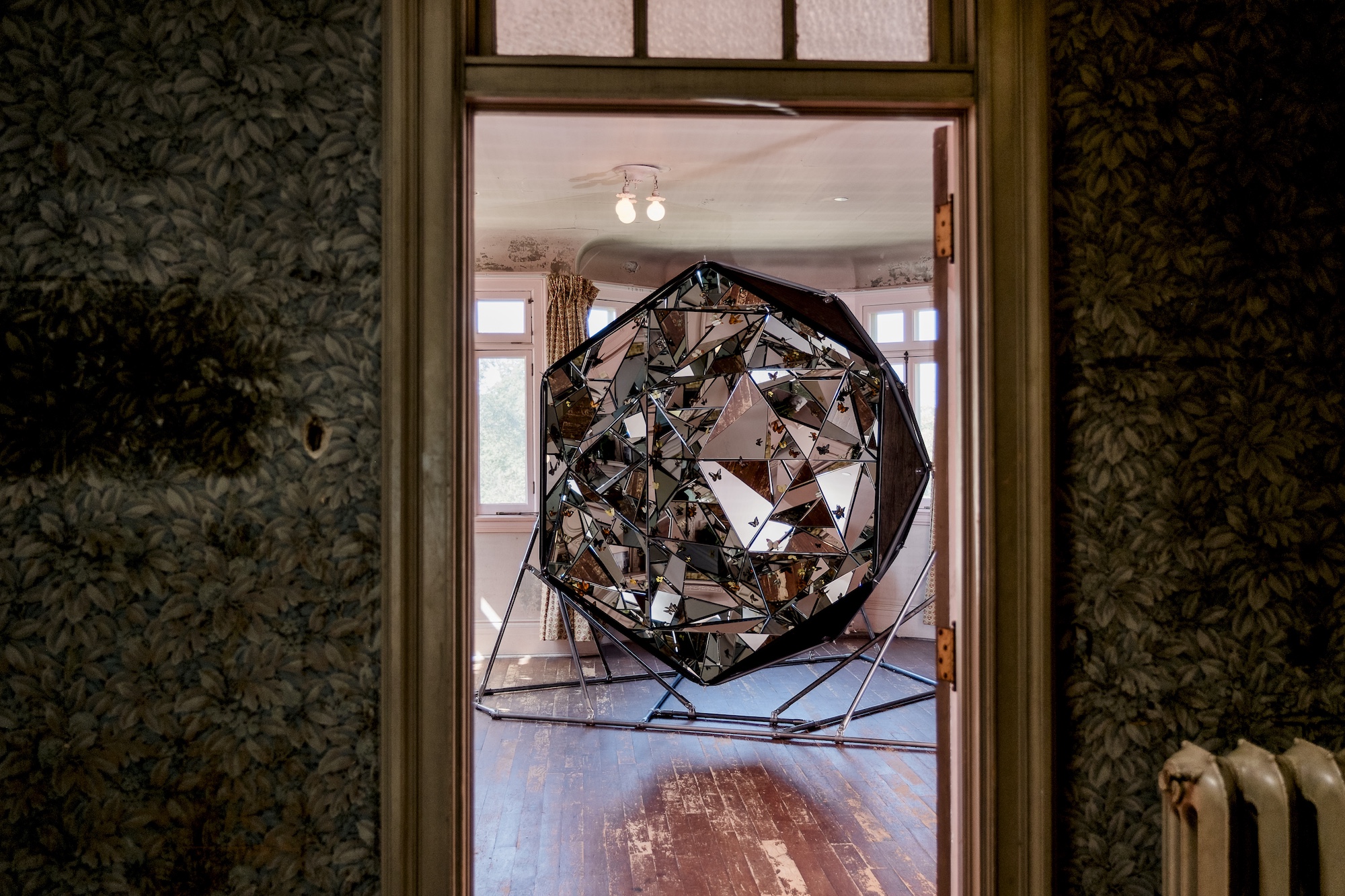
‘Open Wing Death’ by Ry Van der Hout. Photography by Van Der Hout.
Five sculptural interventions are staged across the mansion’s four stories, incorporating photography, stained glass, and mirrors. Responding to the house’s various rooms, the sculptures draw on research and conversations with spiritual leaders, family descendants, historians, guides, and conservators. The former resident families supply ample inspiration; their stories, ranging from forbidden love to fatal illness, are often stranger than fiction.
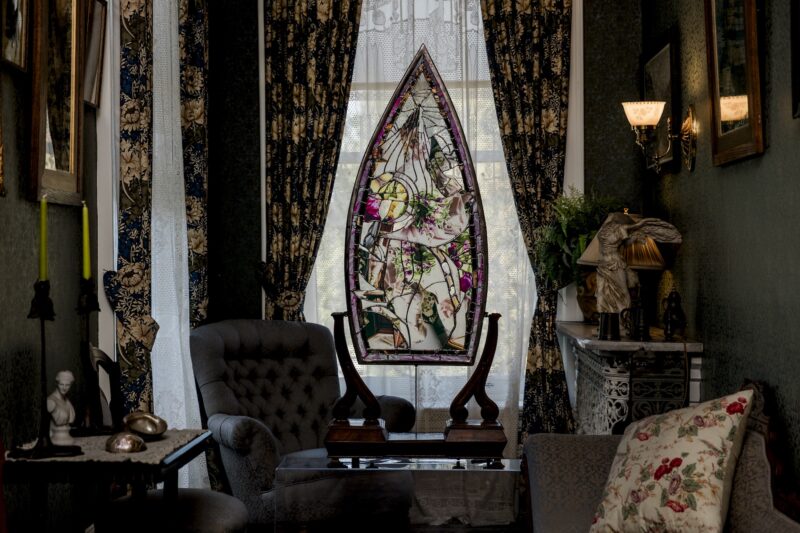
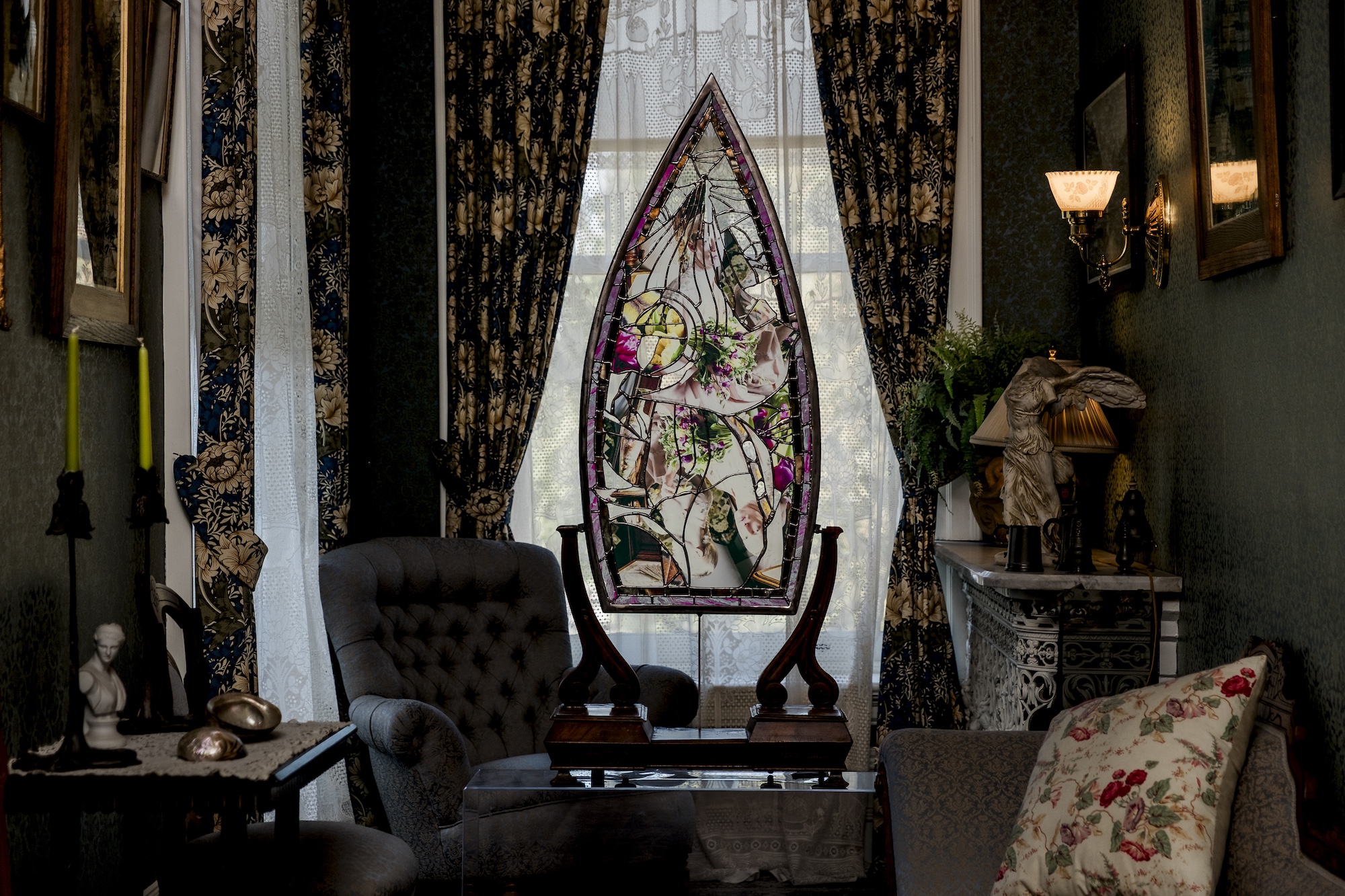
‘Tiber’ by Ry Van Der Hout at Spadina Museum. Photography courtesy of the artist and United Contemporary.
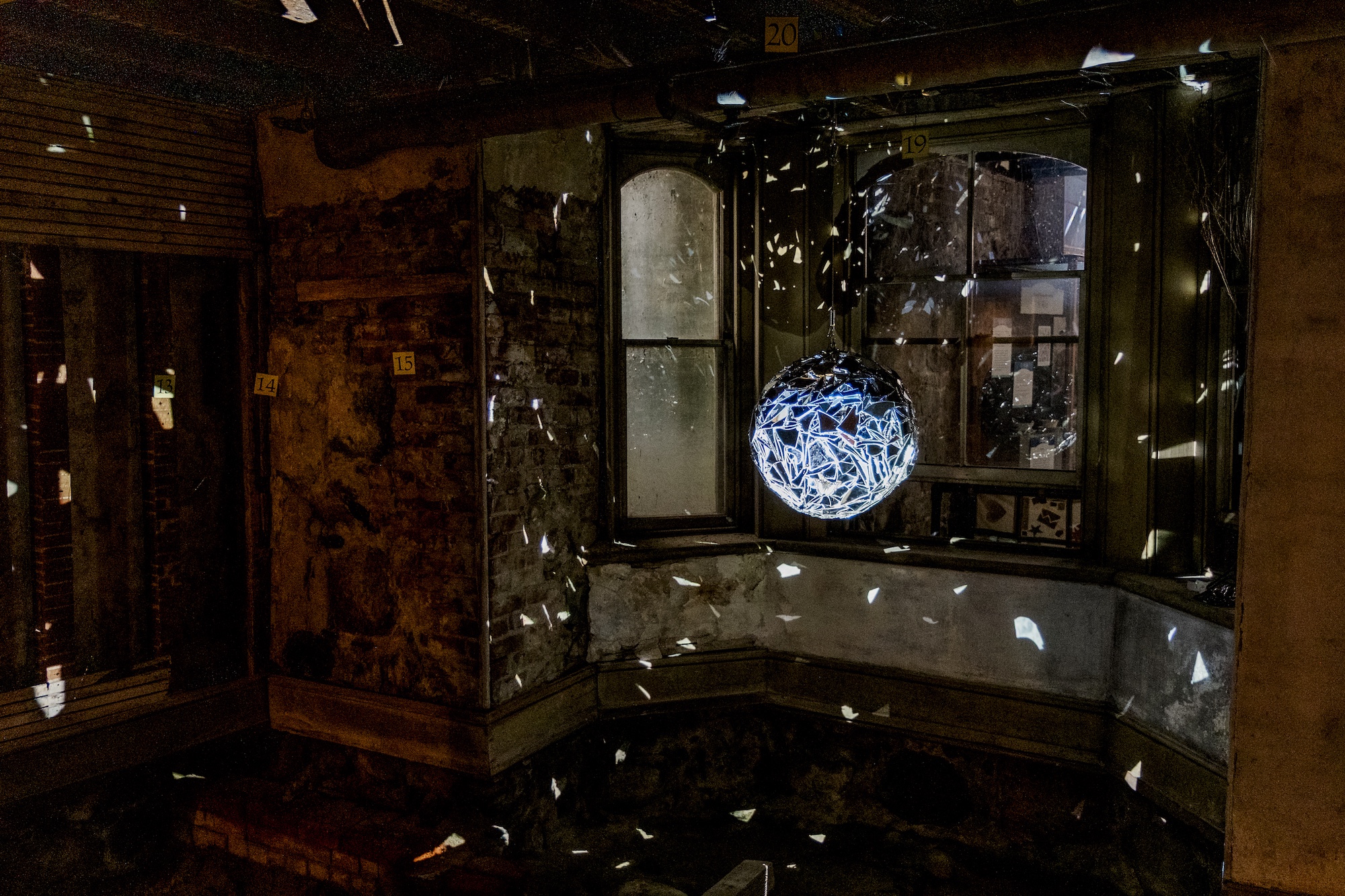
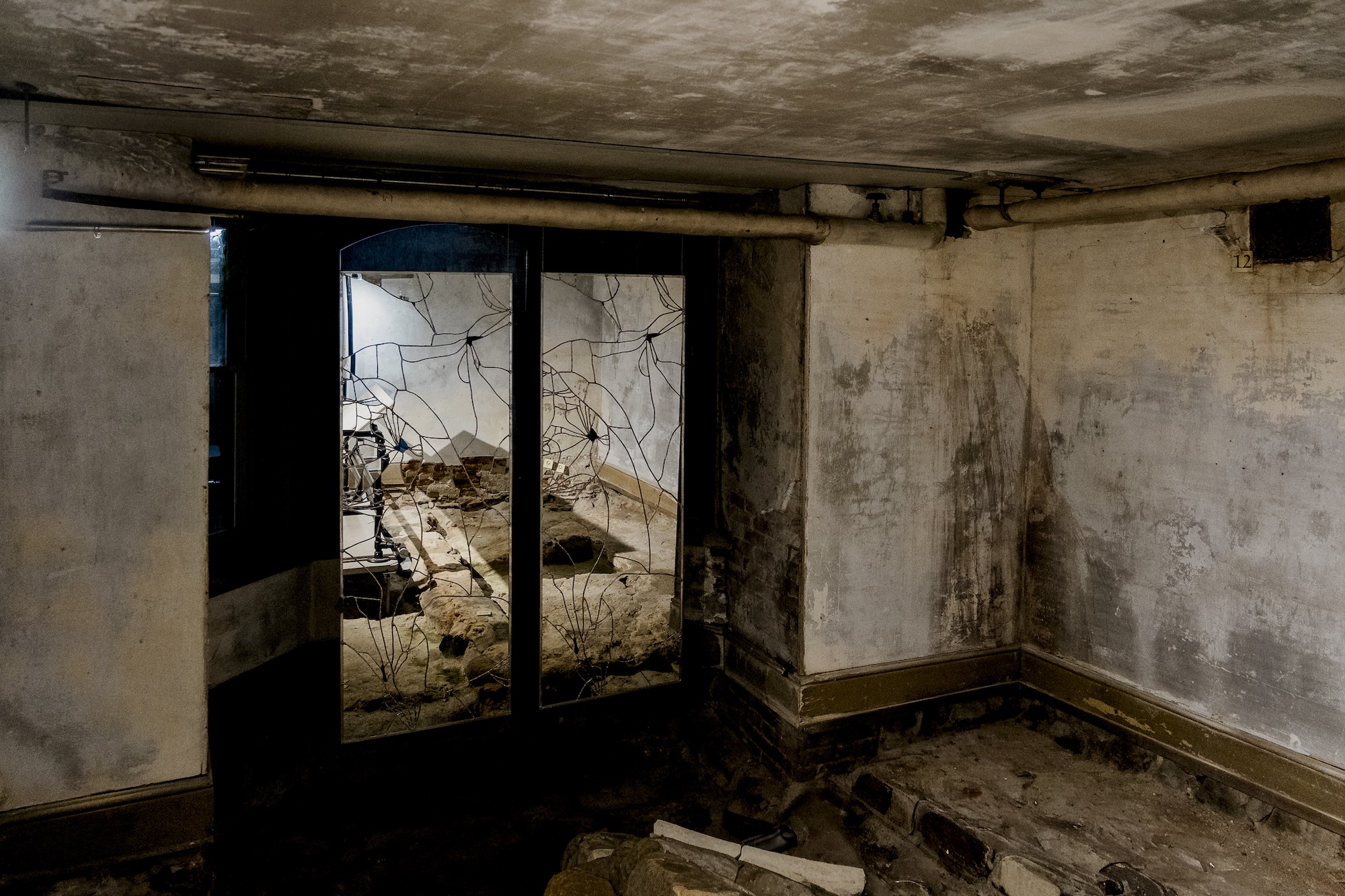
In the basement’s preserved archaeological dig site, a fractured disco ball spins to a NASA-produced audio track, casting a mosaic of light onto stone walls and infilled windows. Upstairs, a stained-glass sculpture printed with photographs of Tiber, a historical interpreter at the museum, has been shattered and reassembled. Van Der Hout made it from a reclaimed antique dressing-table mirror holder, found serendipitously in a dumpster at their studio.
“It felt like I got pulled into this story of an object guiding you to tell you that you are in the right place,” Van Der Hout says.
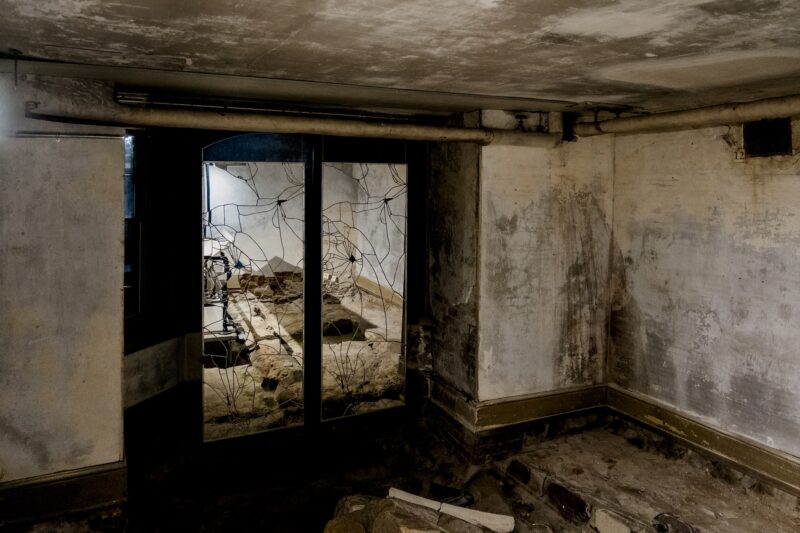
‘Orpheus Twice’ by Ry Van Der Hout at Spadina Museum. Photography courtesy of the artist and United Contemporary.
The largest work in the exhibition, Open Wing Death, is a 12-foot-high ovoid geodesic dome installed on the unrestored third floor of Spadina Museum. Added in 1913 as a sunlit sanctuary for a resident with tuberculosis, the room later housed the household’s domestic staff, to whom the sculpture is dedicated. Before peering inside, I catch stray glimpses of myself in the mirrored facets at various angles. For a split second, I appear to myself as a stranger, seen as if through someone else’s eyes, before recognition sets in.
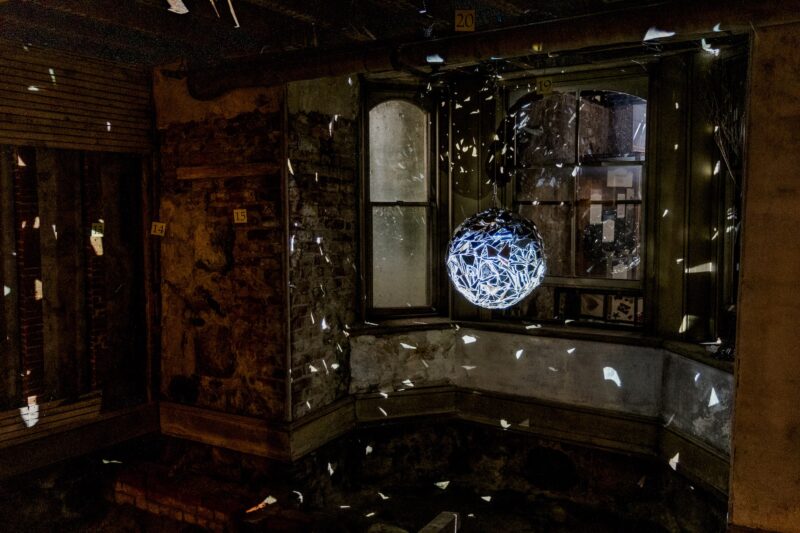
‘The Shattering’ by Ry Van Der Hout at Spadina Museum. Photography courtesy of the artist and United Contemporary.
In Broken Light is on view at Spadina Museum in Toronto until Oct. 18.