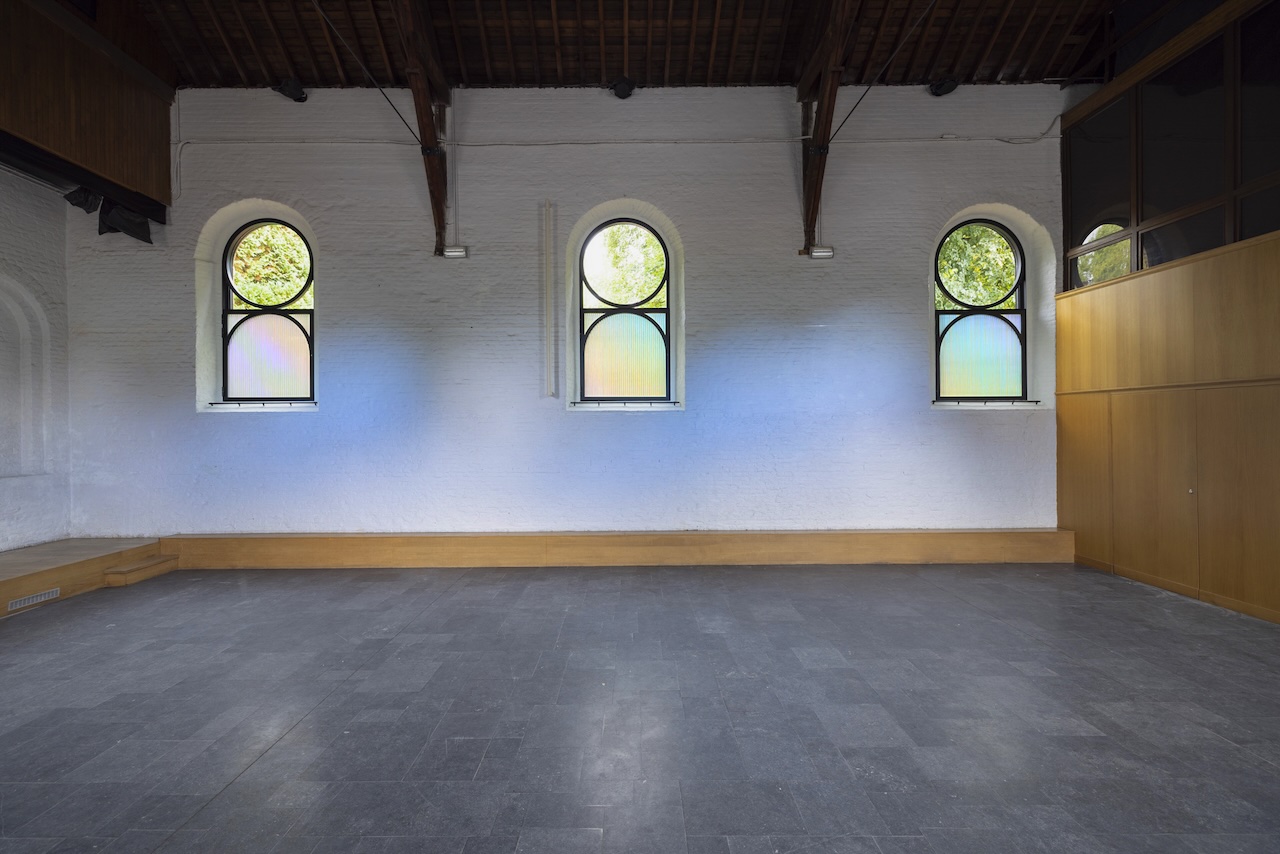
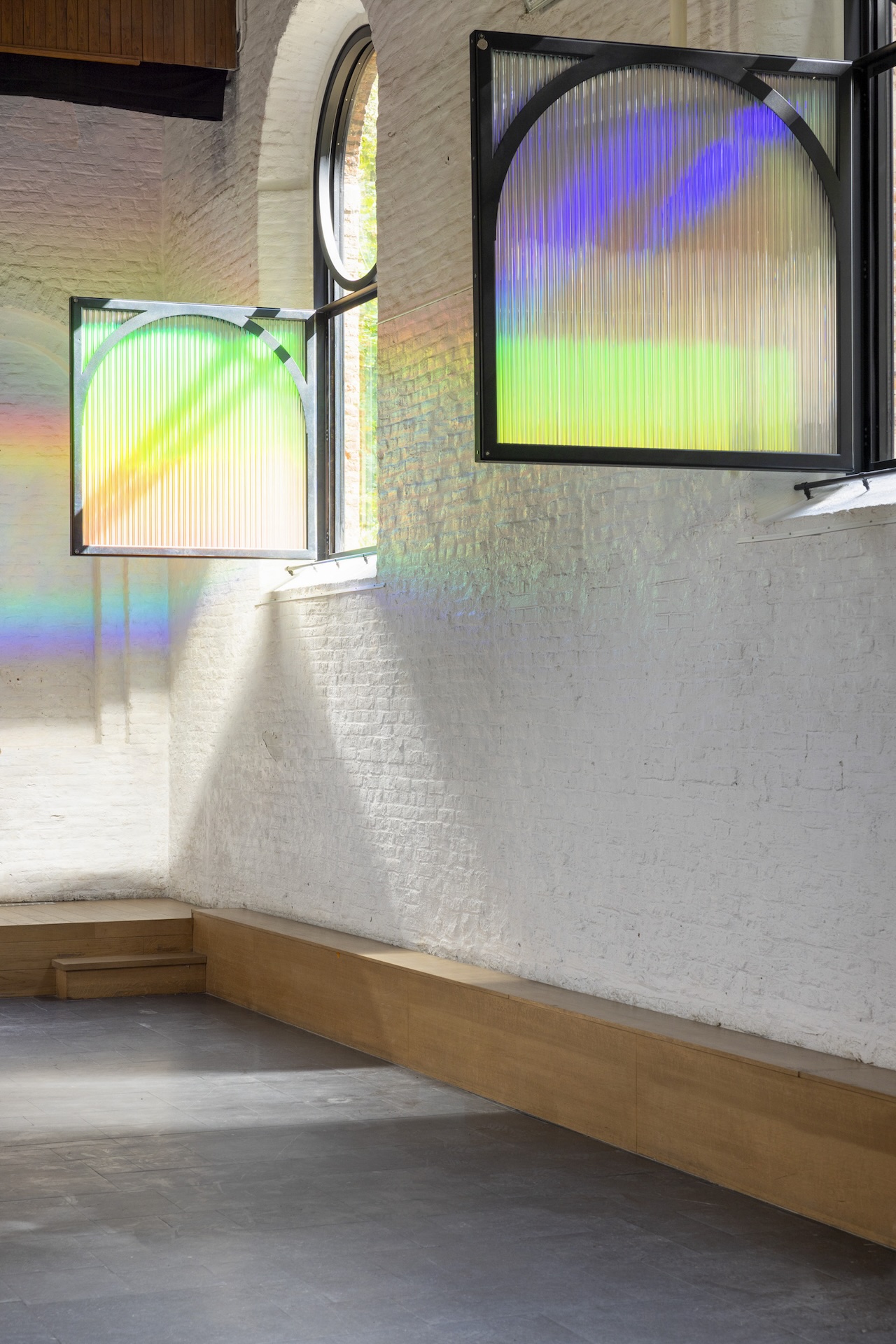
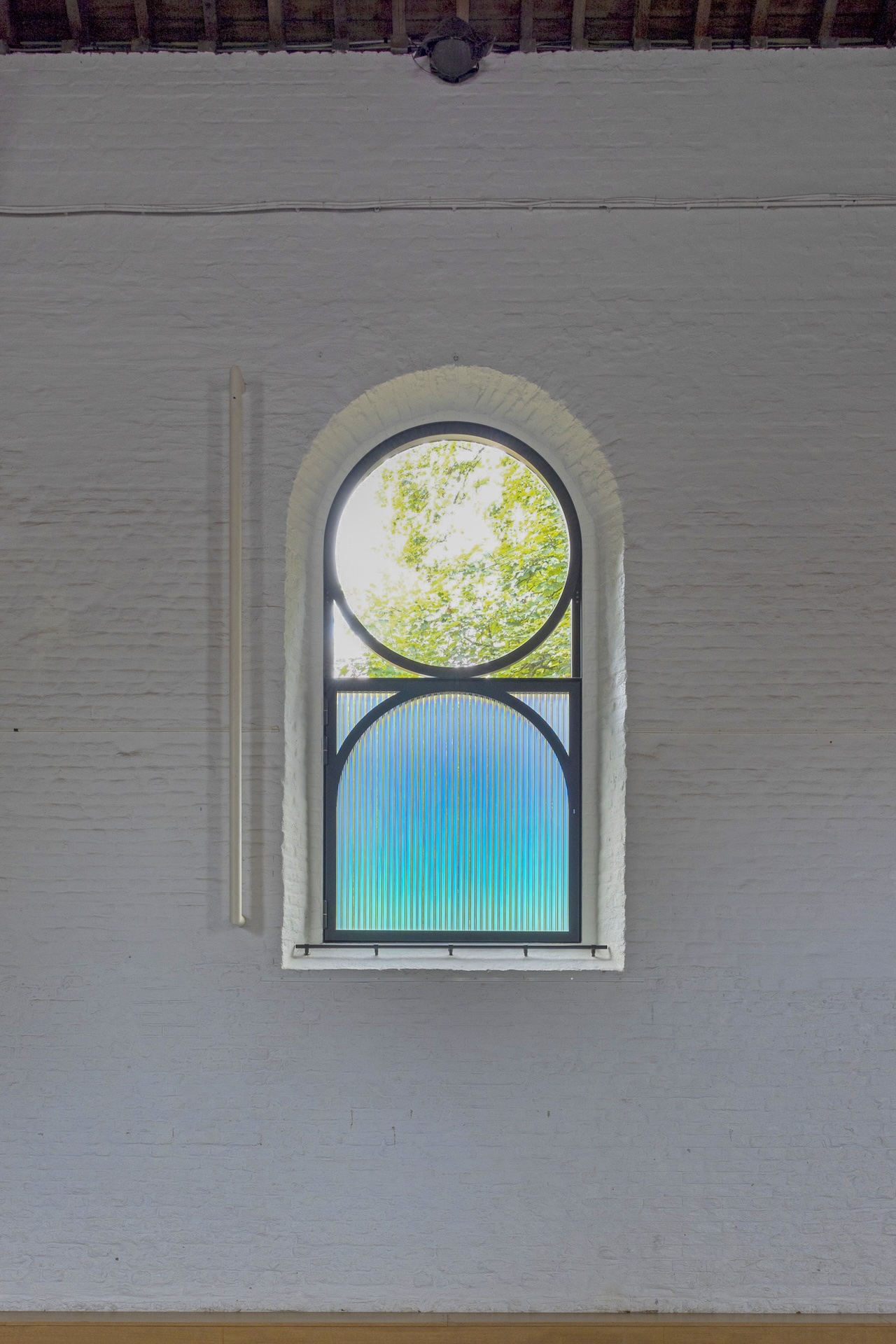
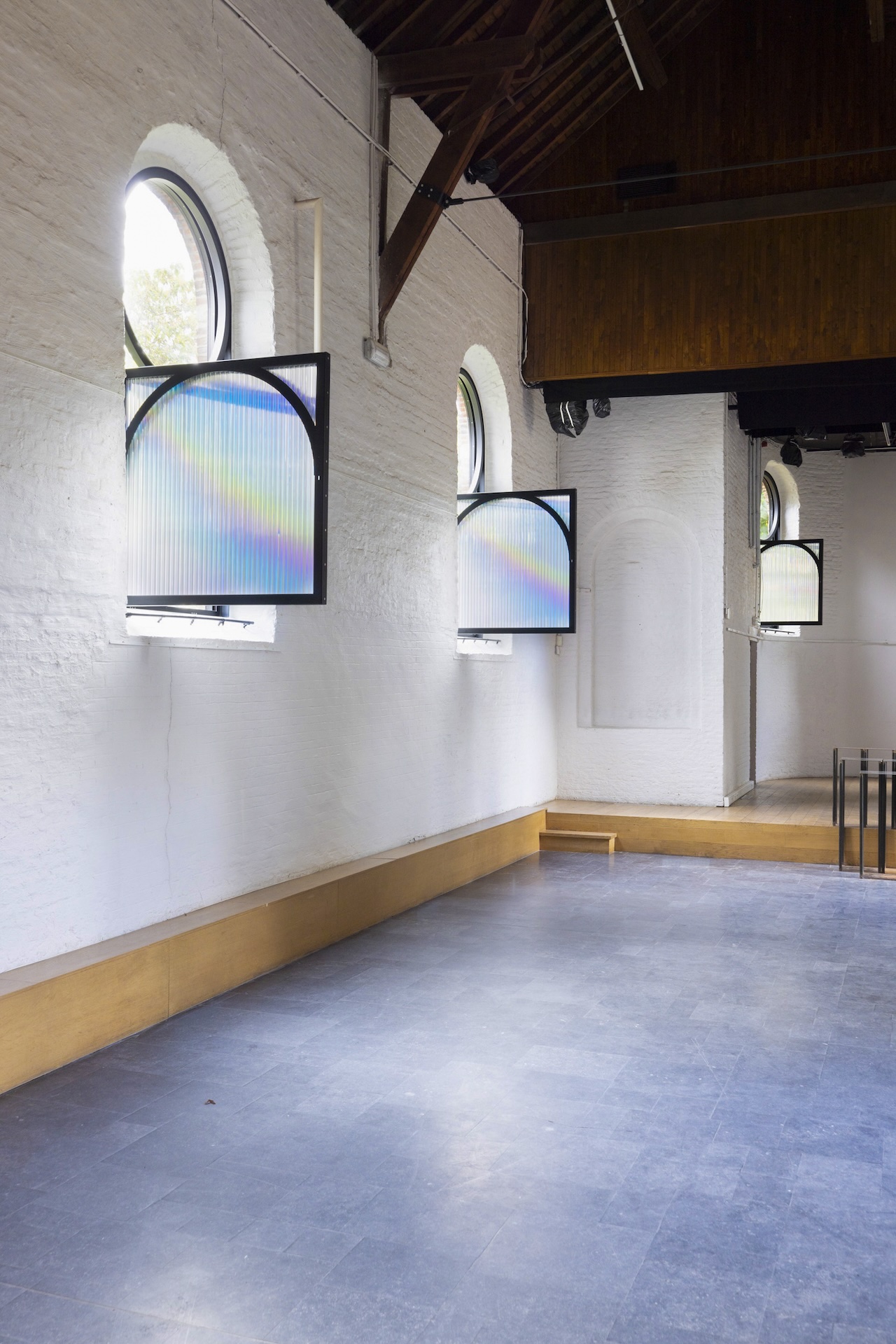
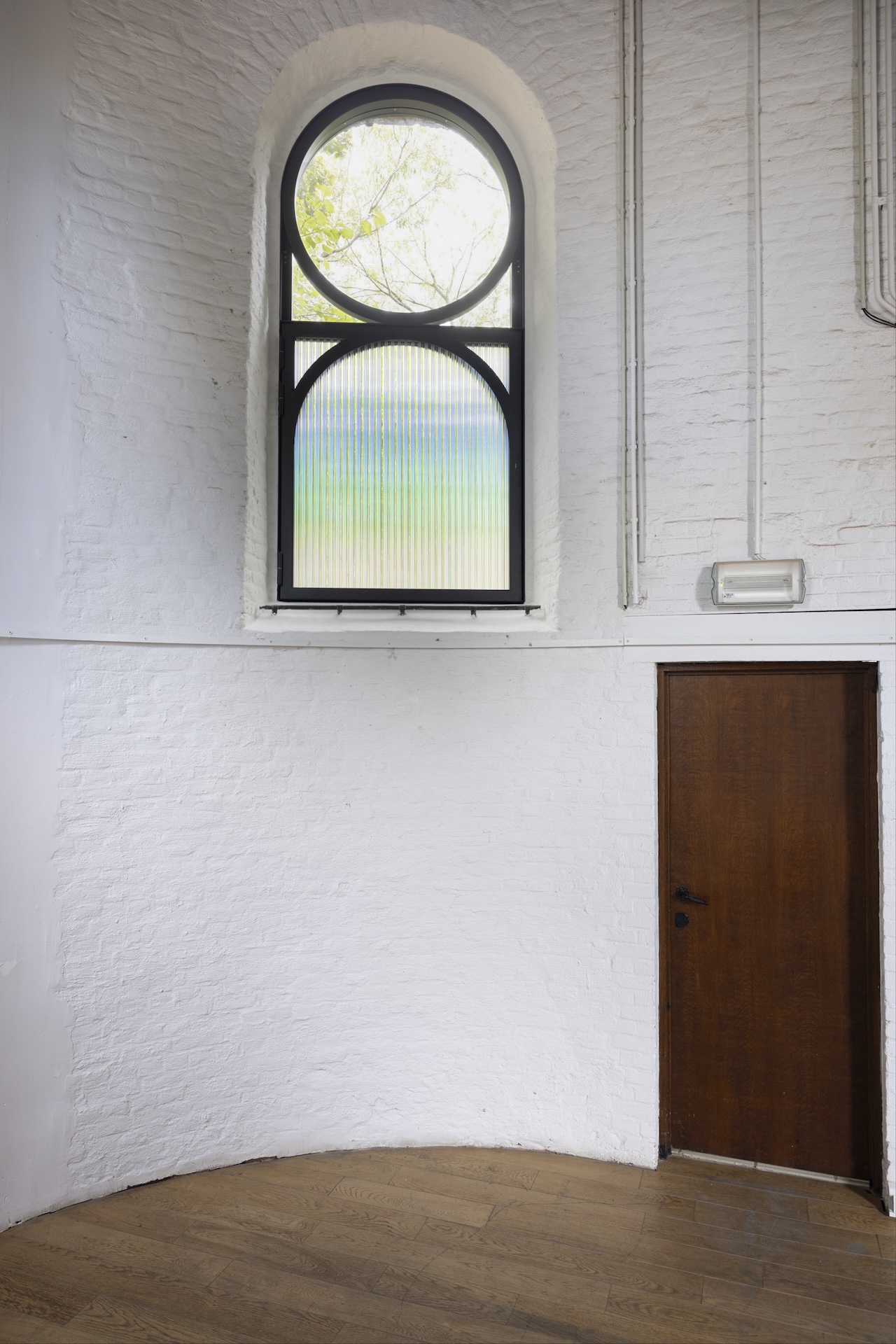
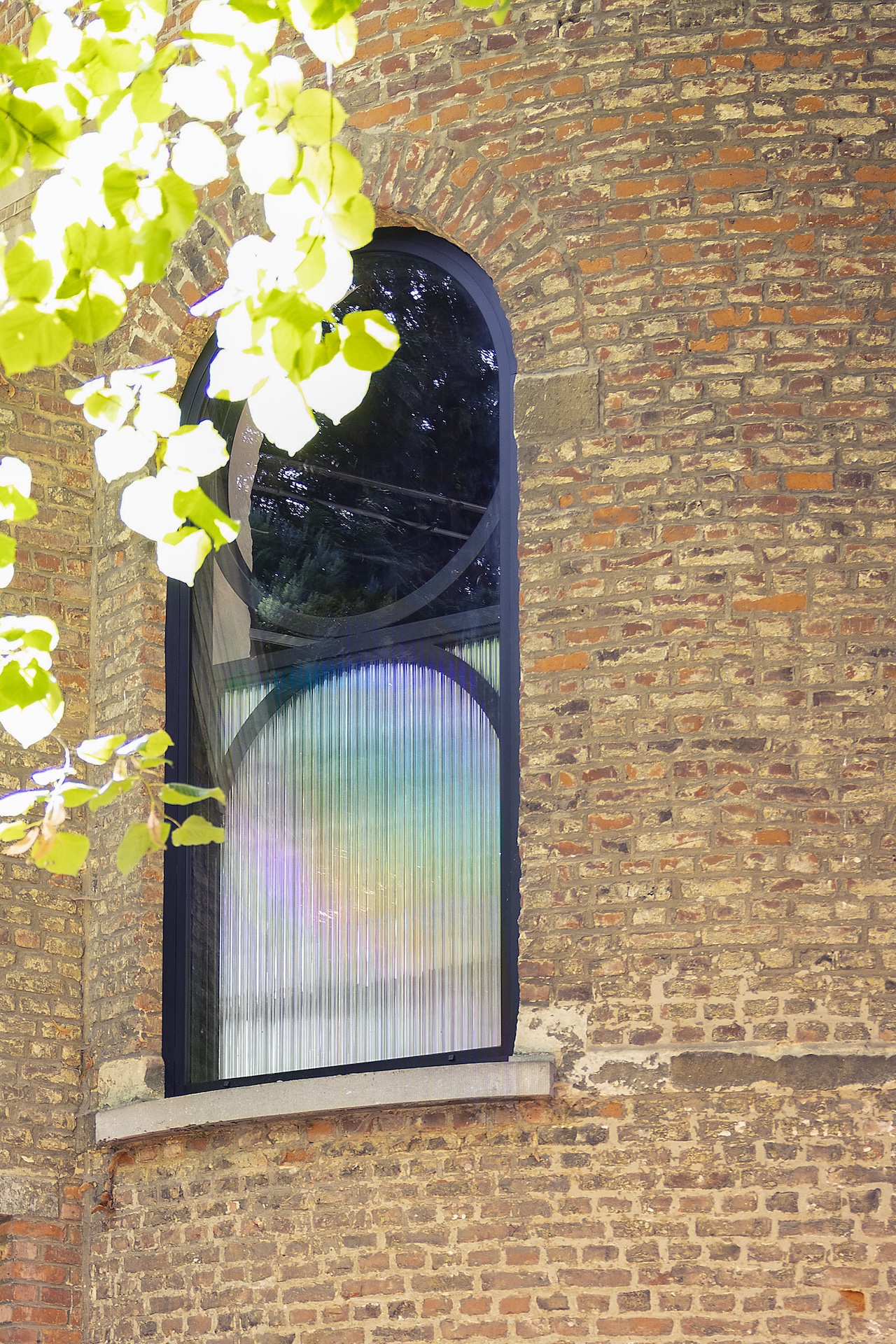
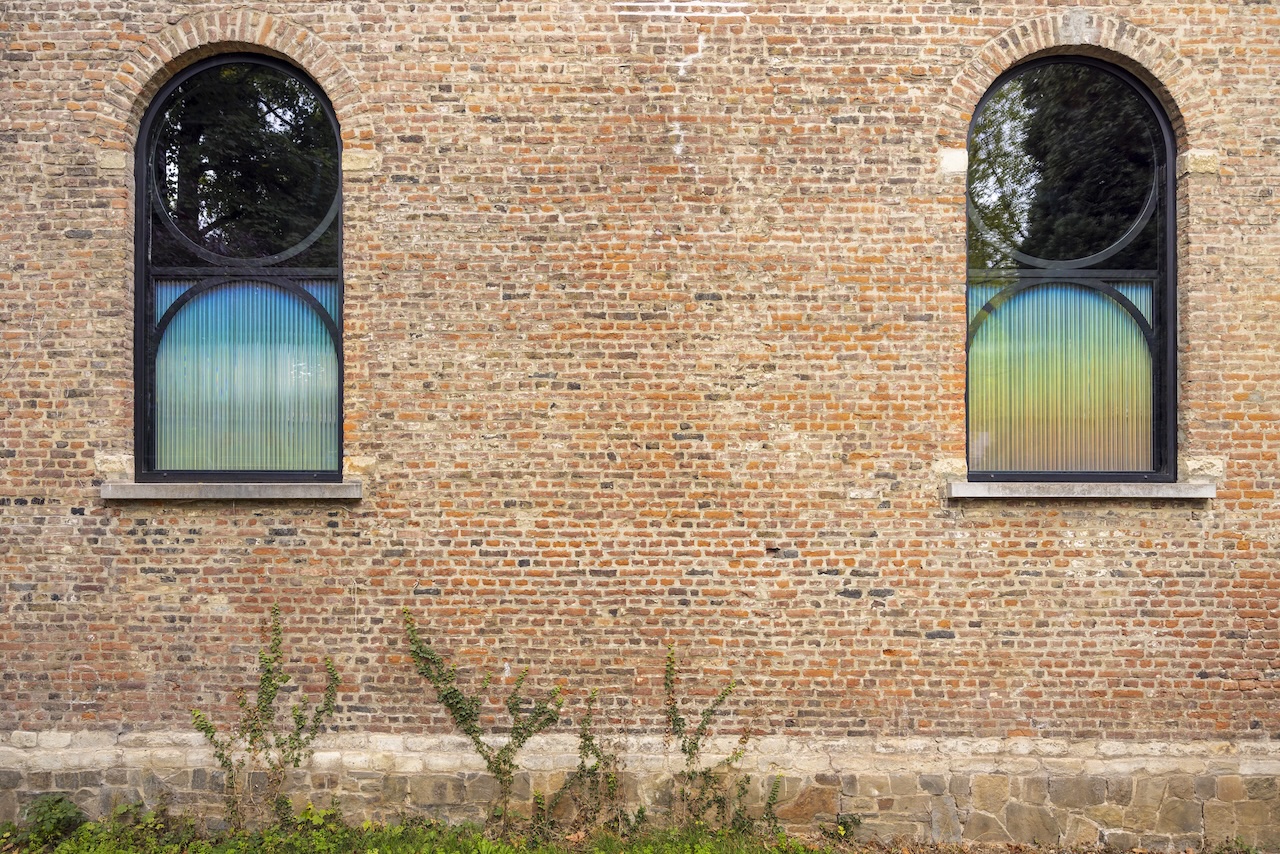
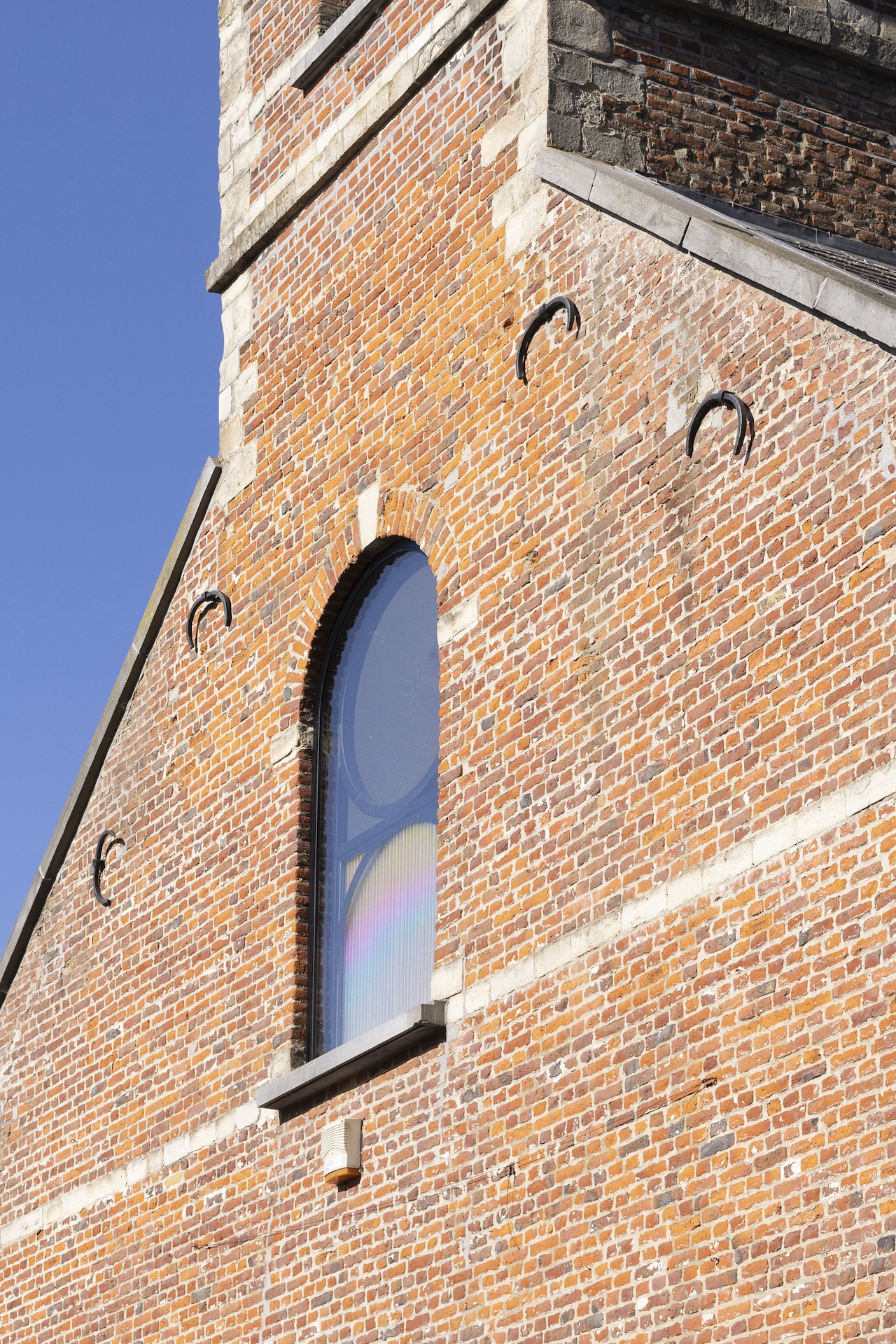
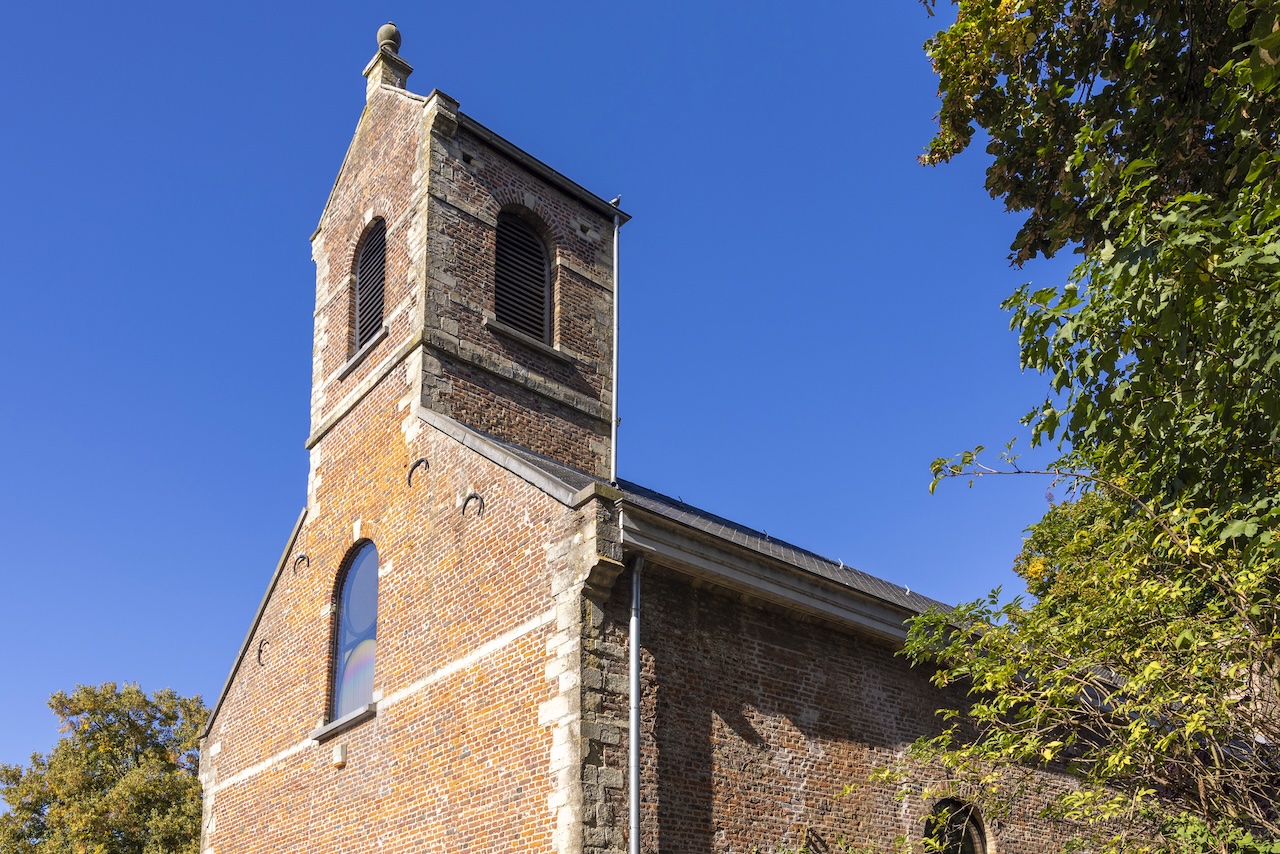
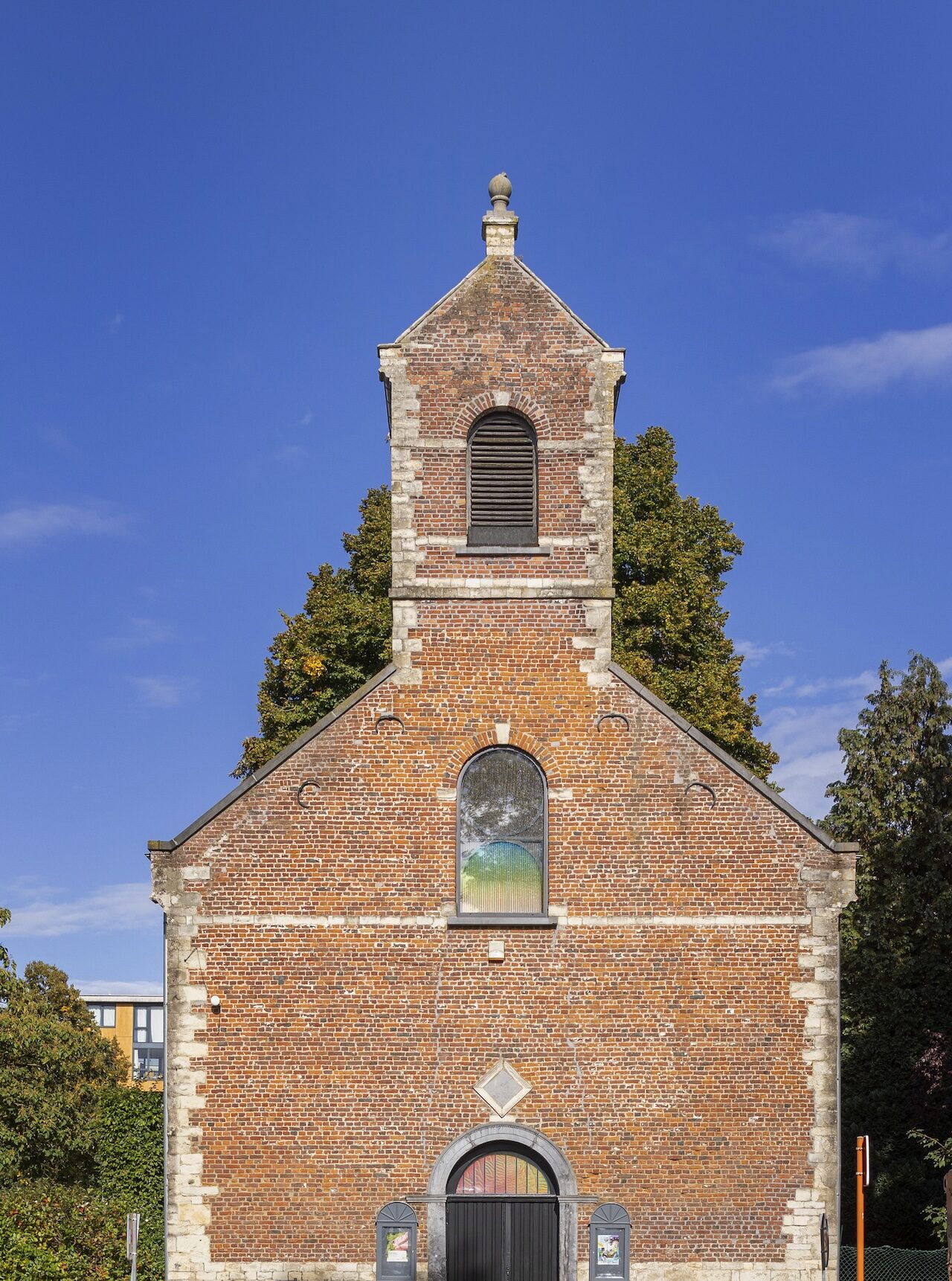
The phenomenon of light—in all its glory—is central to Jordan Soderberg Mills’ oeuvre. He has created numerous immersive works for temporary and permanent commissions around the world with a wonderful simplicity that belies the complex physics that make them possible. And his latest prismatic experimentation is now woven into the very architecture of a decommissioned 15th century church in Brussels. Framed in black ironwork, the Boondael Chapel’s 14 windows now refract light to create rainbow effects that shift throughout the day and the seasons.

Photography by Franziska Krieck.

Photography by Franziska Krieck.

Photography by Franziska Krieck.
The Canadian artist, who also works and lives in Europe, had earlier participated in a Design Museum Ghent exhibition inspired by Jan Van Eyck, who invented techniques that layered transparent glazes in a certain way to create distinct optical effects. “There was a very specific altar piece that’s in Ghent, with an inscription saying the Virgin Mary is the reflection of eternal light,” Soderberg Mills says. “I thought, How can I represent eternal light? How can I create something that uses this idea of multiple layers and glazes that the Renaissance painter used? So I made Eternal Light + a Spotless Mirror.”

Photography by Franziska Krieck.
That piece gave Soderberg Mills visibility in Belgium, but the exhibition’s opening coincided with COVID-19 lockdowns. It made him all the more eager to have his work seen and felt. Then came the open call for the former church and present-day arts venue in Brussels. It had a very specific requirement: The glass had to be colorless and completely transparent. This, too, presented a challenge. “Because my practice is such an exploration of color and perception and light,” he says, explaining his thought process, “how can I kind of cheat the system or be cheeky a little bit in order to produce glass that is colorless but that transmits color?”

Photography by Franziska Krieck.
In Gothic churches, light was treated as a divine element. “A church window is a really mystical thing,” he says. While researching the adaptive reuse of old churches in Belgium, Soderberg Mills came across chapels along the coast of the North Sea where bell towers doubled as lighthouses. It prompted him to reference Belgian architecture in an interesting way; he sought to create something “mythical or magical realist” while also honoring the now-secular use of the church building.

Photography by Franziska Krieck.
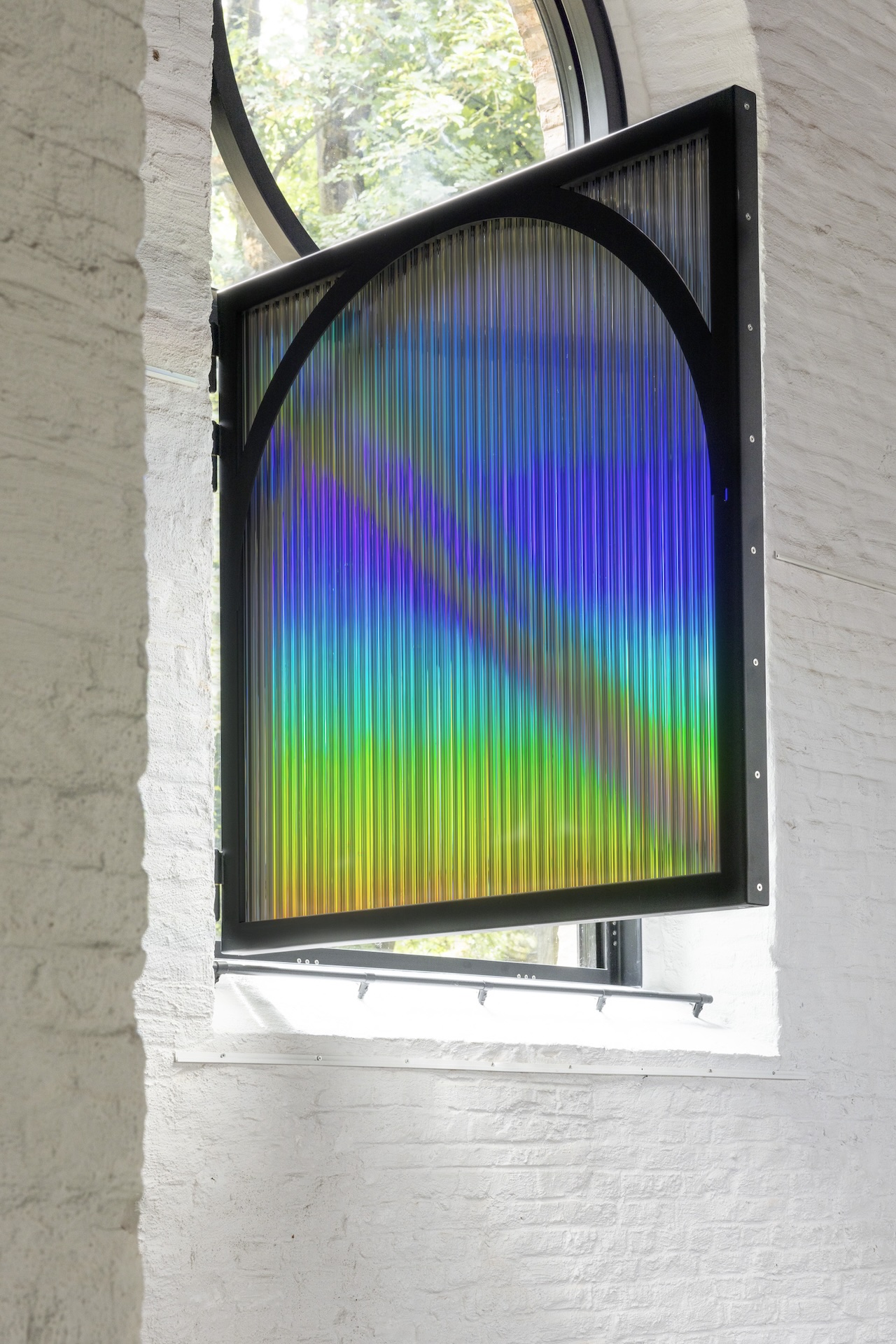
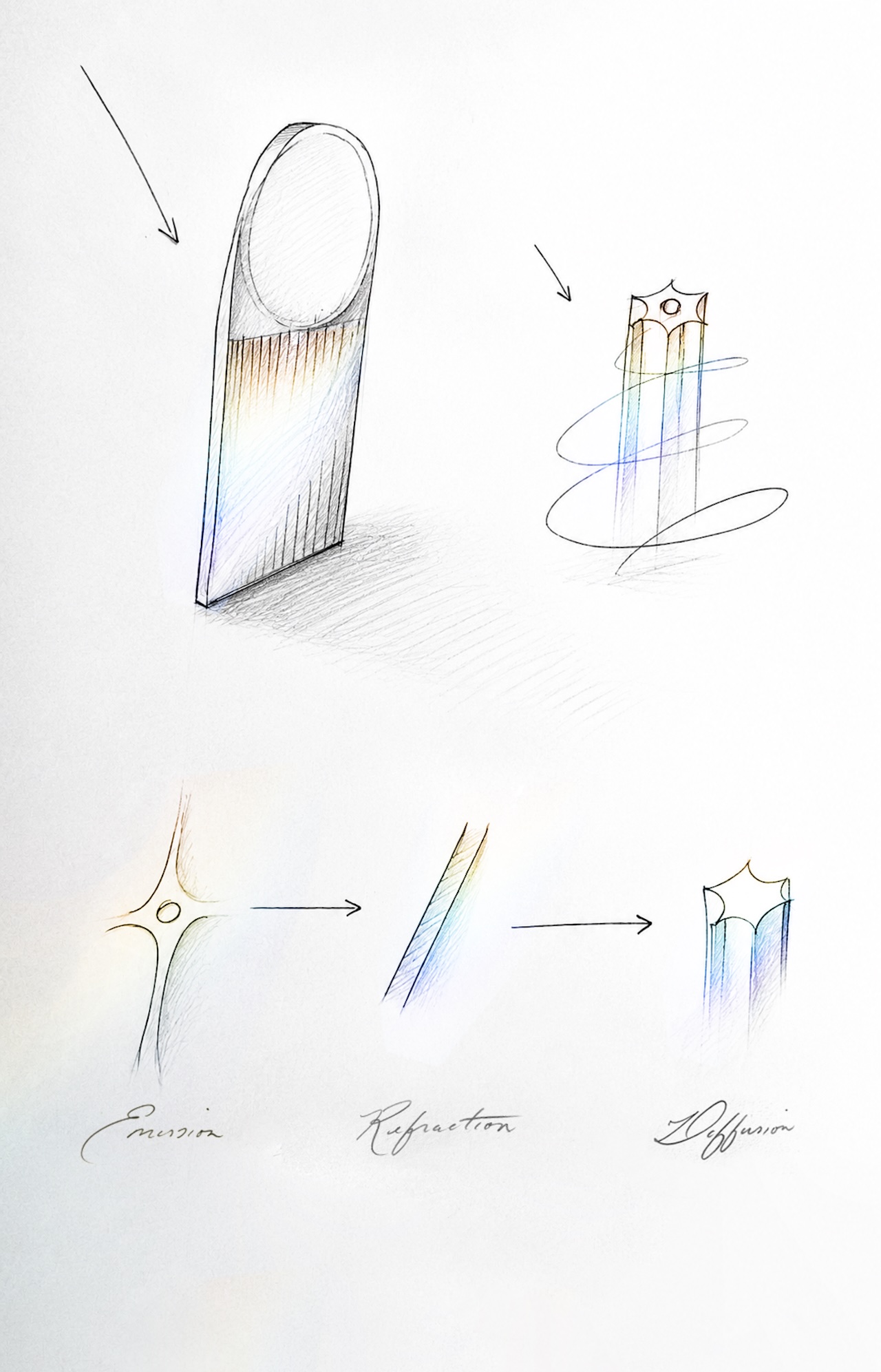
Whatever he envisioned, he needed to collaborate with Belgian fabricators—another criterion of the open call. Soderberg Mills found one that supplies beakers to local laboratories, and a company that makes iron work windows for train stations. The laboratory glass is especially important—it takes the shape of long borosilicate tubes, or canes, that are star-shaped in cross-section. Together, they form a ribbed surface. The canes are internally etched with billions of microscopic apertures that scatter light into spectral bands.

Photography by Franziska Krieck.

Photography by Franziska Krieck.
Another lab, this one in California, produced the film that is embedded inside the glass extrusions. “The film is used in spectrography,” Soderberg Mills explains, “anything that reflects light will have a chromatic signature and the composition of the rainbow will tell you what a star is made of.” Together with the etched glass canes, the film refracts daylight into “vibrant, shifting spectral color, turning the chapel into both a sanctuary and a living lens.”

Photography by Franziska Krieck.
By curving the light, the iron-framed windows produce different perspectives at different times of the day and the year. Soderberg Mills likens it to a sundial, which produces a completely unique experience depending on when you enter the church. “It’s about creating something that’s fixed that also gives this sense of motion and movement, which is really the motion of the planet through through space—this cosmological dance,” he says.

Diagram courtesy of Jordan Soderberg Mills.