


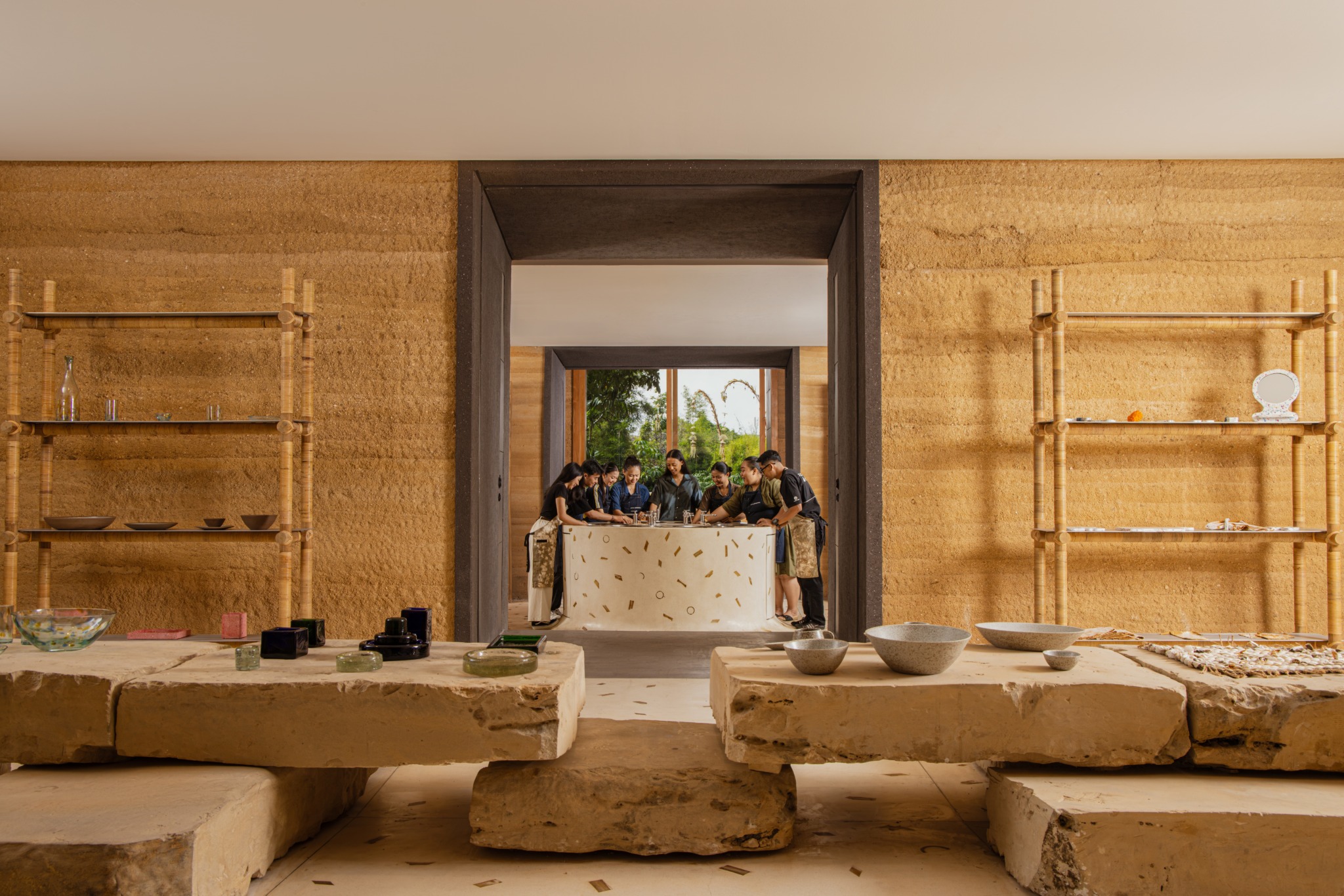

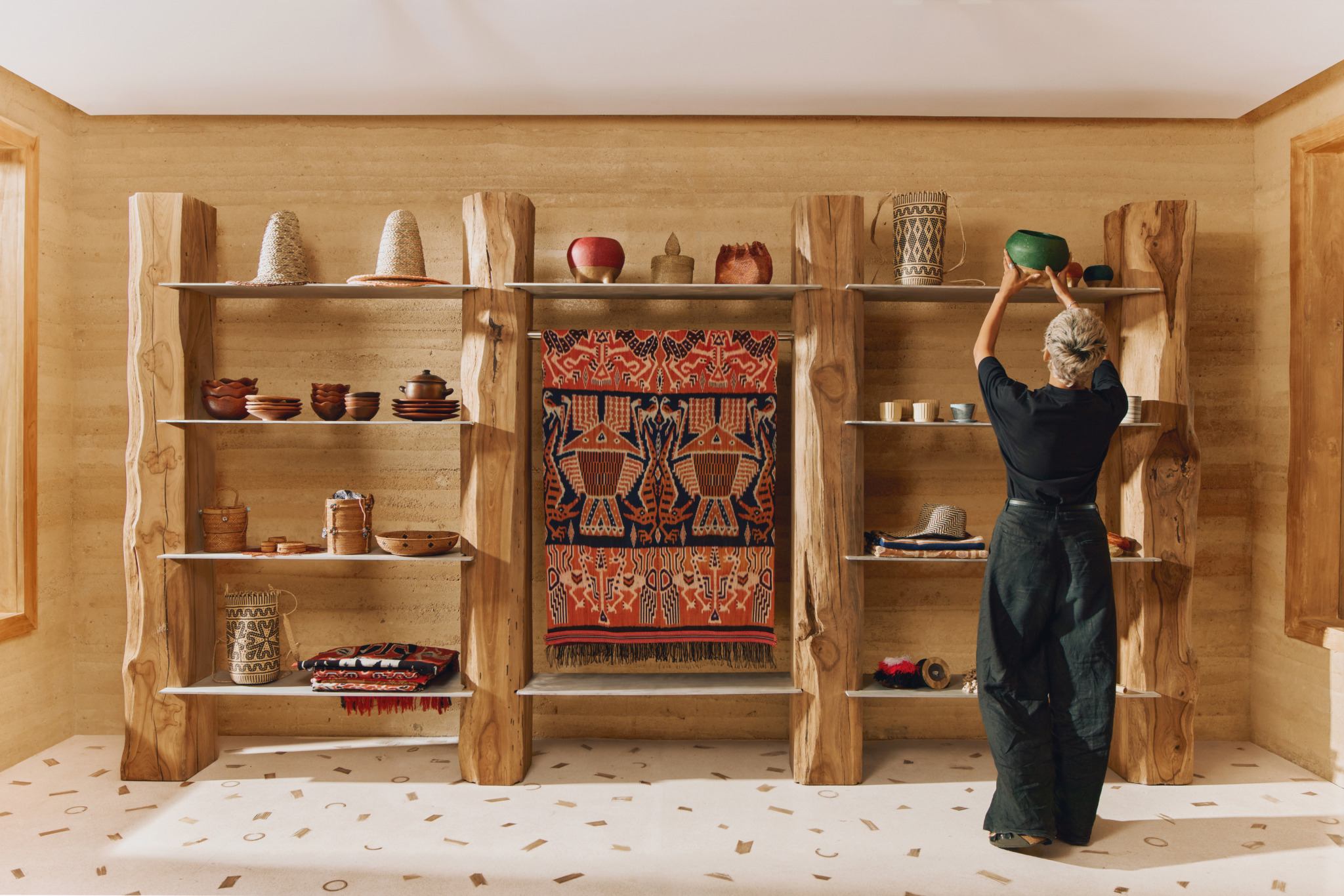
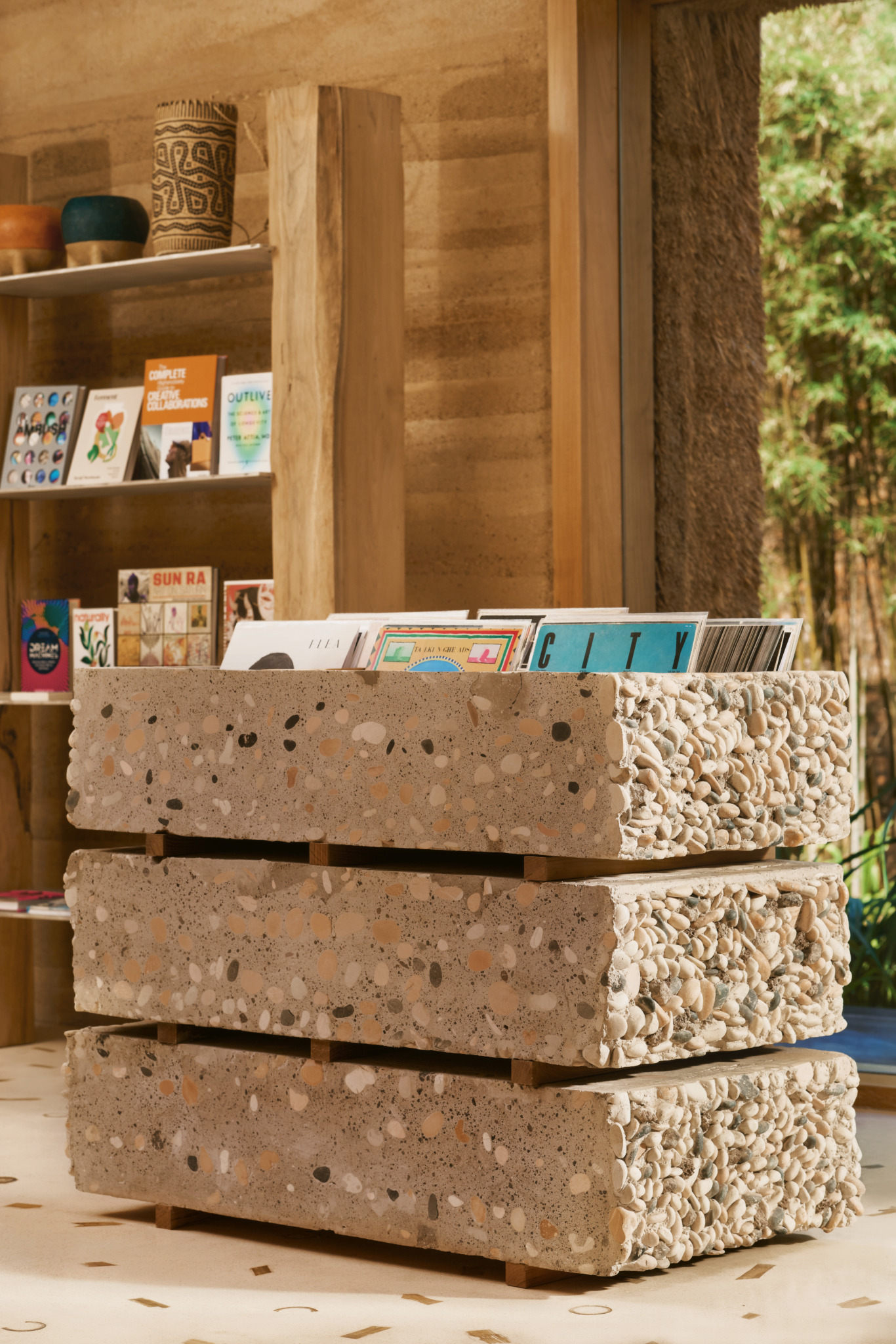
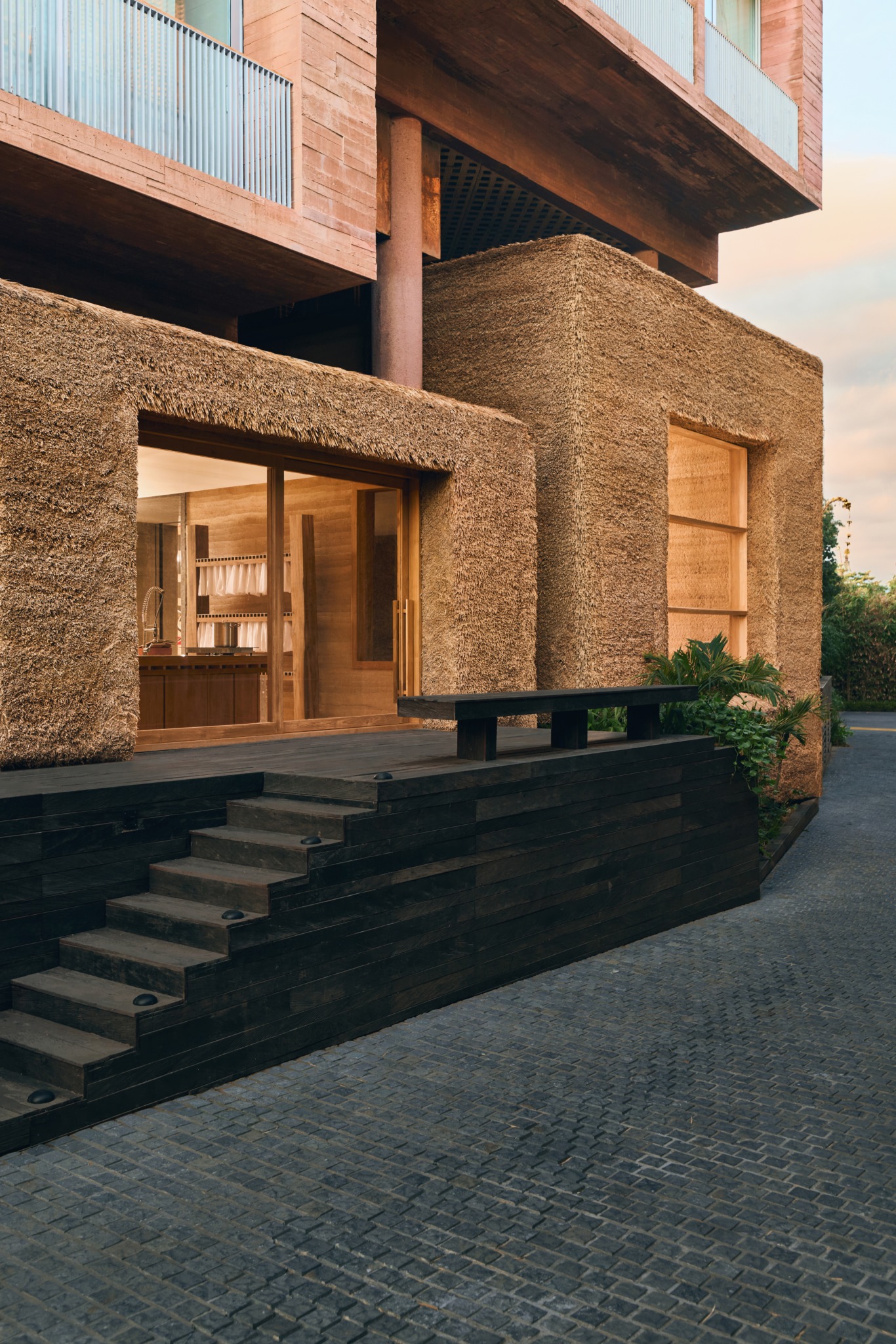

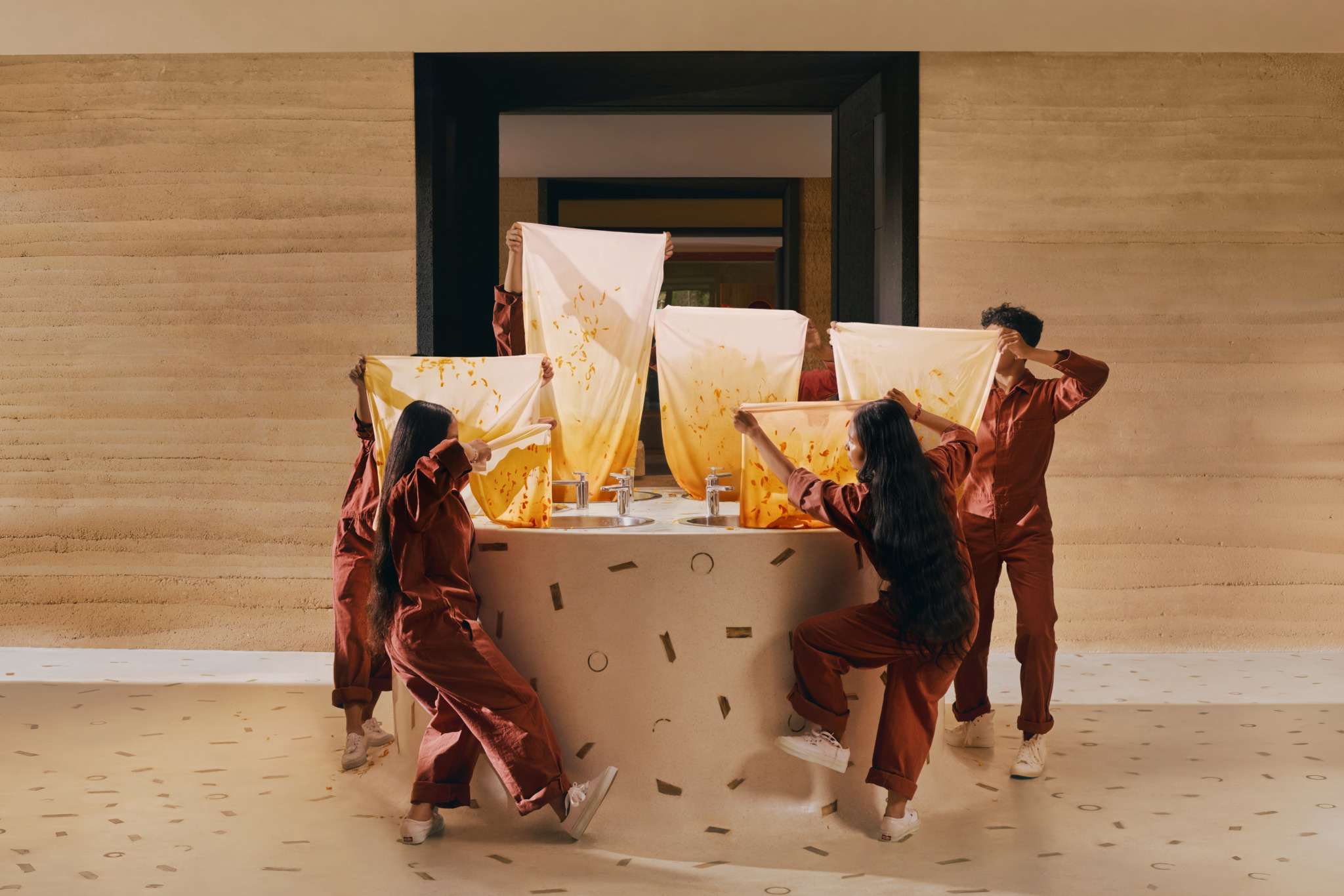


What if a store invited visitors to consider not just what they’re buying, but how it’s made? At Desa Potato Head in Bali, the new Good Times General Store explores that question through architecture, craftsmanship, and circular design. Created in collaboration with OMA, Potato Head’s first permanent retail space shifts the focus from consumption to discovery, inviting visitors to engage with the materials and processes behind the products.

Photography by Sharon Angelia
Building on a partnership spanning more than a decade, OMA and Potato Head envisioned the store as an extension of the hospitality brand’s “Good Times, Do Good” philosophy.
“Rather than focusing solely on the display and sale of products, the design prioritizes experience, participation and interaction,” explains David Gianotten, OMA managing partner and architect.

Photography by Sharon Angelia
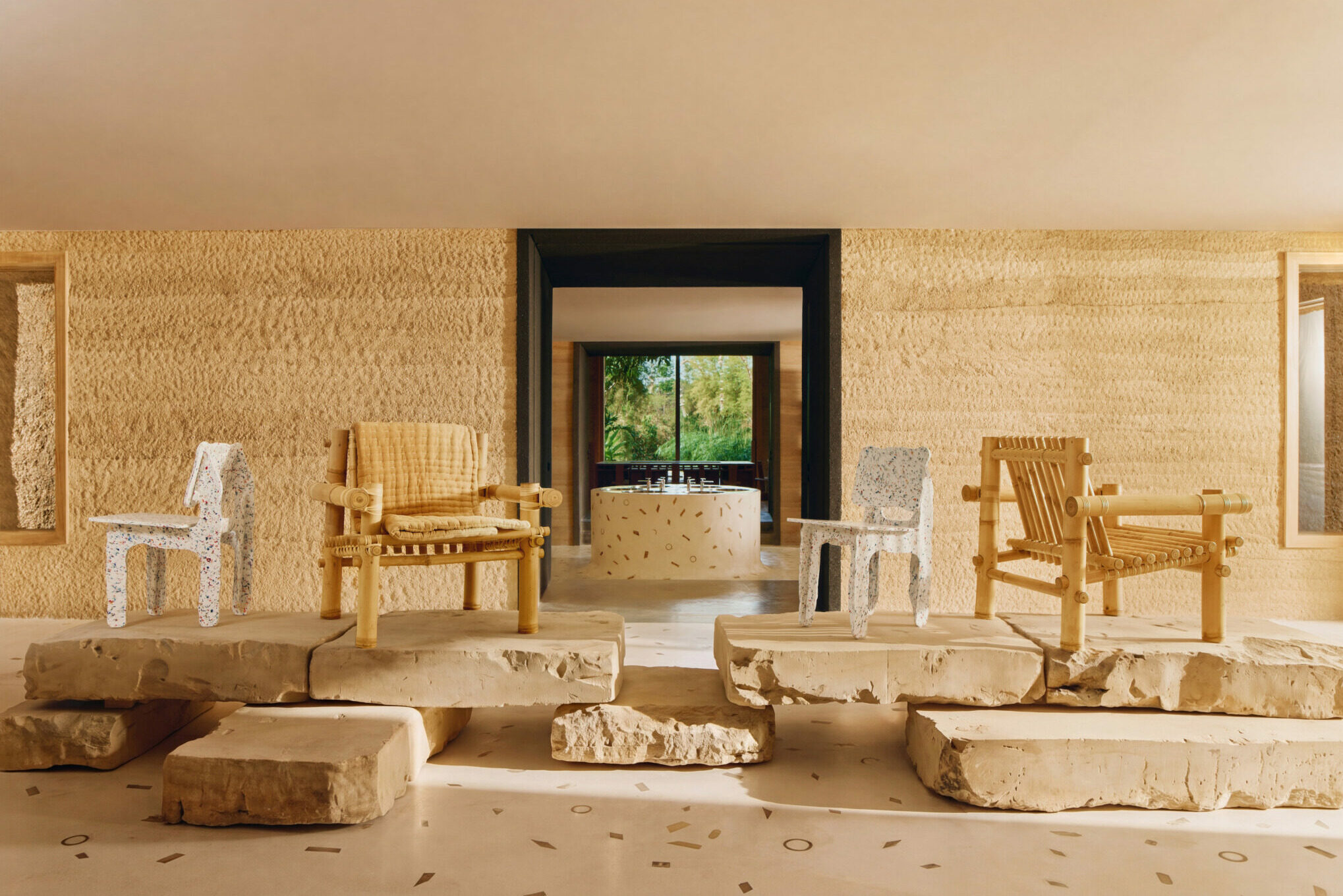
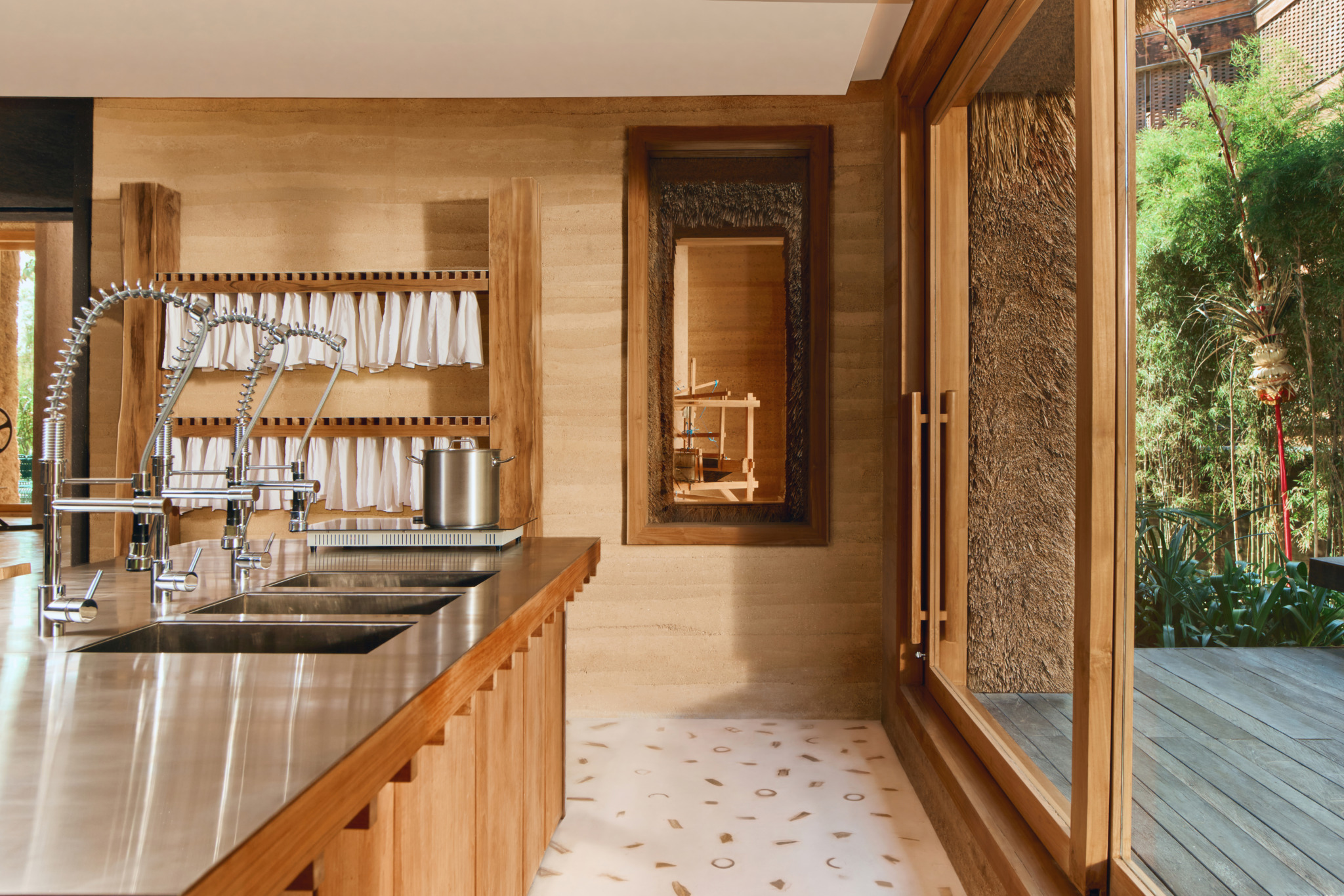
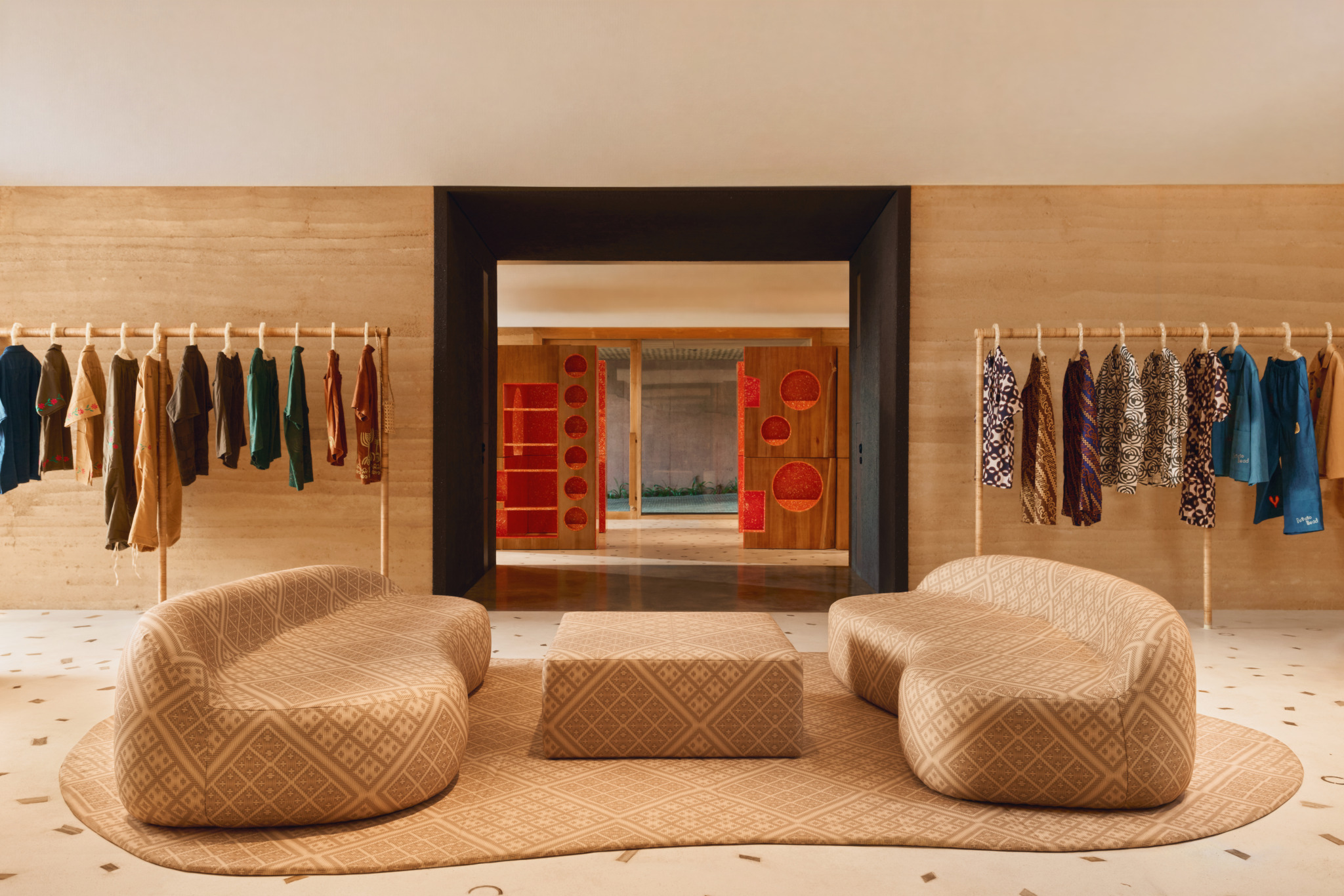
The architecture embraces a “contemporary-traditional” approach, bringing Balinese vernacular building techniques into a modern setting. An alang-alang thatch façade, made from locally sourced tropical grass, creates a textured outer layer, while rammed-earth walls made from local clay lend the interior a grounded, tactile quality. Bamboo appears throughout, including in the terrazzo flooring, where it’s used as an aggregate, and in the display elements.
“We wanted to reinterpret Balinese traditional architecture and craftsmanship in a contemporary way, rather than simply reproducing traditional forms or decorative elements,” says Ade Herkarisma, group head of architecture and development at Potato Head.

Photography by Sharon Angelia
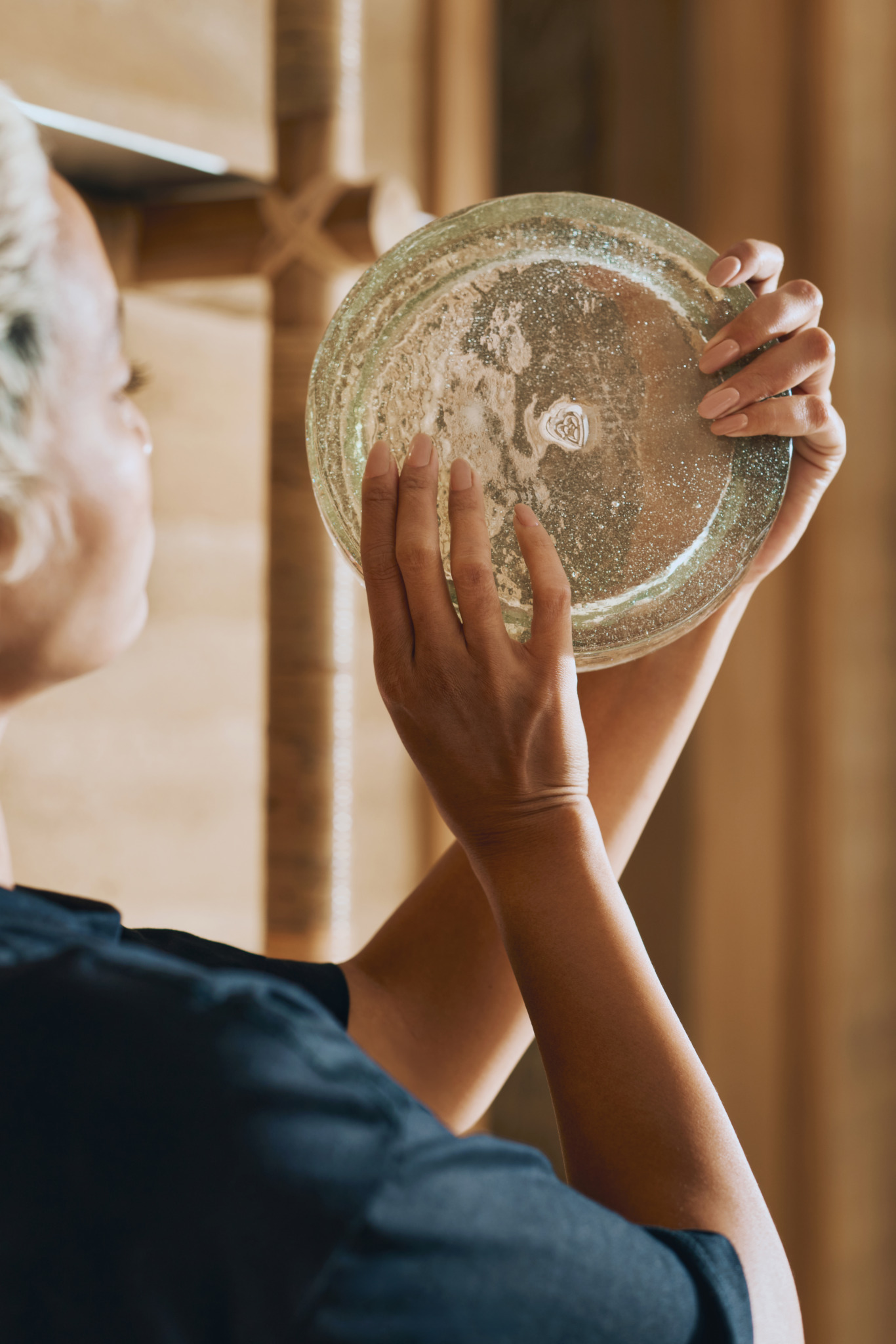
Reclaimed and locally sourced materials bring natural variations in color, texture, and form. Instead of concealing these irregularities, the designers embraced them, letting the materials guide the assembly and detailing.

Photography by Sharon Angelia
Inside, the store unfolds across five interconnected bays, guiding visitors from finished products toward the processes behind their creation. The first showcases souvenirs and lifestyle objects by Indonesian craftspeople, while the second presents the Potato Head Collection, an apparel line inspired by Bali. The third introduces Wasted by Potato Head, a collaboration with British designer Max Lamb that transforms discarded materials into furniture and homewares.

Photography by Sharon Angelia
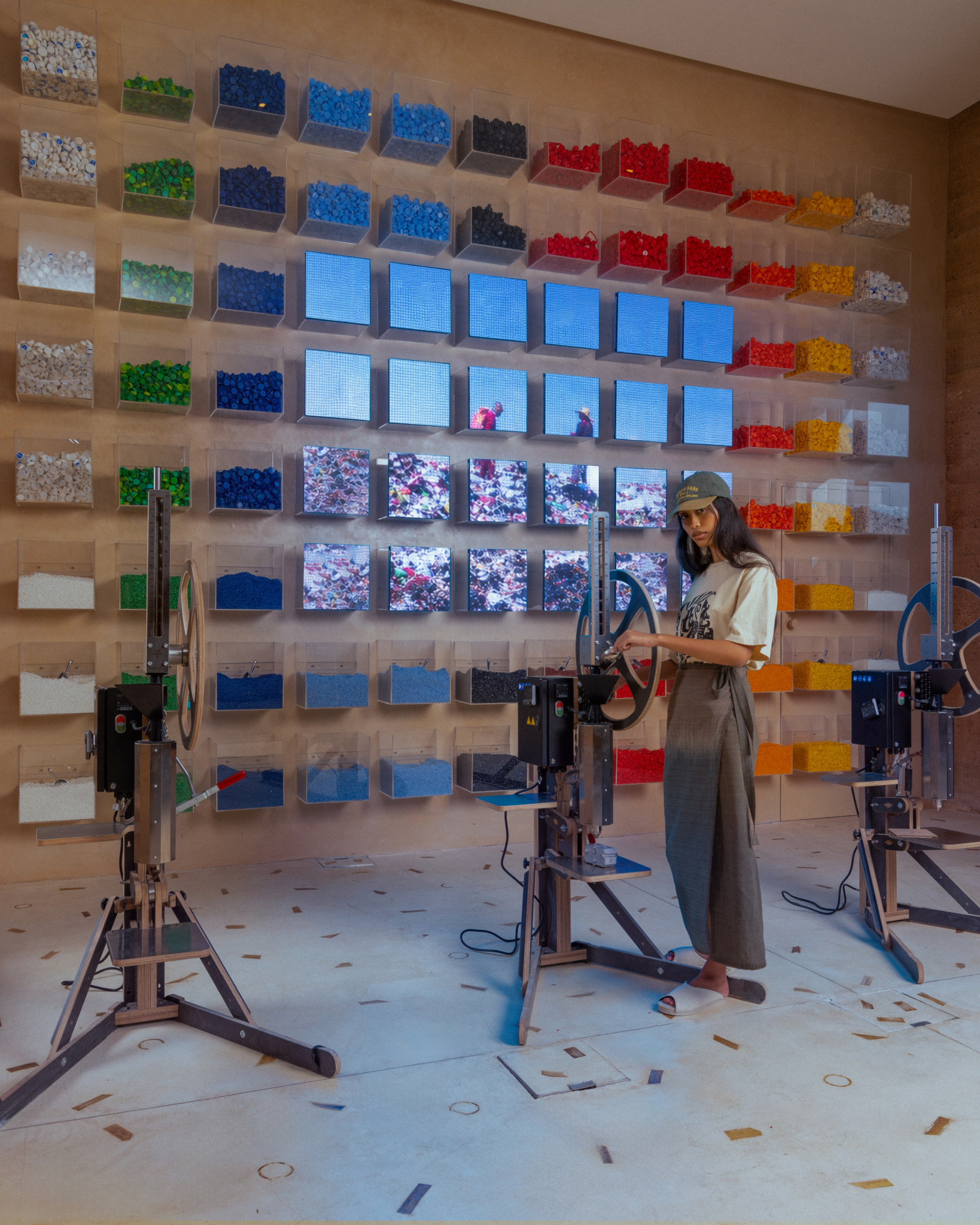
In the final two bays, visitors move from browsing to making. A working natural dye studio transforms food and plant waste into pigments used in workshops exploring dyeing, painting, and pattern-making. Beyond it, The Workshop features a wall of shredded HDPE plastic recovered from waste collectors across Bali and Java. The colorful fragments become part of the architecture, making the material’s previous life visible, while the surrounding space is dedicated to experimentation.
“While the first three bays focus on products and the stories behind them, the final two bays prioritize participation, inviting visitors to engage directly with materials and processes,” Gianotten explains.

Photography by Sharon Angelia
The store also connects to Desa Potato Head’s broader sustainability initiatives, including its Waste Lab and Follow the Waste Tour, which demonstrate how discarded materials can be recovered, processed, and transformed into new objects. For OMA, the project extends ideas explored in N*thing is Possible, a 2022 exhibition in Singapore examining the potential of zero-waste hospitality.
“Circularity therefore becomes something experiential rather than abstract,” says Gianotten.

Photography by Sharon Angelia
Designing around reclaimed resources required flexibility, especially around material consistency and availability. Rather than forcing materials into predetermined specifications, the team adapted the design to their natural characteristics and limitations.
“We discovered that circularity goes beyond material selection,” Herkarisma explains. “It is about rethinking how we design, build, operate, and engage people in the process of giving new value to resources that would otherwise be discarded.”

Photography by Sharon Angelia
At the Good Times General Store, the act of making is as visible as the finished product. By placing workshops alongside retail displays and allowing reclaimed materials to shape the architecture, OMA and Potato Head offer a model of shopping that encourages visitors to look more closely at what they consume—and what might otherwise be thrown away.

Now Trending



Reviving an Enduring Emblem of Simplicity, Loll Designs Launches the Here and There Collection
Developed in collaboration with design studio Argenta Park, the “people and nature first” brand reprises conservationist Aldo Leopold’s humble yet ingenious bench as a family of low-maintenance, sustainable outdoor furnishings.