

For more than a decade, the original Osteria Morini was a constant in New York’s dining scene. The Northern Italian restaurant, opened in 2010 under chef Michael White, quickly became a go-to Soho spot. So it came as a surprise when Altamarea Group announced that Jun. 1, 2024, would be its final day of service. At the time, the restaurant group confirmed plans to relocate a new, “refreshed” version of the longtime favorite—and that recently came to life as Piccolo Morini.

Photography by Mcguire McManus
Opened in June, Piccolo is just a short walk down the street from the original Morini. The new 92-seat restaurant trades some of its predecessor’s formality for a more social, energetic approach centered on handmade pasta, martinis, and shareable plates.
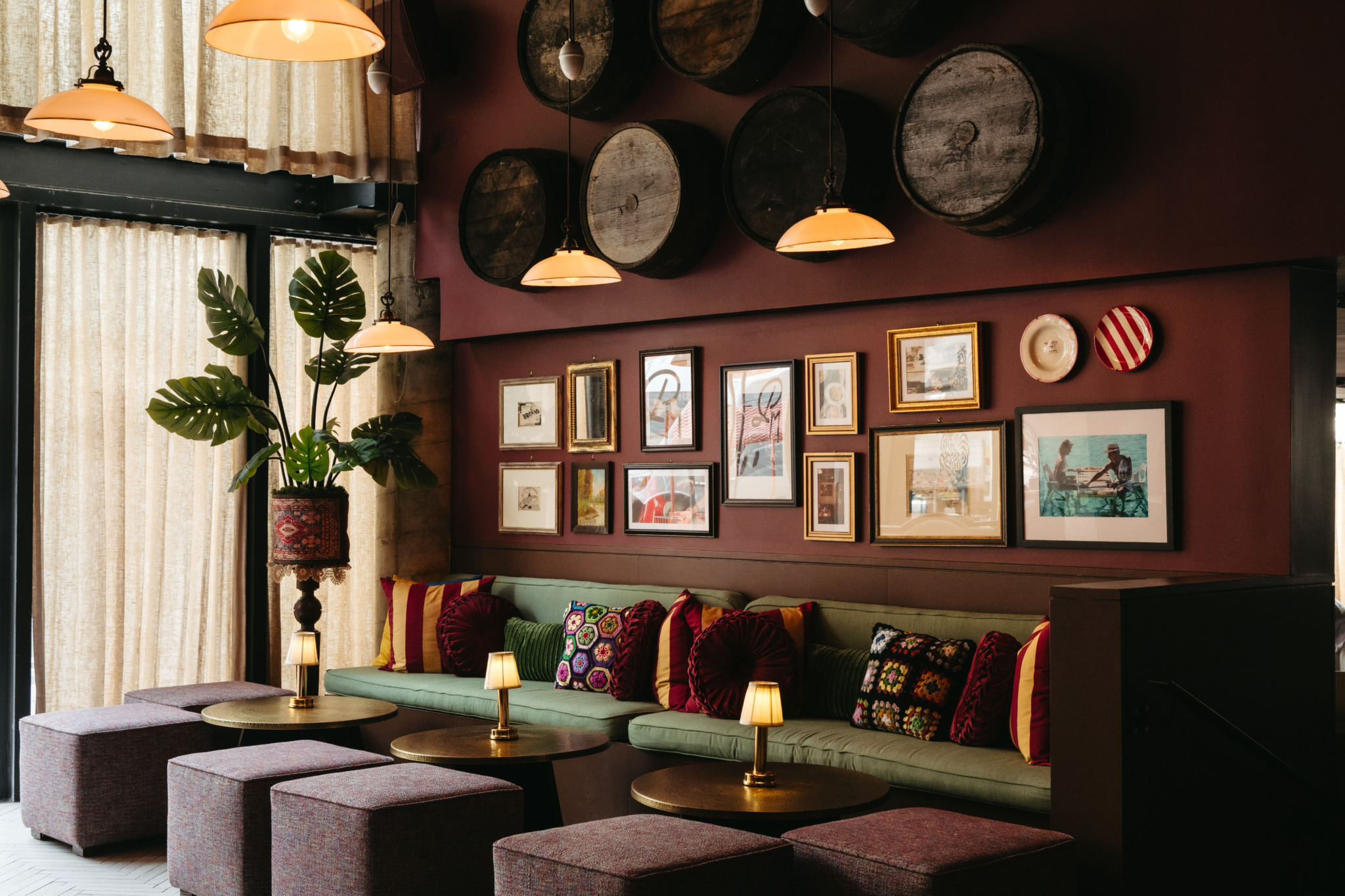
That shift extends to the interiors. “We didn’t erase the old identity to create the new one,” says Alsun Keogh of Nusla Design, who led the project. “We literally layered the new generation onto it.” To translate that evolution into the interiors, Keogh started with the design concept of an Italian grandmother’s living room, reimagined by her cool grandchild.

Photography by Mcguire McManus
“It was about loosening it up,” she explains. That meant keeping pieces with a genuine connection to the original restaurant, including its solid-wood butcher-block tables, restored multi-colored trattoria chairs, vintage mirrors, and Il Fanale Murano-shade lighting—but throwing out the traditional rules for using them.
In the new space, those familiar pieces now sit against oxblood walls, a dark ceiling, forest green banquettes, linen café curtains, raw concrete, contemporary art, and unexpected patterns and textures.

Photography by Mcguire McManus
“We kept thinking of Piccolo as the younger generation taking possession of something they genuinely love,” Keogh says. “They’re not throwing out their grandmother’s furniture—they’re putting their own things next to it, changing the music, and inviting their friends over.”
Just as a real grandmother’s living room might contain pieces that are inherited, practical, or even “slightly questionable,” Keogh explains, she sourced items from previous Morini restaurants, auctions, vintage dealers, flea markets, garage sales, and even her own collection.

Photography by Mcguire McManus
Take a look at the hutch in the dining room: It contains an old Morini wine-cork bucket next to antique books, family silver, vintage Italian signs, a new lamp, a Le Creuset pot, and a live plant. Elsewhere, an intentionally unstructured gallery wall brings frames, photographs, maps, needlepoint, and decorative plates together without the formality of a grid.

Photography by Mcguire McManus
Color was another way Keogh signaled that Piccolo belonged to a different generation. A palette of deep oxblood burgundy, forest green, amber, burnt orange, coral, and flashes of yellow could belong in an older Italian interior, but the saturation is amped up to feel more contemporary.

Photography by Mcguire McManus
The clearest expression of the generational shift is outside: The sign features Morini in the original large orange letters, with Piccolo added above in loose yellow neon script. “Piccolo is lighter and cheekier, almost as though someone came along afterward and wrote their name above it,” the designer says. “In a way, that’s the entire project in two typefaces.”

Photography by Mcguire McManus
Back inside, the restaurant is divided into two distinct moods: a warm, intimate dining room and a lively neighborhood bar. The designs suit different kinds of evenings—but both work together. Keogh imagines the dining room as a place to bring your parents, have a long dinner, and order a “serious” bottle of wine, while the bar is darker, younger, and a “little less behaved.”

Photography by Mcguire McManus
That flexibility also gets at the larger question Keogh faced with Piccolo: How do you bring back a restaurant people already know without simply rebuilding it?
At 40 Kenmare Street, the answer isn’t a replica of Osteria Morini or a complete break from it. The old tables, chairs, mirrors, lights, and even the name remain recognizable, but they’re surrounded by enough new personalities to give Piccolo an identity of its own.