A well-designed product can solve problems, but getting that product into the hands of the people who need it is another challenge entirely. Increasingly, designers are being asked to think beyond form and function to consider business models, manufacturing, marketing, and more.
In the latest episode of SURROUND Presents, METROPOLIS Editor-in-Chief Avi Rajagopal explores this evolving role with Souvik Paul, founder of medical device startup Aurie, and Sinclair Smith of the School of Visual Arts (SVA) MFA Products of Design program. Their conversation examines what it takes to move from identifying a problem to developing a viable solution—and why entrepreneurship is becoming an essential part of a designer’s education.
For Paul, the journey began on Wall Street, where he worked in finance before deciding to pursue a career in industrial design. Just two weeks before starting graduate school at SVA, his future sister-in-law sustained a spinal cord injury in a car accident. The experience fundamentally changed his approach to design, prompting him to dedicate his studies to understanding how products and services could improve the lives of people living with disabilities.
That work eventually led to Aurie, a medical device startup developing a reusable catheter system for people living with spinal cord injuries, spina bifida, and multiple sclerosis. Unlike conventional single-use catheters, Aurie’s catheter can be reused up to 100 times. The compact system automatically cleans, disinfects, and lubricates the catheter between uses. The approach reconsiders not only the physical product but also the economics of continued catheter use.
Yet designing the system was only one part of the challenge. After graduating, Paul worked as a design strategist at Johnson & Johnson, where he began to understand the difficulties of bringing new medical technologies to market. He eventually realized that if he wanted Aurie to exist, he would need to build the business behind it.
“If I believe that this product could—and should—exist in the world, I’m gonna have to do the legwork,” Paul recalled on SURROUND Presents. “I’m gonna have to take it across the finish line.”
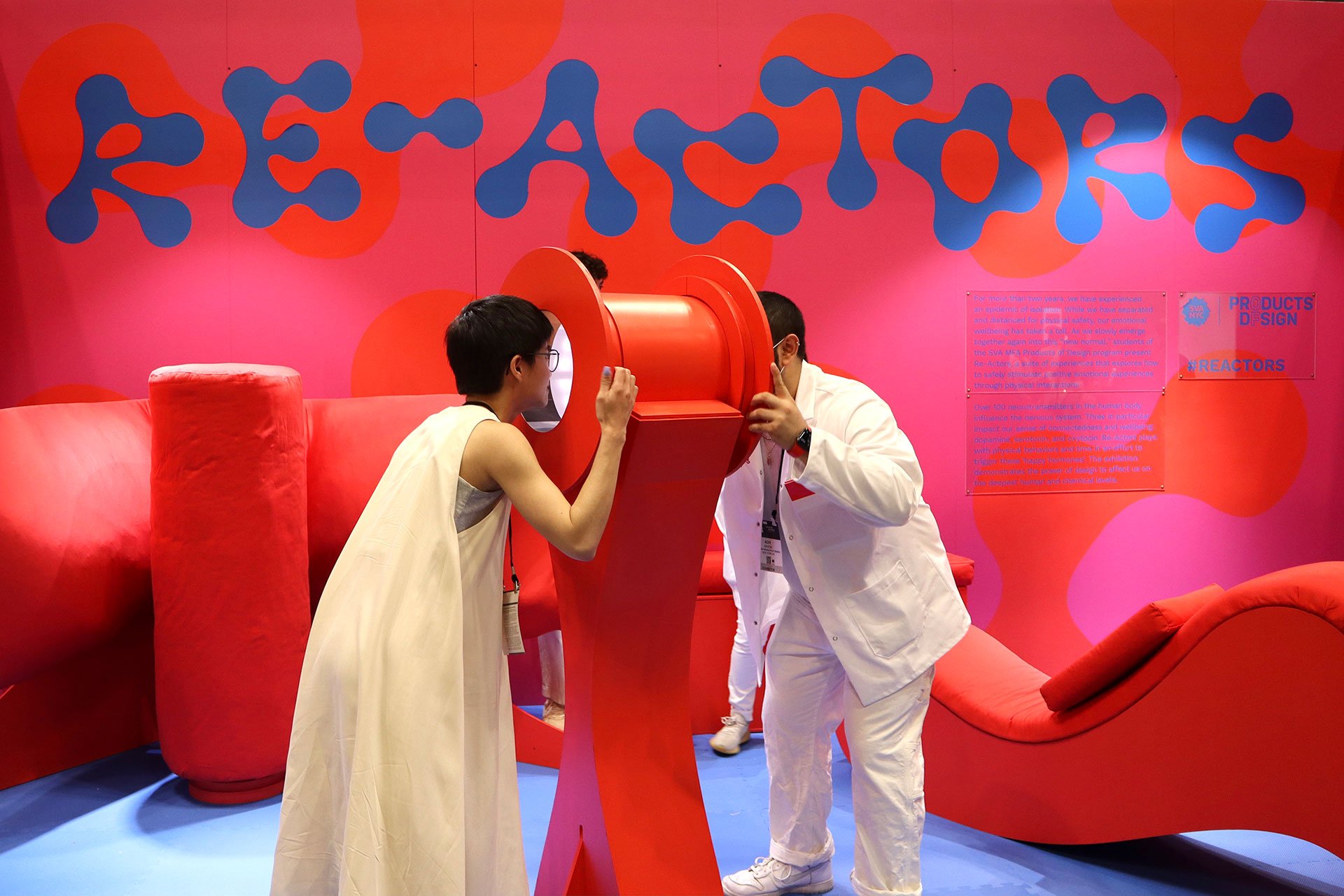
That realization speaks to a broader shift in design education. At SVA, Smith has been rethinking how the MFA Products of Design program prepares students to develop ideas beyond the prototype stage. Drawing on his experience running the school’s Ground Floor Incubator, he has integrated business modeling and entrepreneurship more directly into the curriculum, allowing students to develop the commercial frameworks for their thesis projects alongside the products themselves.
Paul’s experience illustrates this broader approach. For him, the skills developed through design education continue to inform his work, whether he’s collaborating with other designers, communicating with investors, or navigating the regulatory requirements of medical device development.
The conversation ultimately highlights how designers increasingly need to understand the larger systems that determine how—and whether—their ideas can make a difference.
Listen to the full episode of SURROUND Presents, presented by SVA, to hear Avi Rajagopal’s conversation with Souvik Paul and Sinclair Smith.
Editorial Transparency: This article was developed with the assistance of AI tools, which may have been used for research, outlining, editing, or copy refinement. Reporting, fact-checking, and editorial decisions were made by the Design Milk editorial team.