Scandinavian design is celebrated for light-filled spaces, pale woods, clean lines, and a sense of calm. Translating that aesthetic to a cruise ship, however, presents a spatial challenge—particularly when compared with the backdrop of the oversized, ornate interiors typical of mass-market cruise liners.

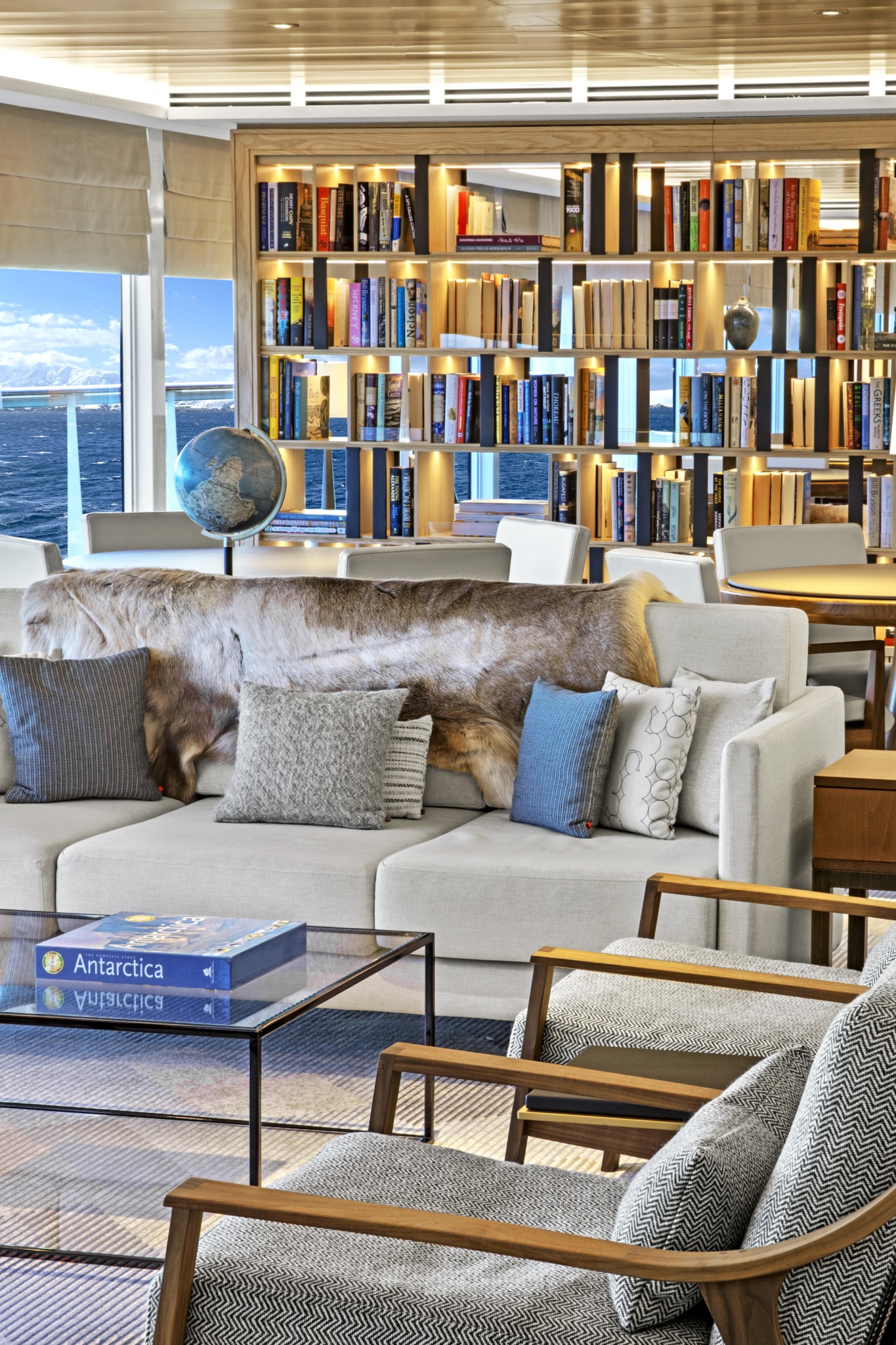
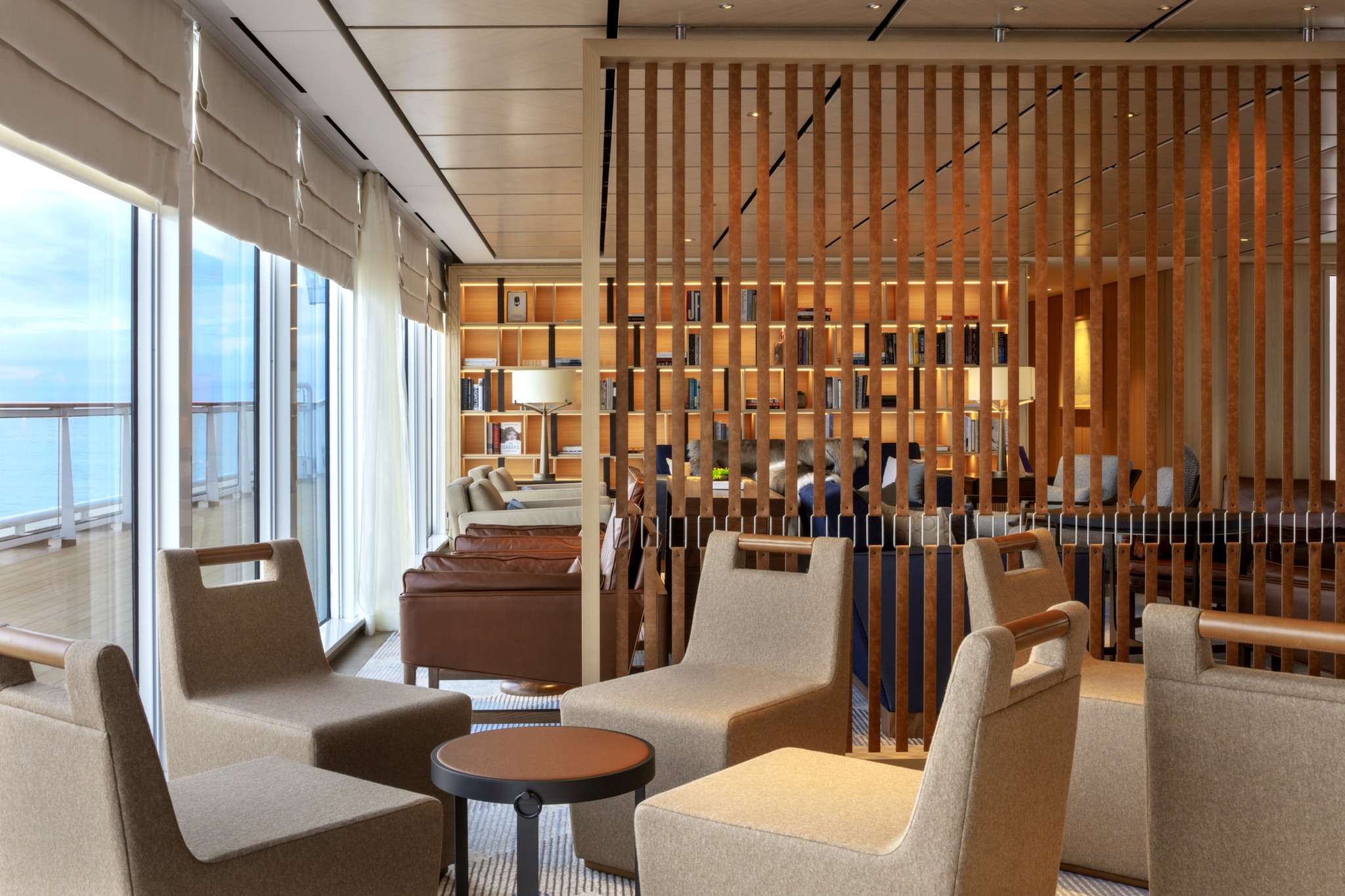
Sunlight pours through the lounge’s expansive windows, illuminating pale wood, textured upholsterery, and warm leather furnishings that lend the space a residential feel. Photography courtesy of Viking.
Viking has made Scandinavian modernism central to its fleet’s design identity, creating onboard spaces that feel less like conventional cruise ships and more like considered residential interiors. Across the vessels, the design language reflects a contemporary interpretation of Scandinavian aesthetics, sometimes called “New Nordic,” through natural textures, tactile materials, subtle color, and sculptural, carefully proportioned furnishings.

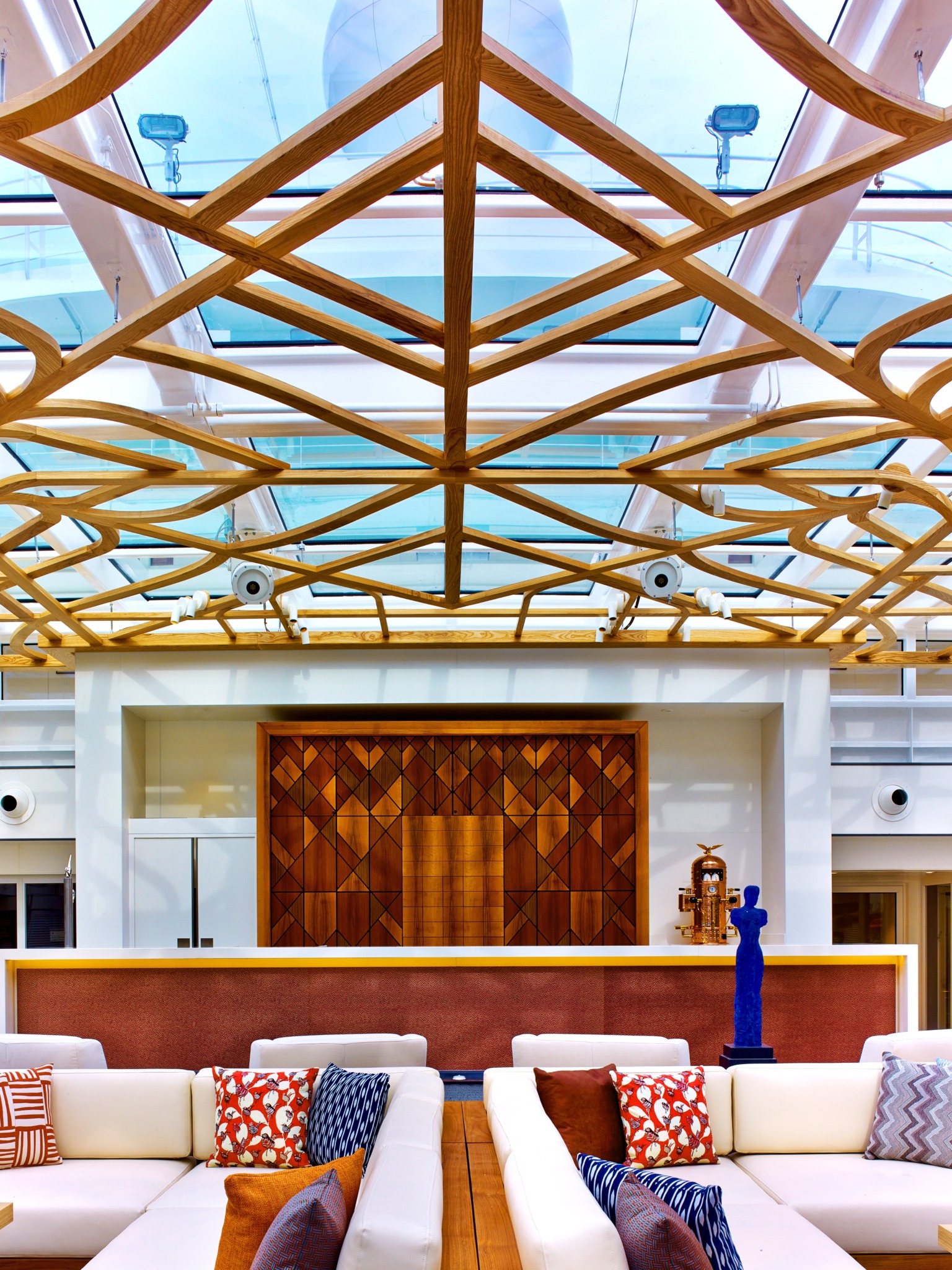
A sculptural wood lattice ceiling beneath expansive glazing brings natural light and organic forms into the Wintergarden lounge. Photography courtesy of Viking.
“Although ‘new Nordic’ is not terminology we use formally, traditional Scandinavian principles have evolved and are being interpreted for how people live and travel today,” says Richard Riveire, founding principal of Rottet Studio and the designer of Viking’s river, ocean, and expedition ships. “There’s still a strong sense of restraint, but it’s balanced by a feeling of being lived in. These days, Scandinavian design is less about minimalism and more about creating spaces that feel welcoming, thoughtful, and enduring.”

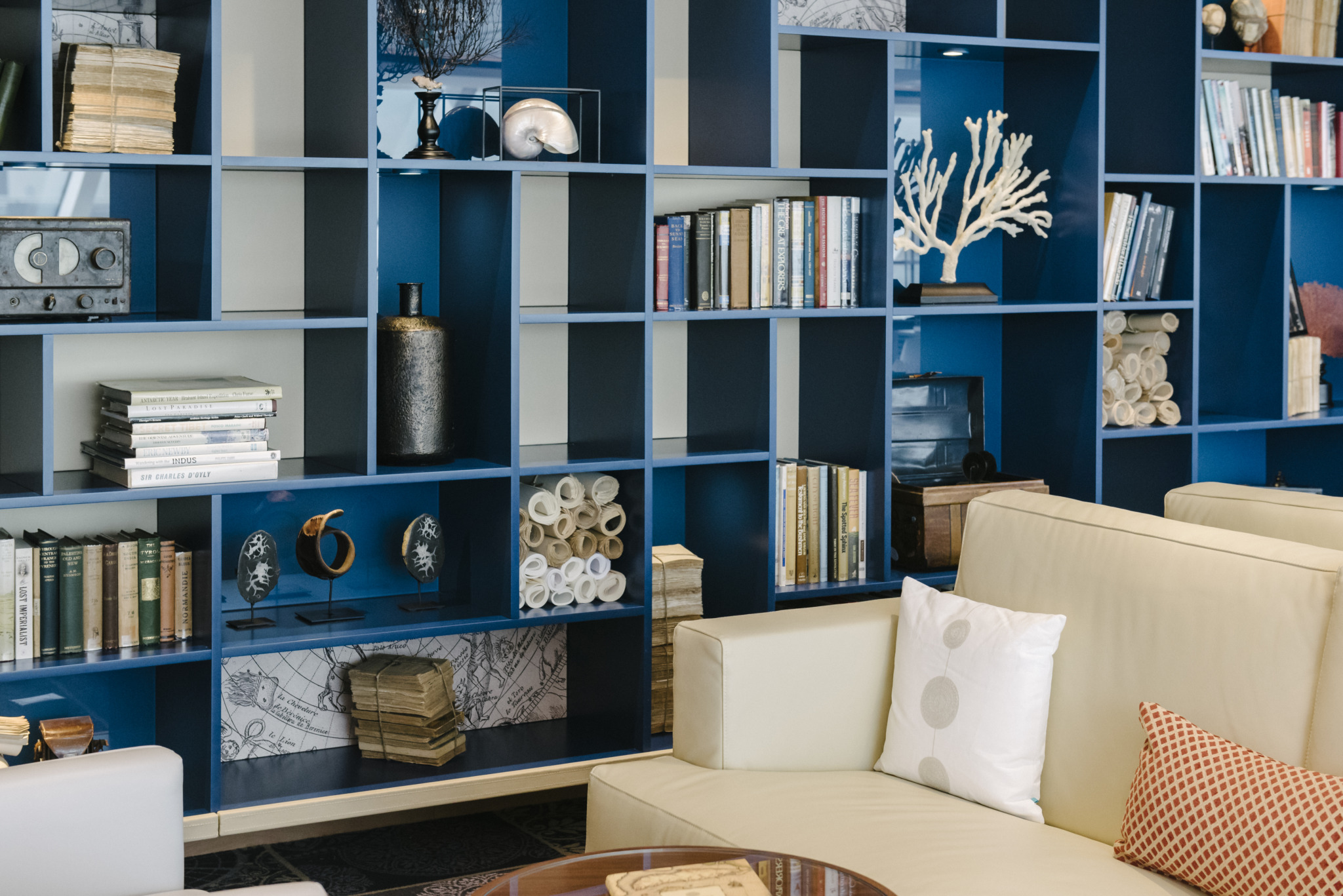
A deep blue built-in bookcase displays books, maps, shells, coral, and collected objects, connecting the residential atmosphere of Viking’s interiors with the theme of exploration. Photography courtesy of Viking
Drawing On Nordic Principles
Instead of treating Scandinavian design as a static visual style, Riveire and his team anchored the fleet’s interiors around five underlying principles: residential modernism, nature, craft, heritage, and exploration. This framework establishes a restrained architectural foundation, while fabrics, upholstery, rugs, and furniture introduce warmth and texture. “These tactile details make each space feel inviting and personal, while preserving the simplicity that is so central to Scandinavian design,” says Riveire.

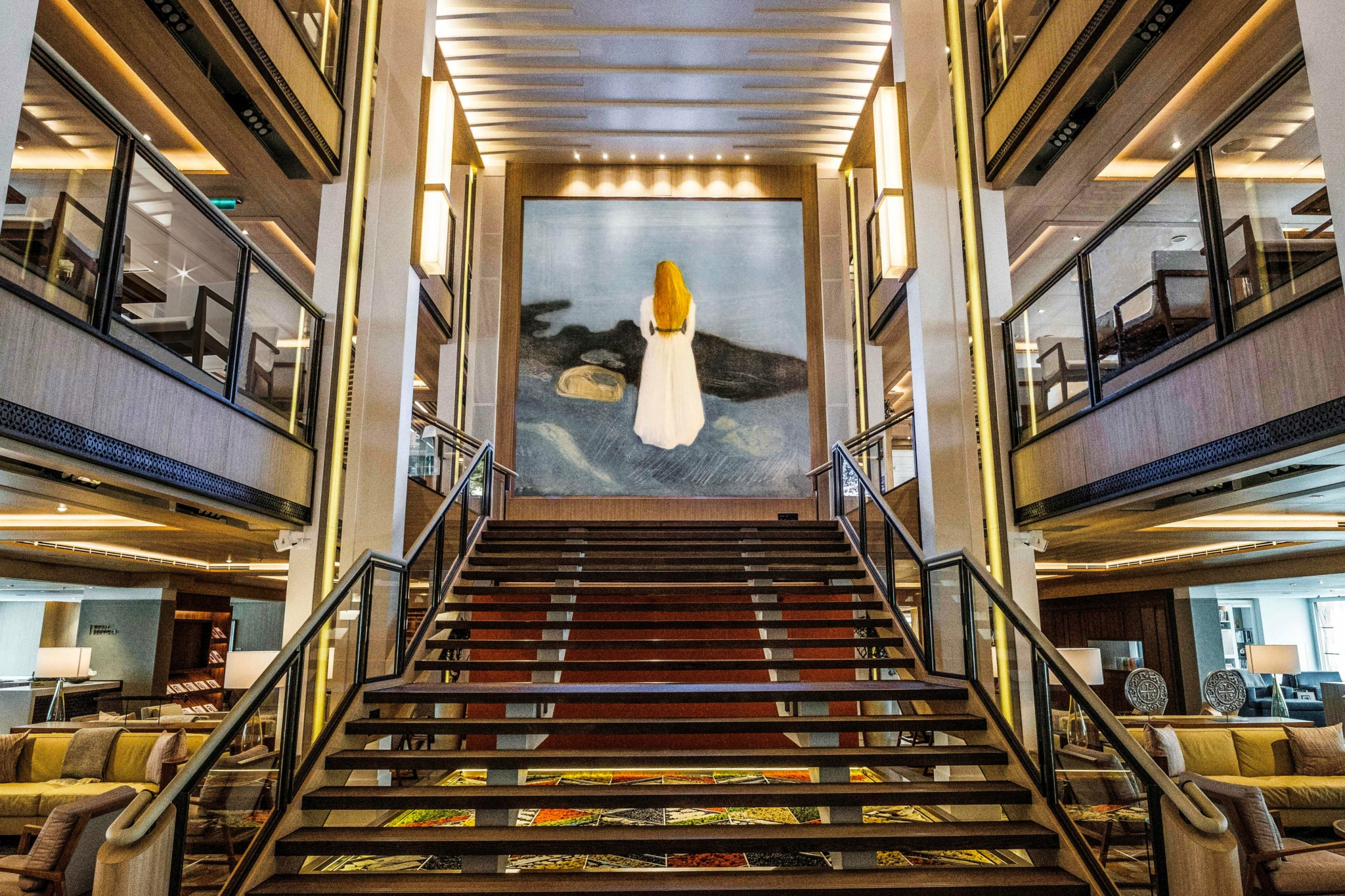
An artwork depicting a figure on a beach anchors the atrium stairwell, bringing Nordic art into one of the ship’s main circulation spaces. Photography courtesy of Viking.
Tapping Into Nordic Heritage
Throughout Viking’s fleet, Nordic heritage appears in a collection of regional artwork, including pieces by celebrated Norwegian painter Edvard Munch. Textiles and decorative objects extend those cultural references, featuring fabrics by Dutch designer Hella Jongerius alongside tabletop accessories by Finnish architect Alvar Aalto.
“That heritage connects the design to Norwegian culture and folklore, while exploration reminds us that this is a ship designed for people who are curious about exploring the world,” says Riveire. “So maps, globes, libraries, constellations and other references to exploration play a meaningful role in our designs.”

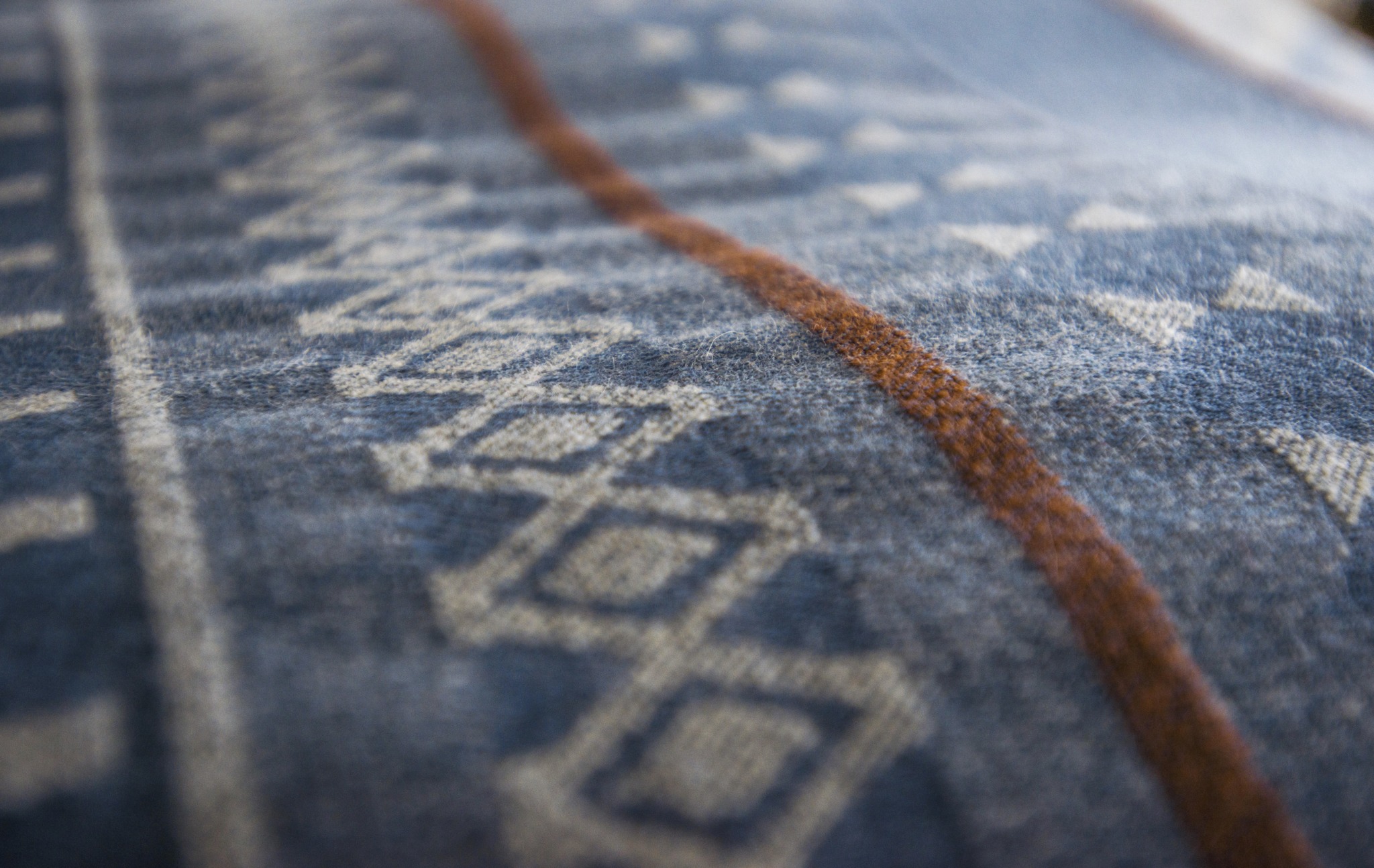
A traditional Norwegian Marius blanket brings a familiar geometric knitting pattern into the staterooms, referencing a longstanding Norwegian textile tradition. Photography courtesy of Viking.
Mastering Materiality and Craft
Material choices help give Viking’s expansive public spaces a more intimate, residential character. Light woods, natural woven textiles, and stone bring warmth, texture, and visual depth to the staterooms and public areas. “Craftsmanship is fundamental because it gives a space a sense of humanity and authenticity,” says Riveire. “Our design calls for furniture, artwork, textiles, and decor that evoke handmade traditions or honor historic craftwork.” These references to craft appear throughout the ship, in details such as woven leather lounge chairs in the living room areas, the intricate ceiling latticework, and sculptural wood wall accents.

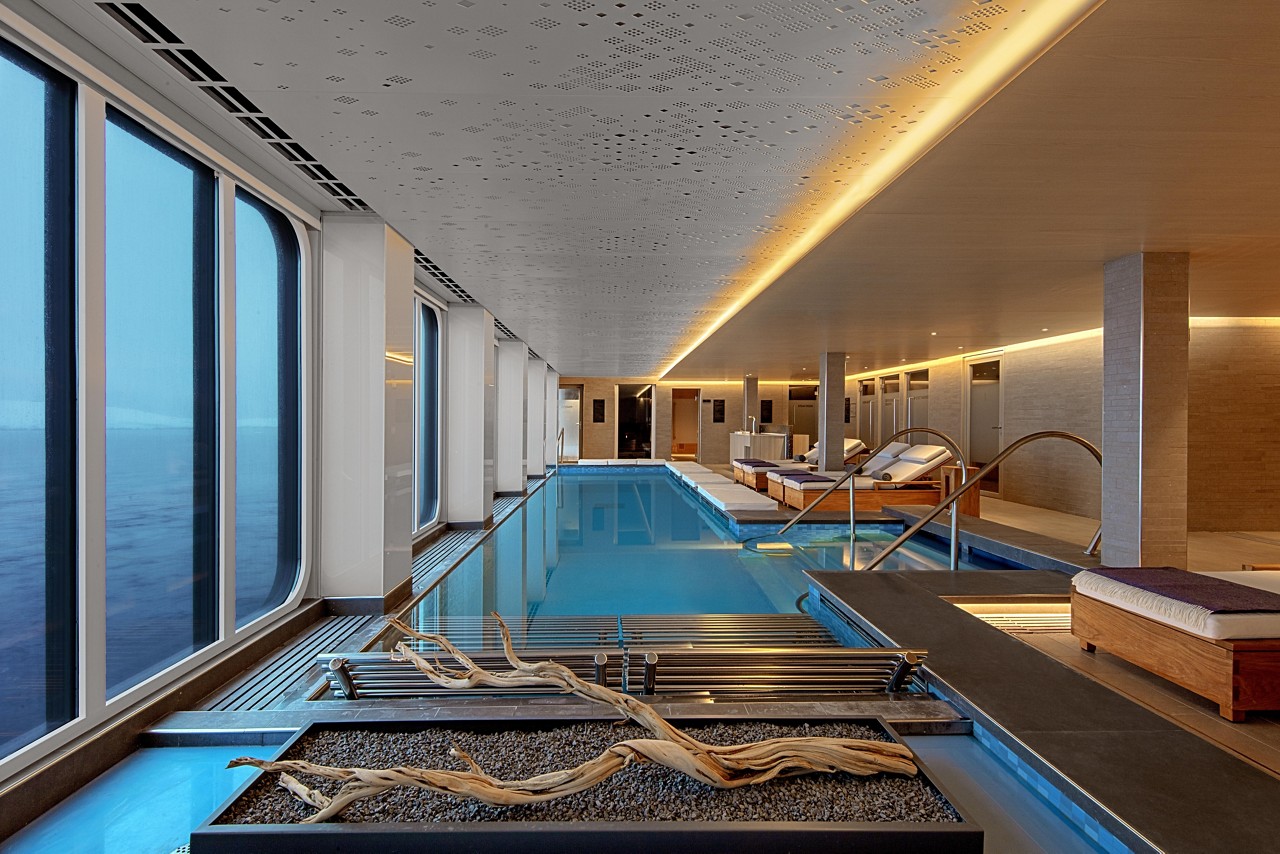
Dramatic glass walls surround the spa’s hydrotherapy pool, pairing natural stone, sculptural driftwood, and wood loungers to create a serene retreat that brings Scandinavian simplicity indoors. Photography courtesy of Viking.
Integrating Biophilic Design
The Nordic landscape—where birch trees, flora, and wildlife symbolize renewal—informs both the materials and sensory details throughout the ships. References to driftwood, lichen, and moss can be found in staterooms and lounges. In the public bathrooms, guests hear birds softly chirping in the background, while birch tree branches in planters and floor-to-ceiling forest wallpaper appear throughout the common areas and spa. “It’s where the landscape and wildlife outside become part of the indoor experience,” says Riveire.
In the spa, amenities such as a snow grotto, cold plunge, and thalassotherapy pool draw on Nordic bathing traditions. “Water reinforces the connection to the outdoors, making the spa an extension of the Nordic design philosophy,” says Riveire. Slate, stone, and glass reinforce the spa’s restrained, minimalist material palette.

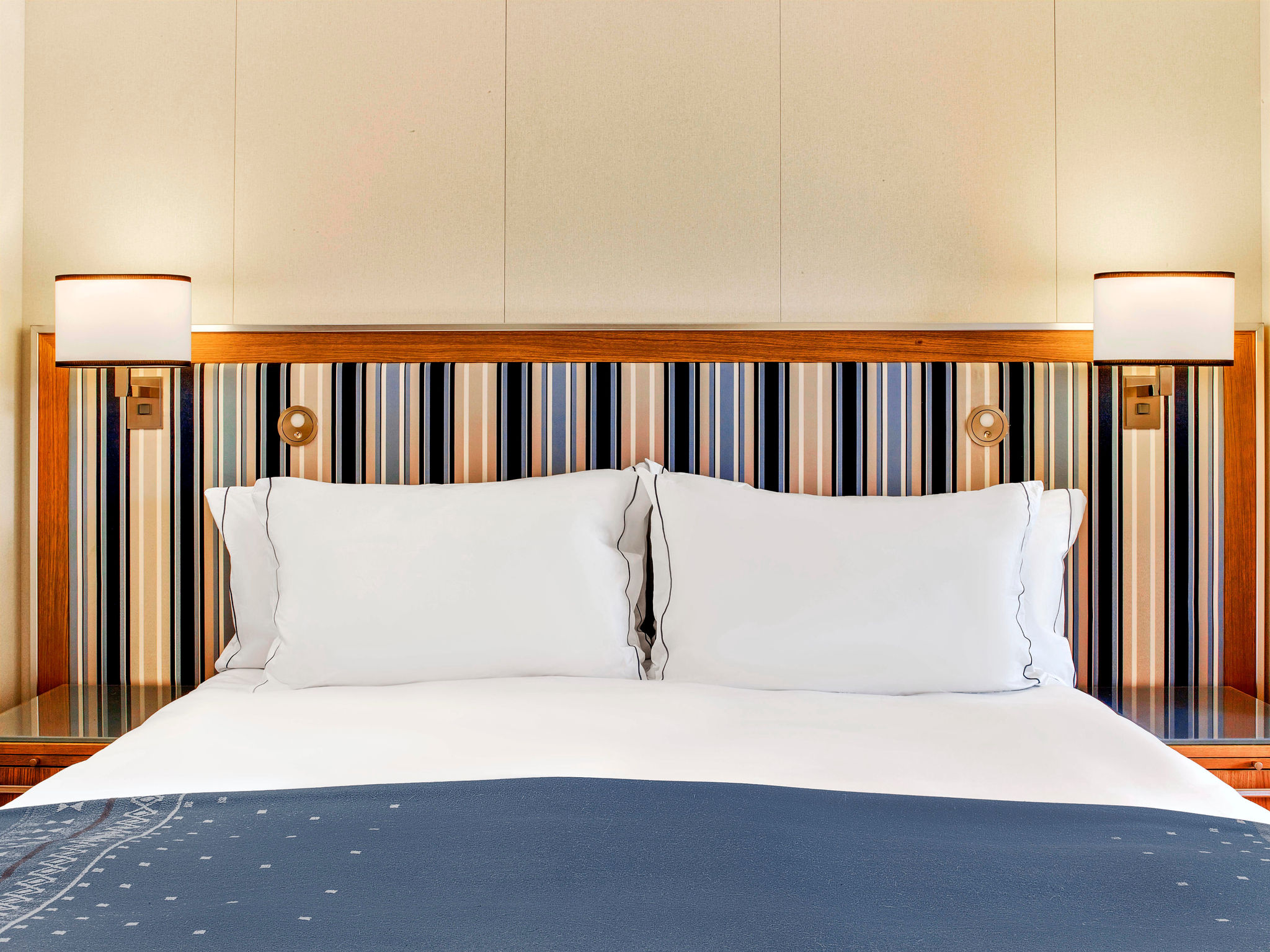
Navy and slate blue stripes add a measured dose of color to the upholstered headboard, complementing the stateroom’s otherwise understated palette. Photography courtesy of Viking.
Layering Subtle Color
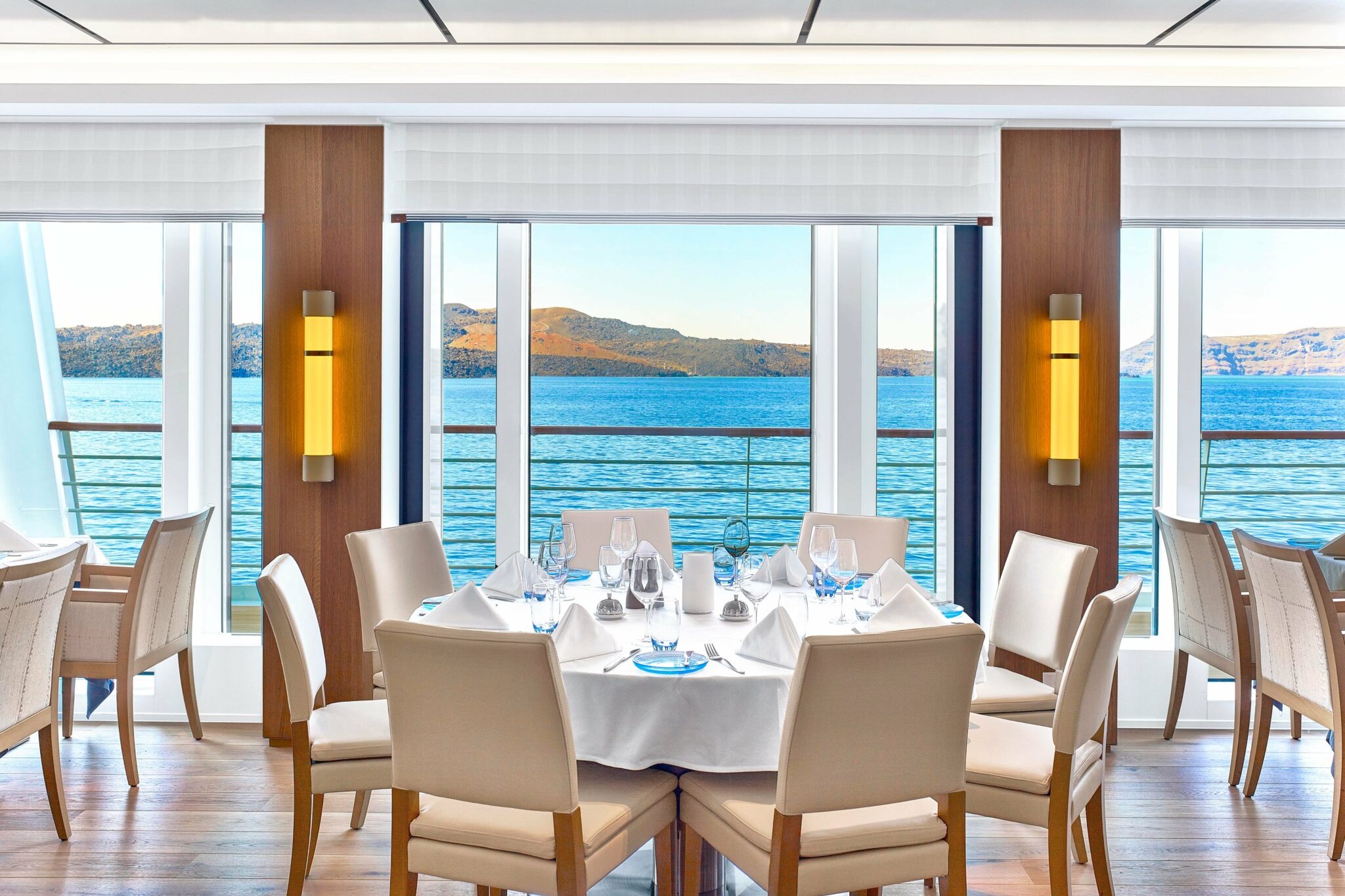
Rather than relying on stark whites or an entirely neutral palette, the ship’s interiors layer warm creams, sandy tans, and other earthy tones drawn from nature. Navy and slate blue stripes appear on upholstered stateroom headboards, while translucent aqua glass side plates and water glasses introduce light-reflecting accents to restaurant table settings. Orange and rust accents in throw pillows and carpets provide contrast without disrupting the overall palette. “These touches reflect a more expressive side of Scandinavian design,” says Riveire. “We want guests to experience color, but without introducing a lot of visual noise.”

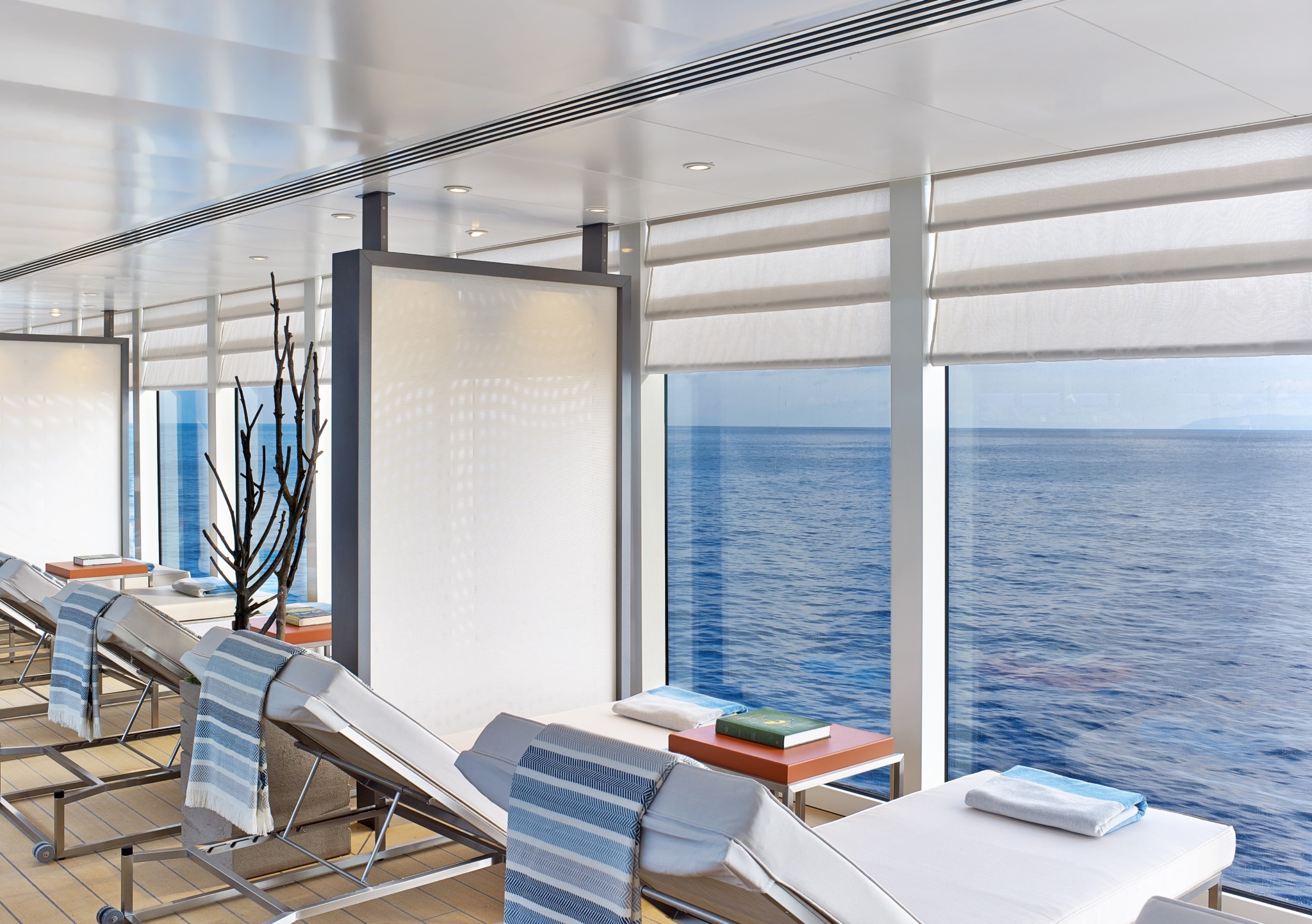
A wall of glass frames ocean views from the pool deck, where pale loungers, blue-and-white textiles, and natural wood maintain the understated palette. Photography courtesy of Viking.
Framing the Natural Landscape
Floor-to-ceiling windows do more than admit daylight; their placement turns the passing landscape into a focal point of the interiors. “A Norwegian fjord, European river, or Antarctic landscape becomes part of the room, an ever-changing piece of art within the interior,” Riveire says. Sightlines and spatial planning help connect the rooms to their changing surroundings.
On land, designers can anticipate the position of the sun and how daylight will move through a home or building. “At sea, the sun is far more variable—not only in direction, but also in duration,” Riveire says. “During Arctic summers, for example, it may never set.” The interiors must therefore accommodate changing light conditions throughout a voyage. Architectural openings, curtains, and shades adjust as conditions shift, balancing dynamic daylight with interior comfort and privacy. “Spaces are connected to the world outside, while also creating more intimate moments indoors,” says Riveire.

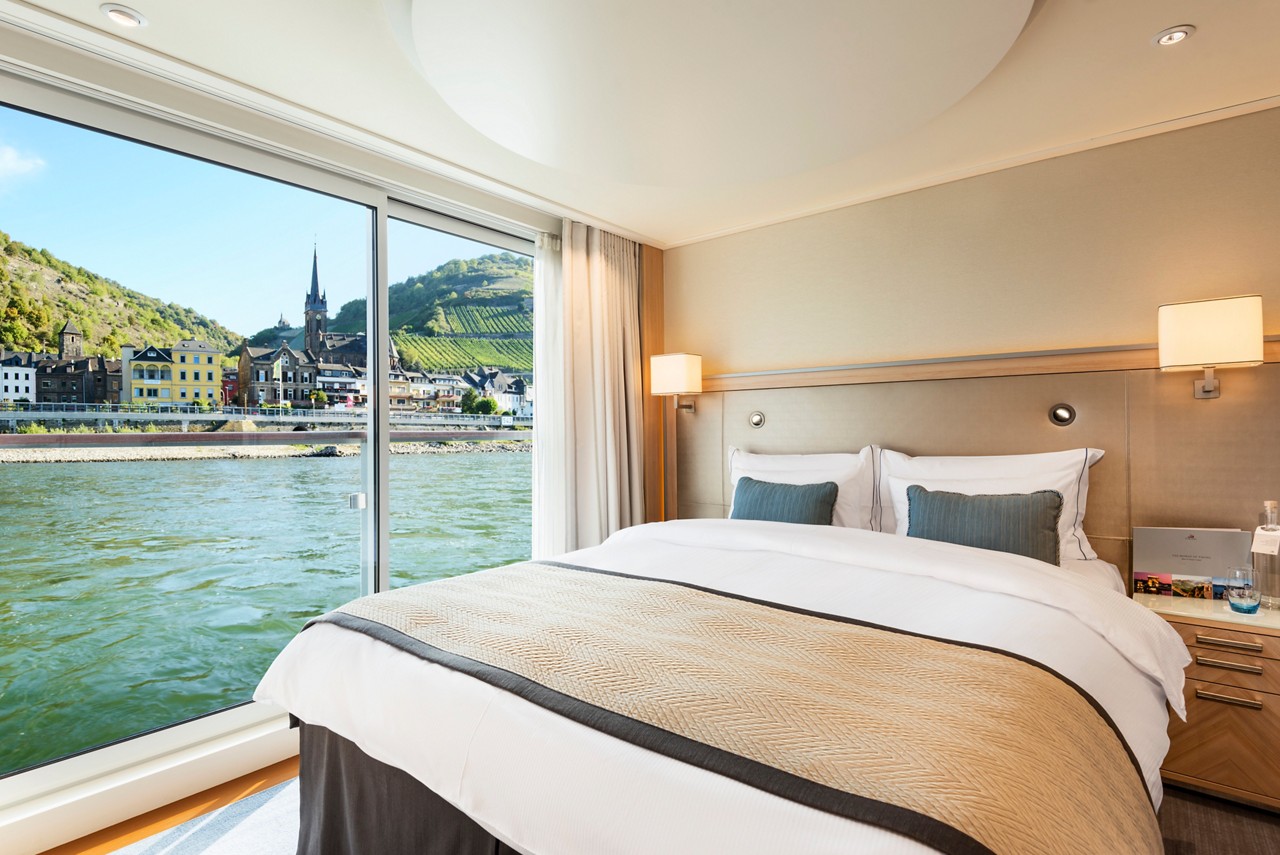
A large window frames the passing river landscape, while pale wood, soft neutrals, and streamlined furnishings keep the suite’s interior visually quiet. Photography courtesy of Viking.
Concealing Technology and Softening Acoustics
A residential atmosphere depends on more than visual details. Sound, temperature, and lighting also shape how comfortable a space feels. To the interiors’ uncluttered appearance, technology is integrated discreetly into wood joinery and architectural details, such as underfloor heating in stateroom bathrooms or subtle lighting controls. Acoustic design plays an equally important role in creating a sense of hygge at sea; sound-absorbing textile wall panels, acoustic carpet underlays, and upholstered surfaces help reduce ambient noise in public areas. “In the Scandinavian tradition, design serves human comfort without demanding attention,” says Riveire. “Technology and acoustics are integrated so subtly that you don’t notice how the space functions—only how calm it makes you feel.”

Maritime artifacts, books, a globe, and warm wood shelving create a residential-style display that reflects Viking’s Scandinavian emphasis on craftsmanship and history. Photography courtesy of Viking.
Designing Intimate Spaces at Scale
Capturing a lived-in, residential warmth can be challenging on a vessel with expansive public areas like multi-level atriums, especially when Scandinavian design favors intimate and approachable spaces. “Creating a residential feeling within a ship requires careful attention to proportion,” says Riveire. “At Viking, we subscribe to a ‘cocoon’ principle—a house-within-a-house concept—where the interior provides a quiet and serene onboard environment, rather than constantly competing for attention.” This principle guides the arrangement of open, social hubs and smaller, quiet seating nooks. “Every furniture grouping has been carefully considered for how guests actually move through and use the space,” adds Riveire.