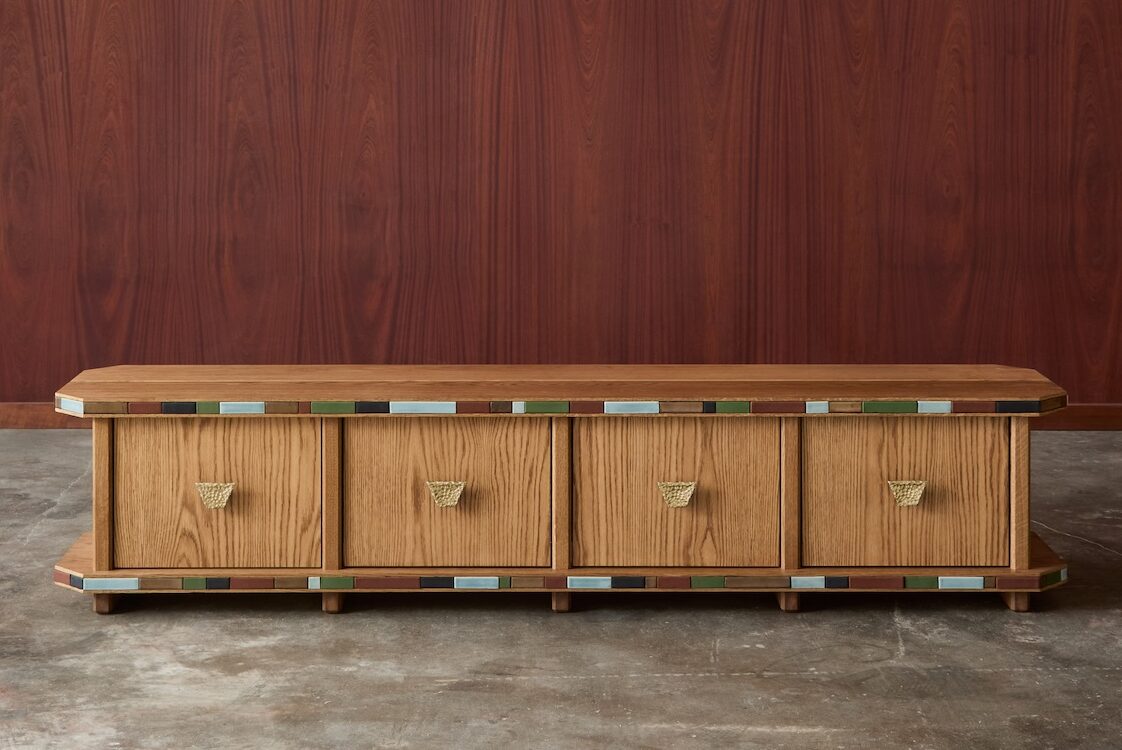
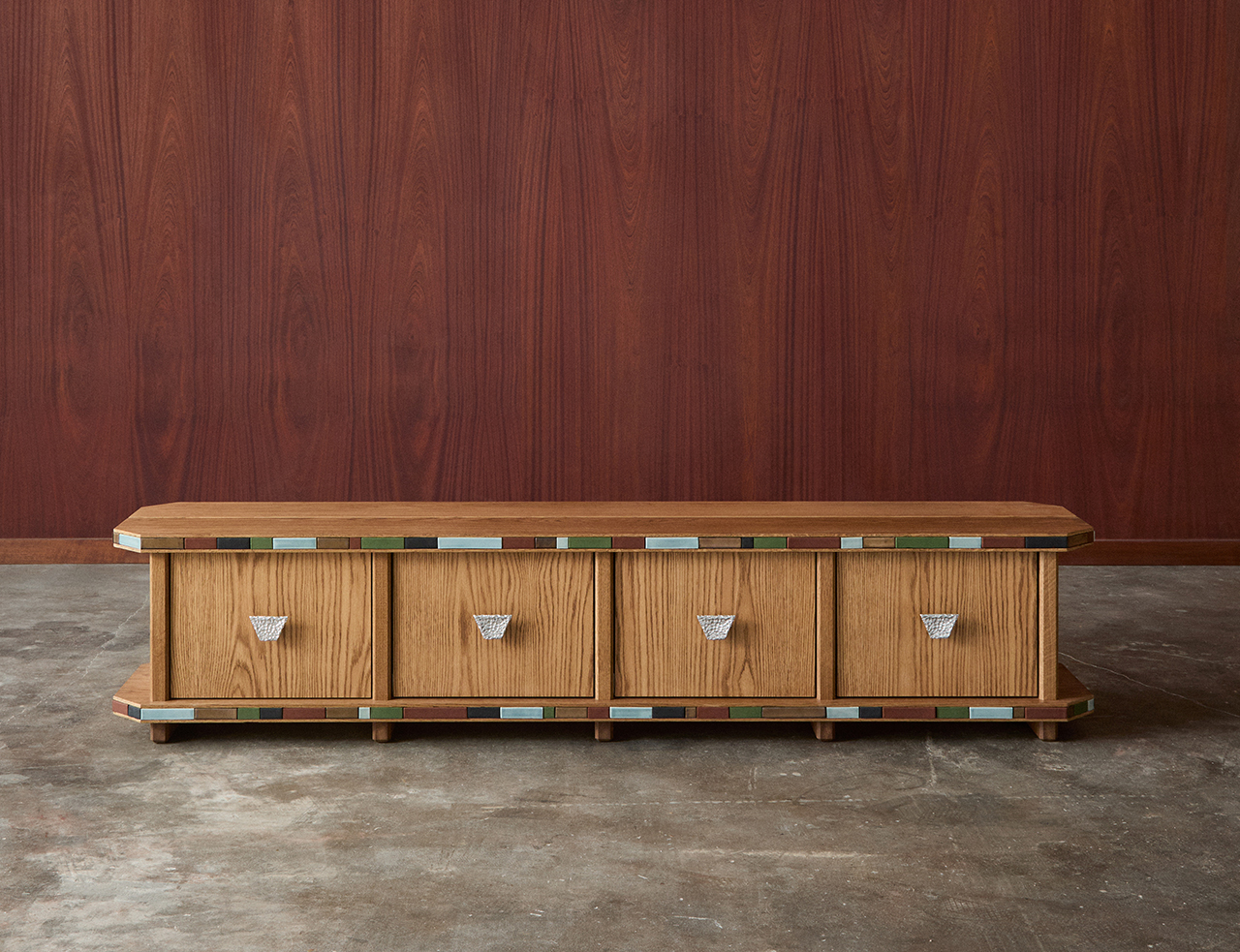
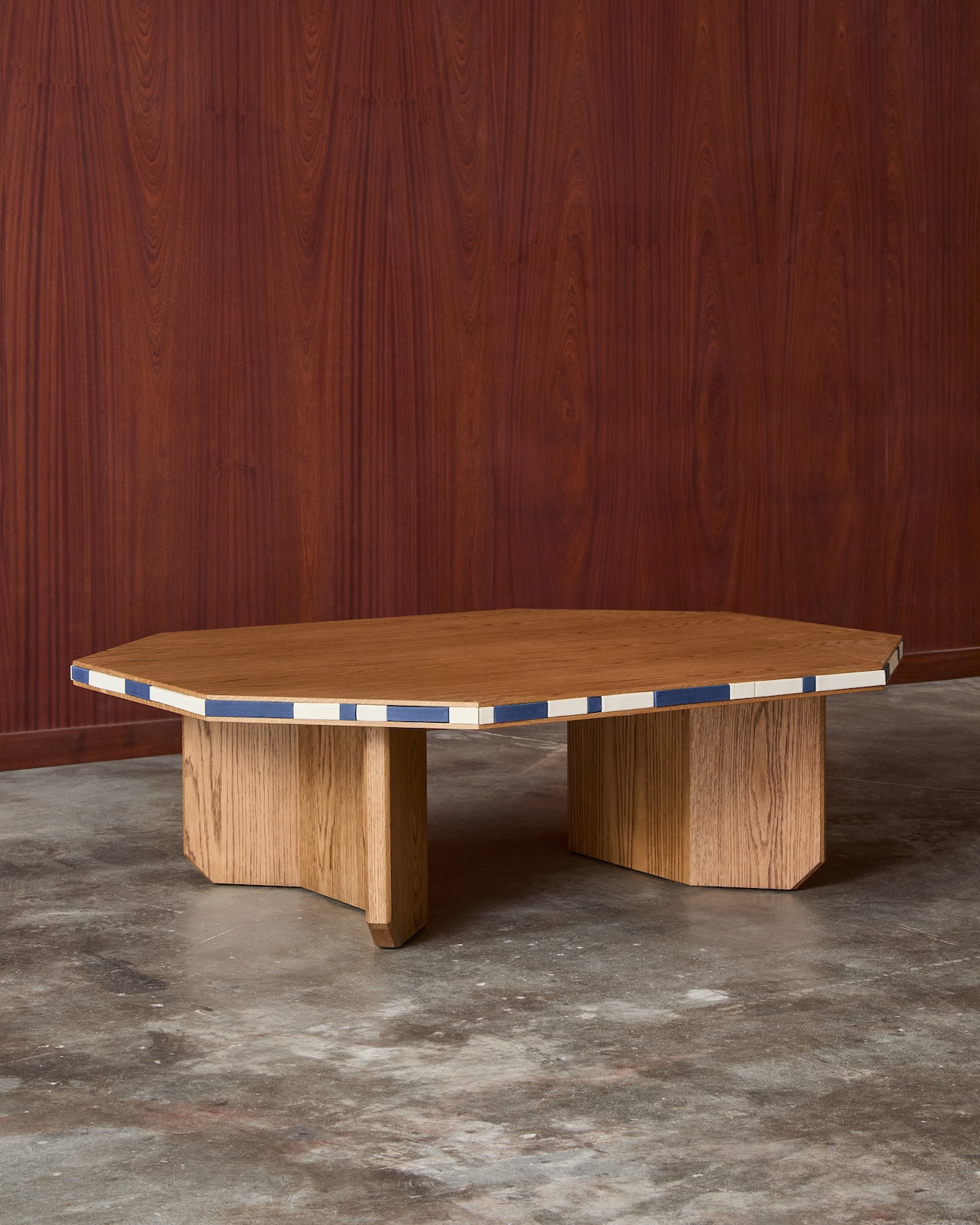
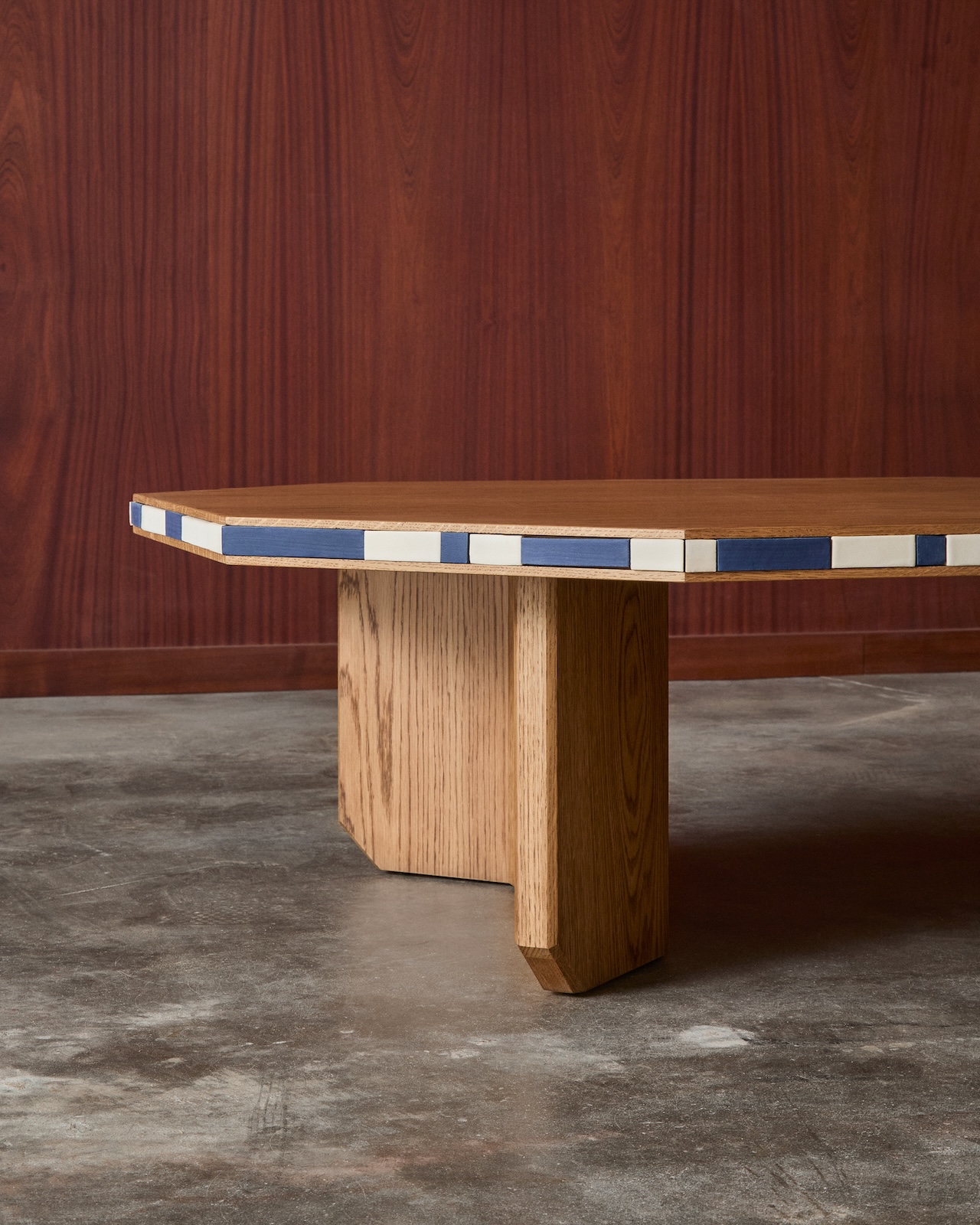
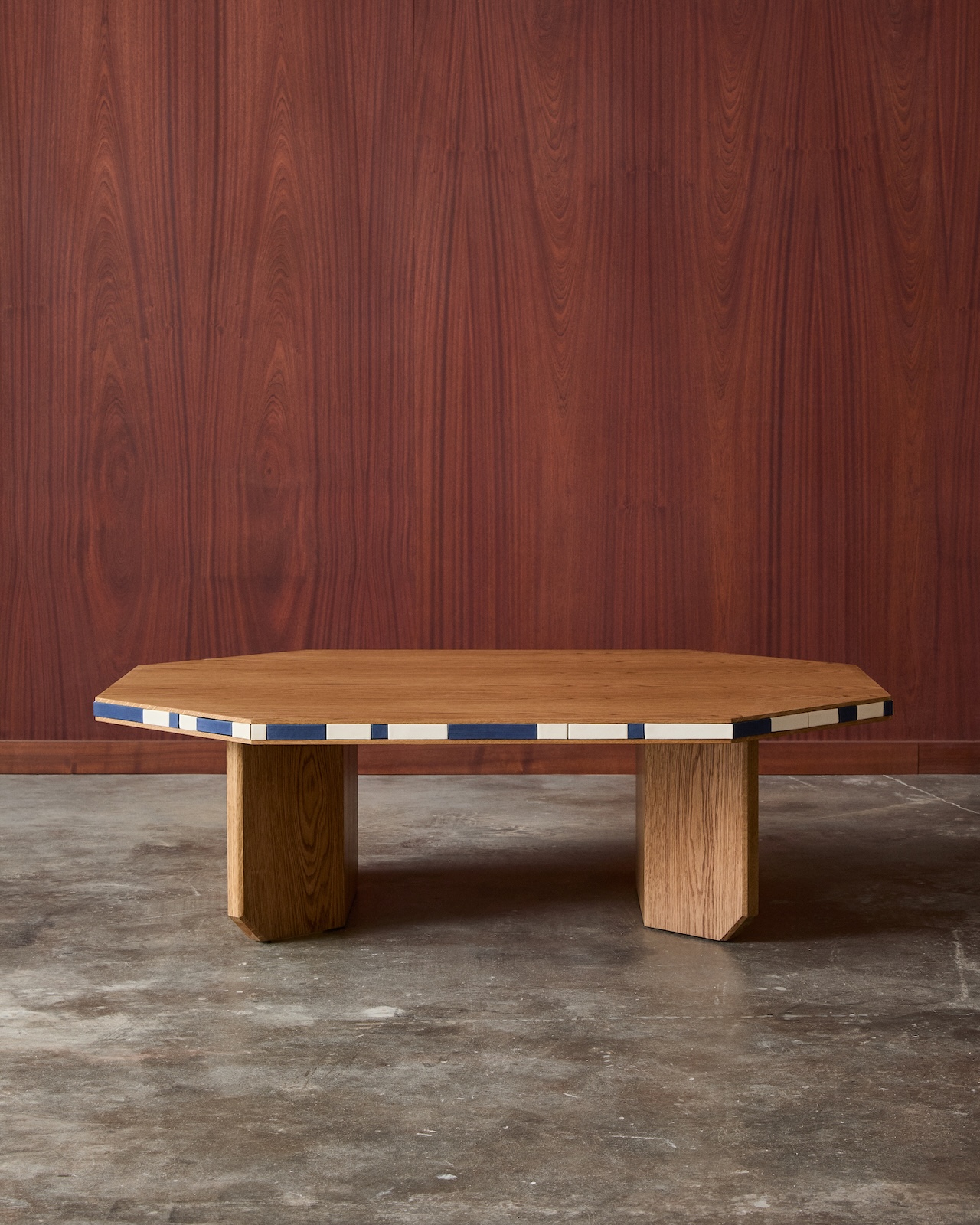
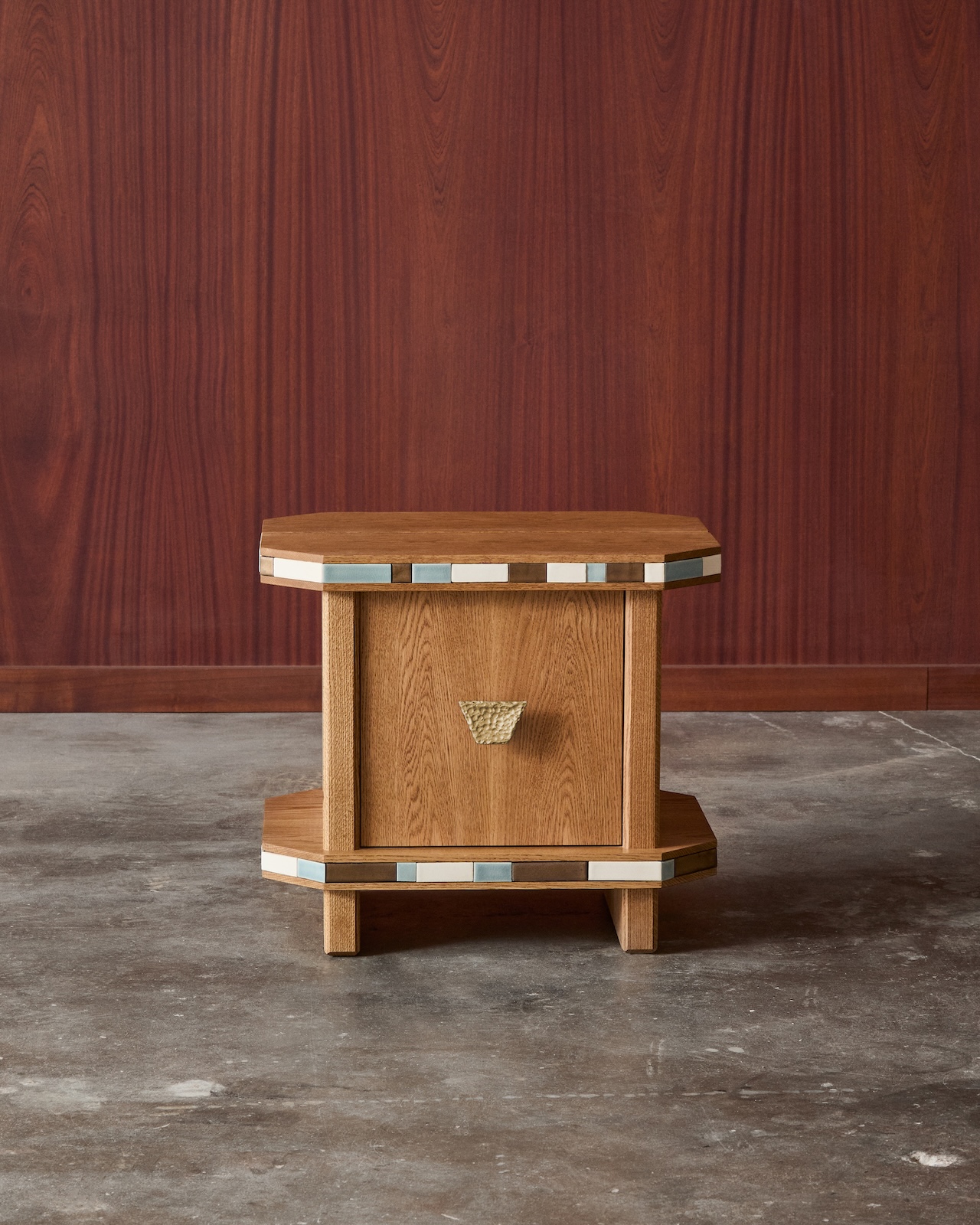
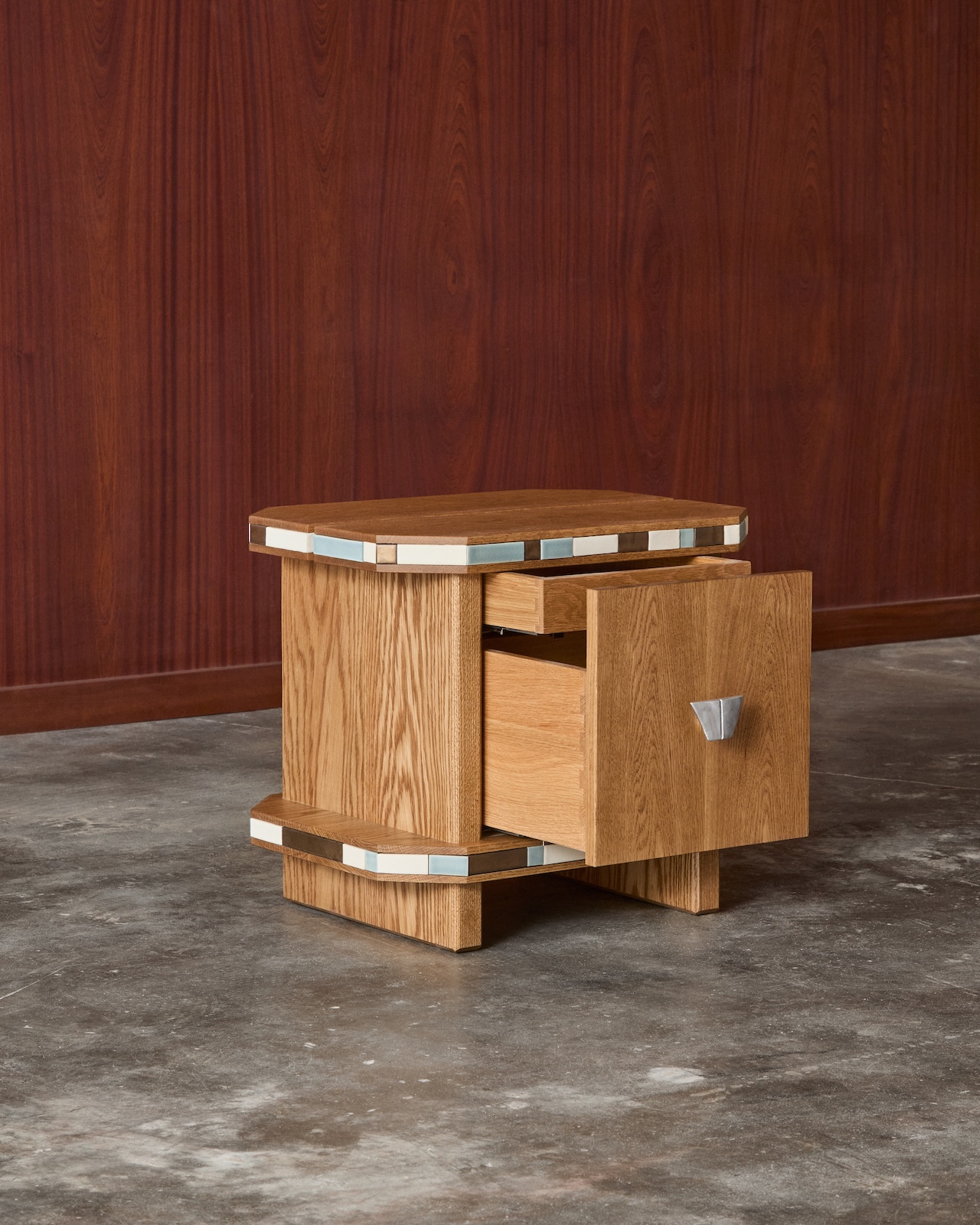
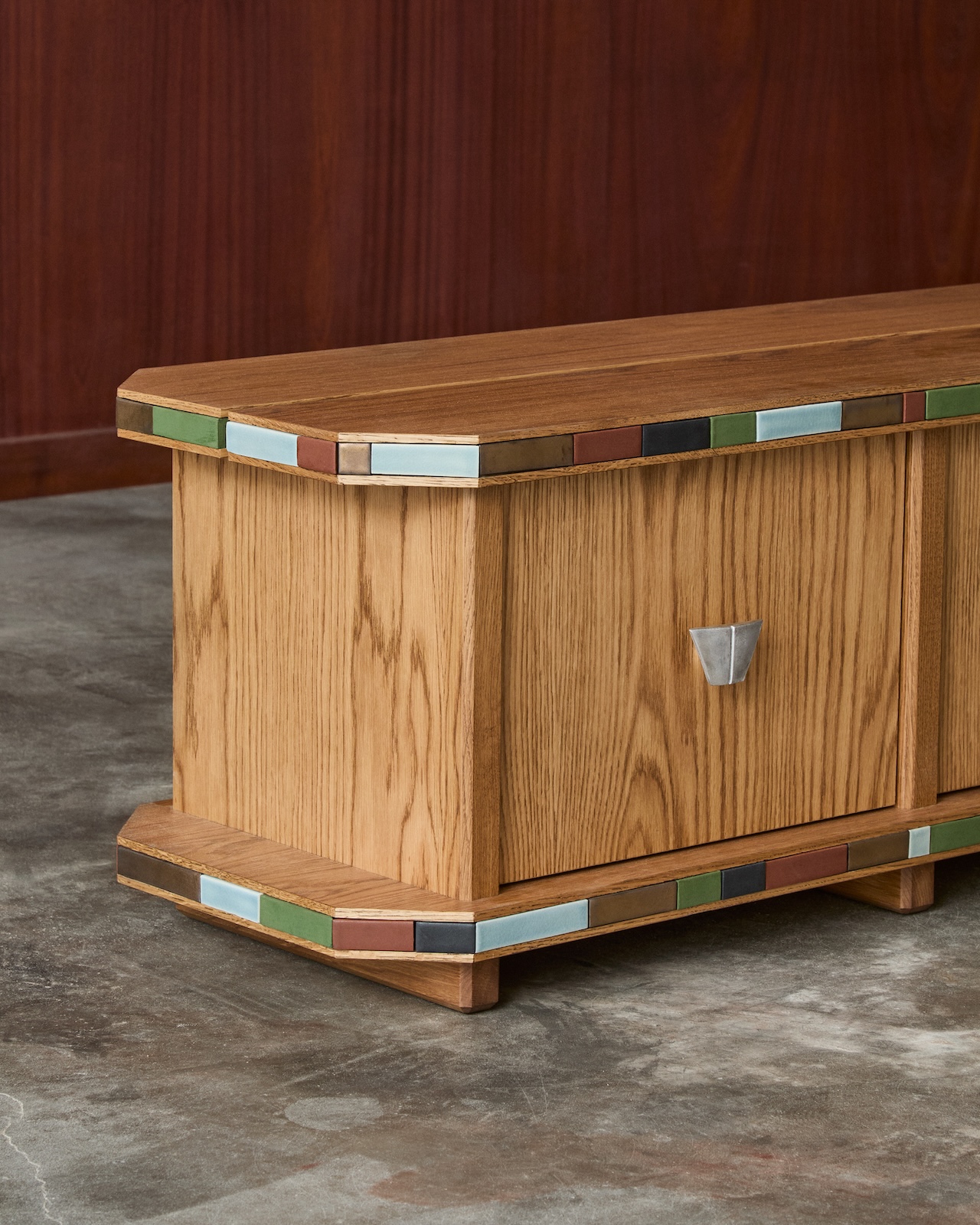
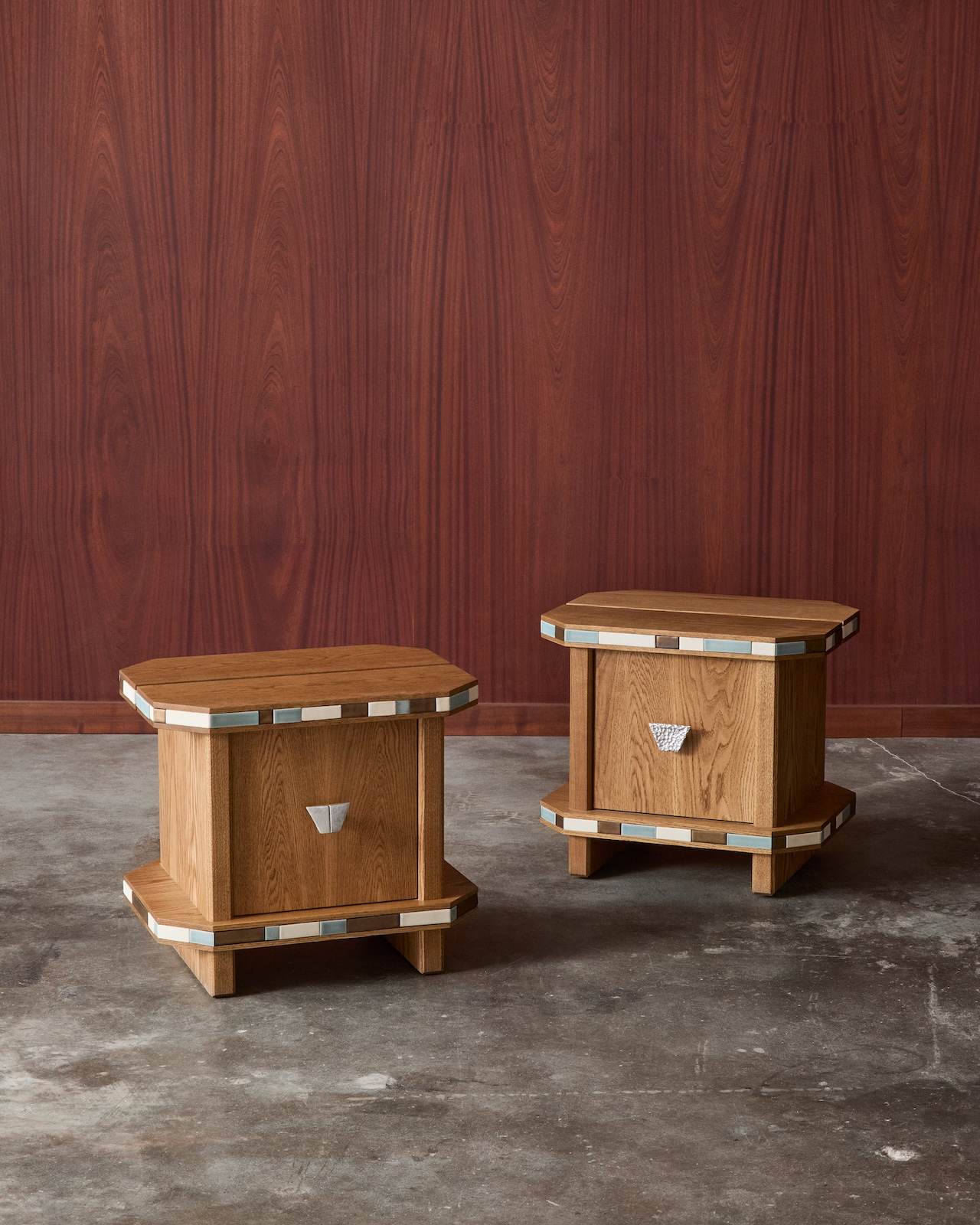
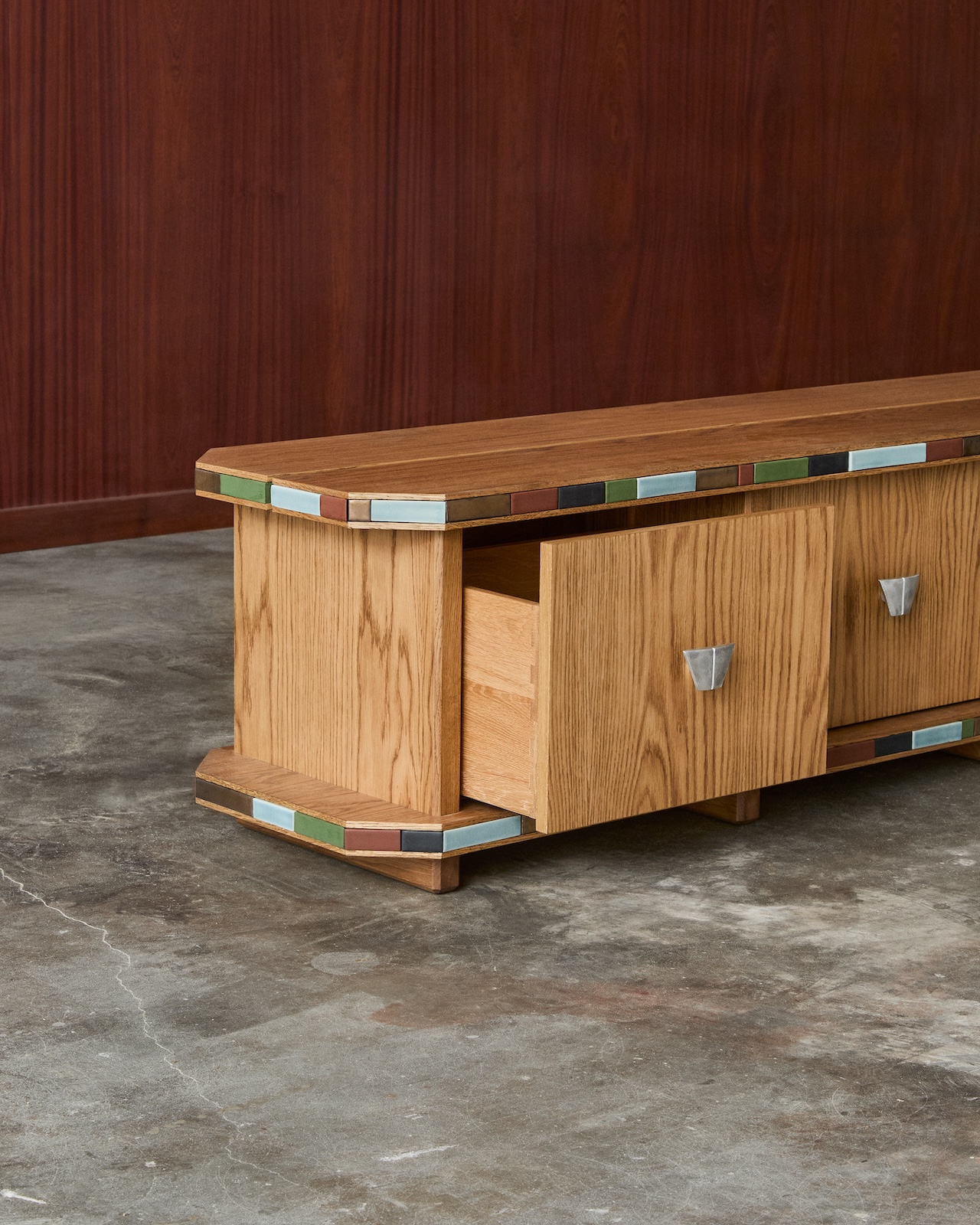
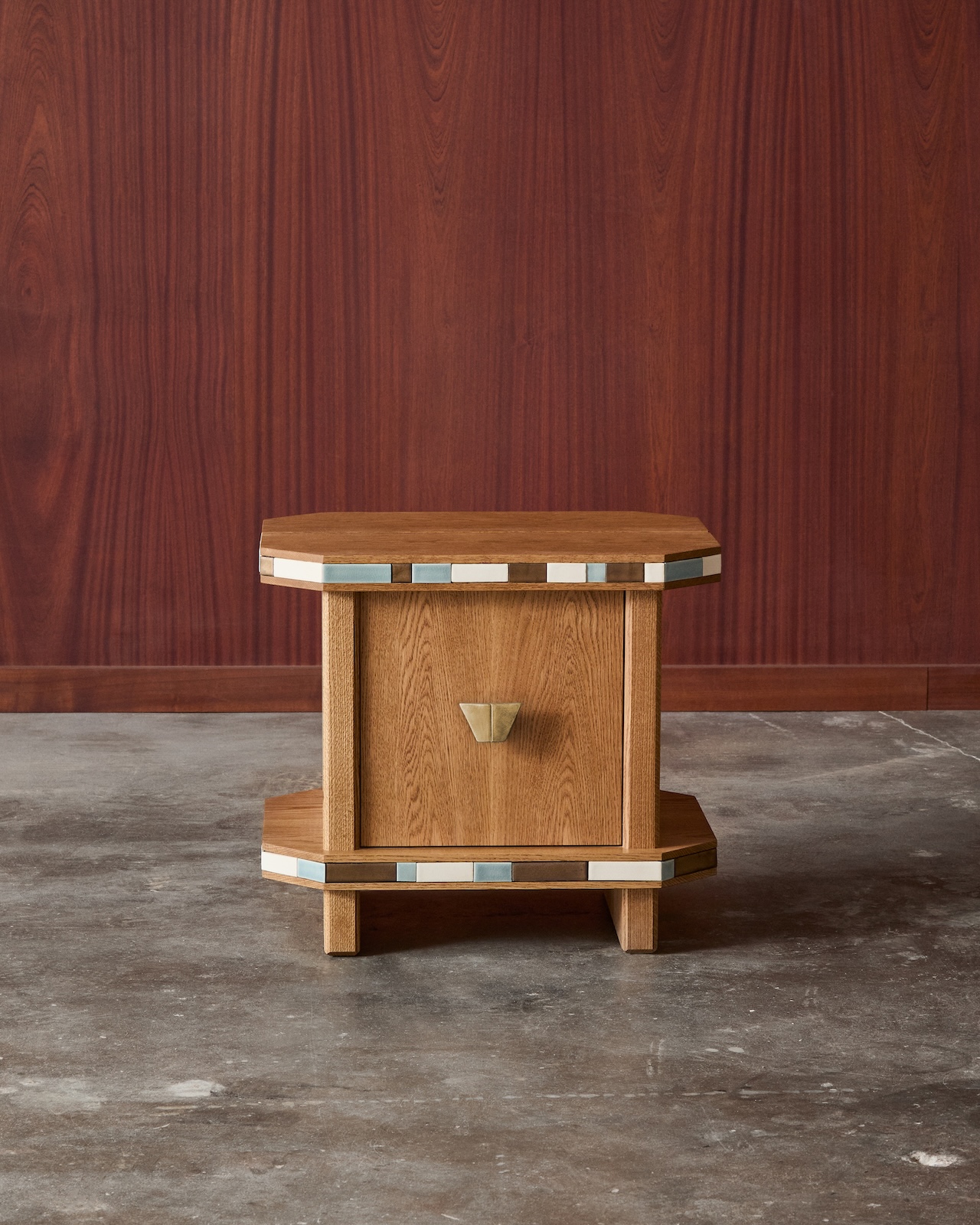
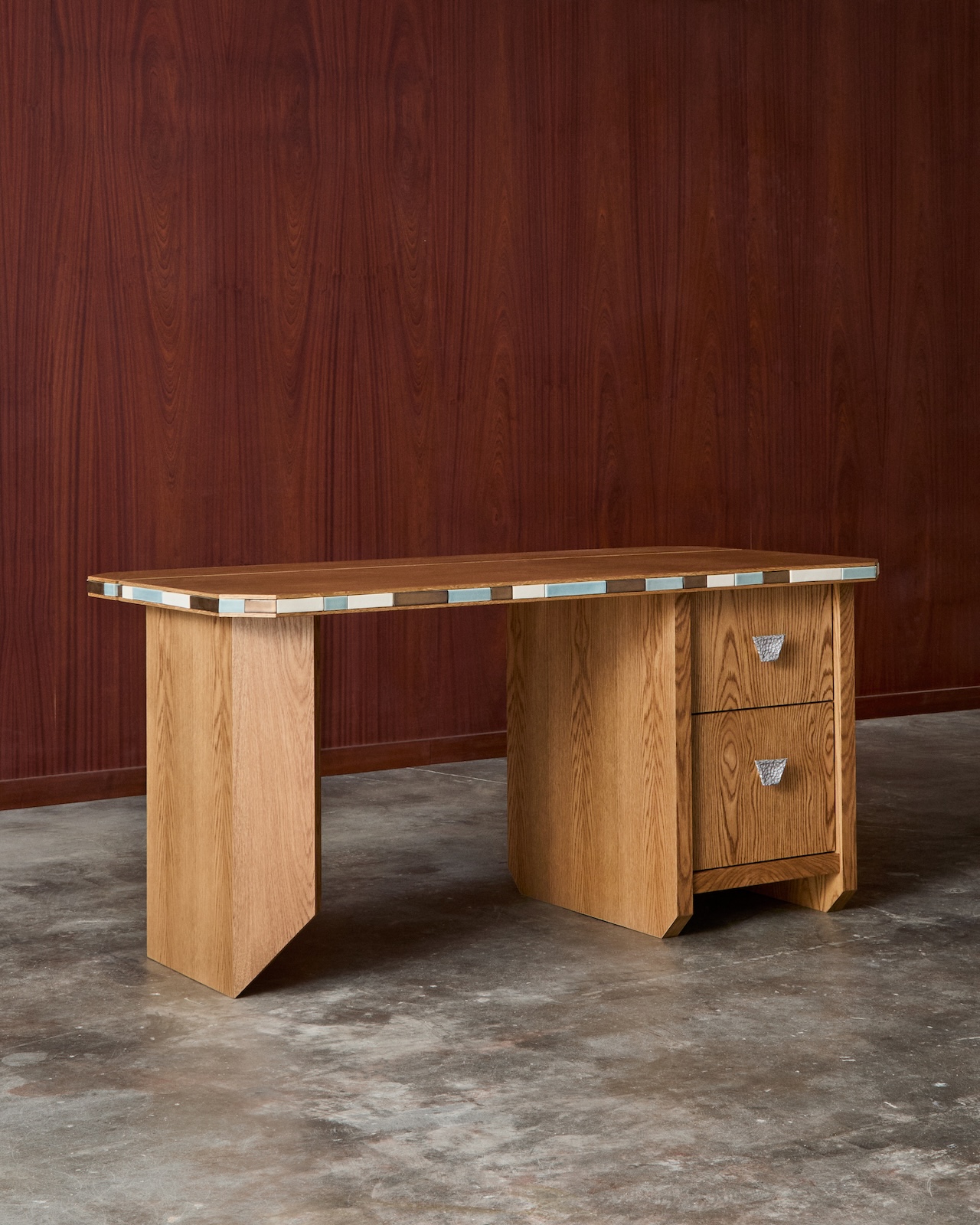
Delf began as a single bed. Danny Kaplan designed the Paravent Bed for his own home, basing its strong, paneled silhouette on the hinged screens of Jean-Michel Frank, before he and Vince Patti of Lesser Miracle saw the potential for a larger commercial collection. That collection launched in 2024. Following its commercial success, the two New York–based designers have expanded it with Delf II, adding a desk, a coffee table, a console, and a nightstand that extend the series beyond the bedroom.
Photography by Brent Goldsmith
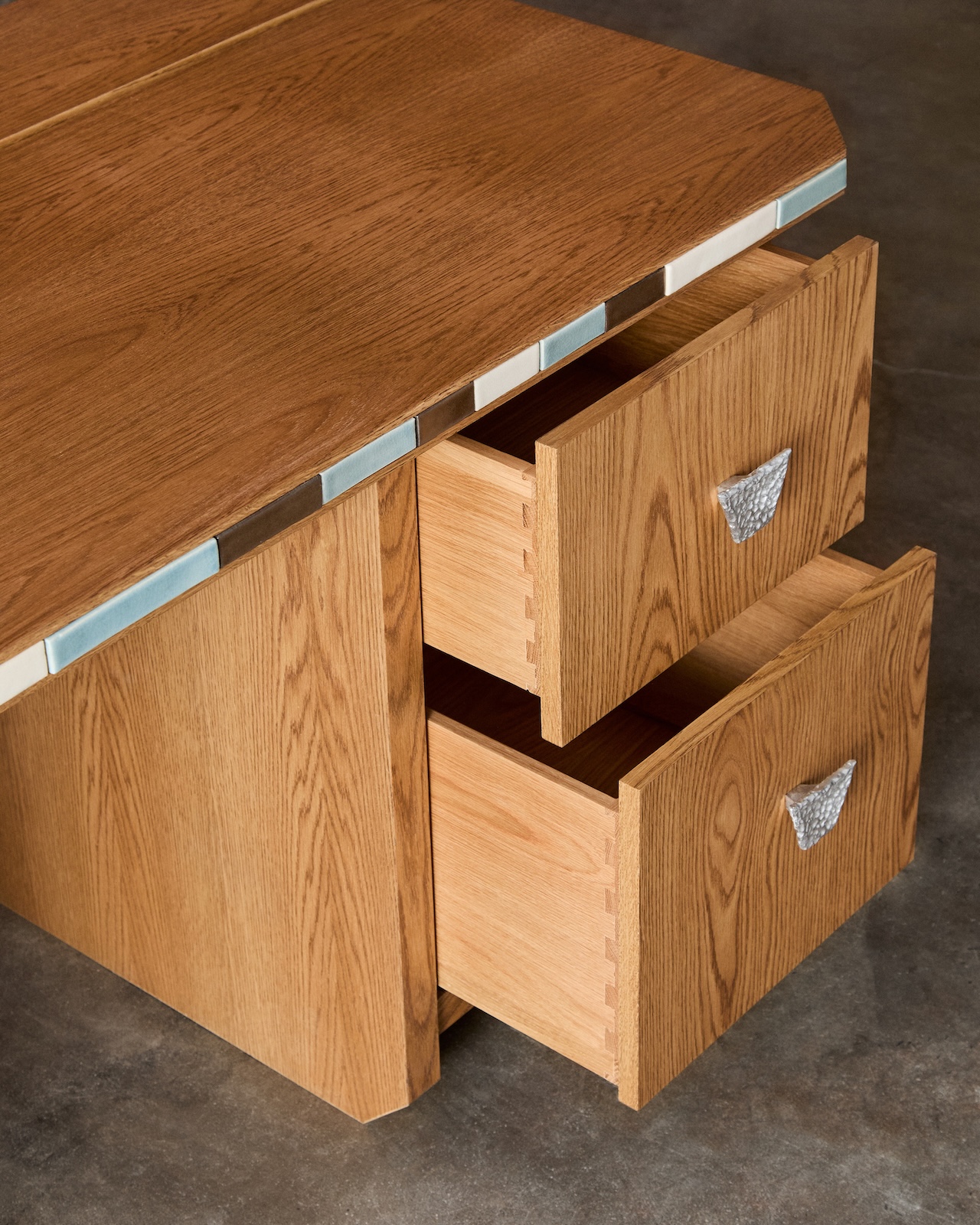
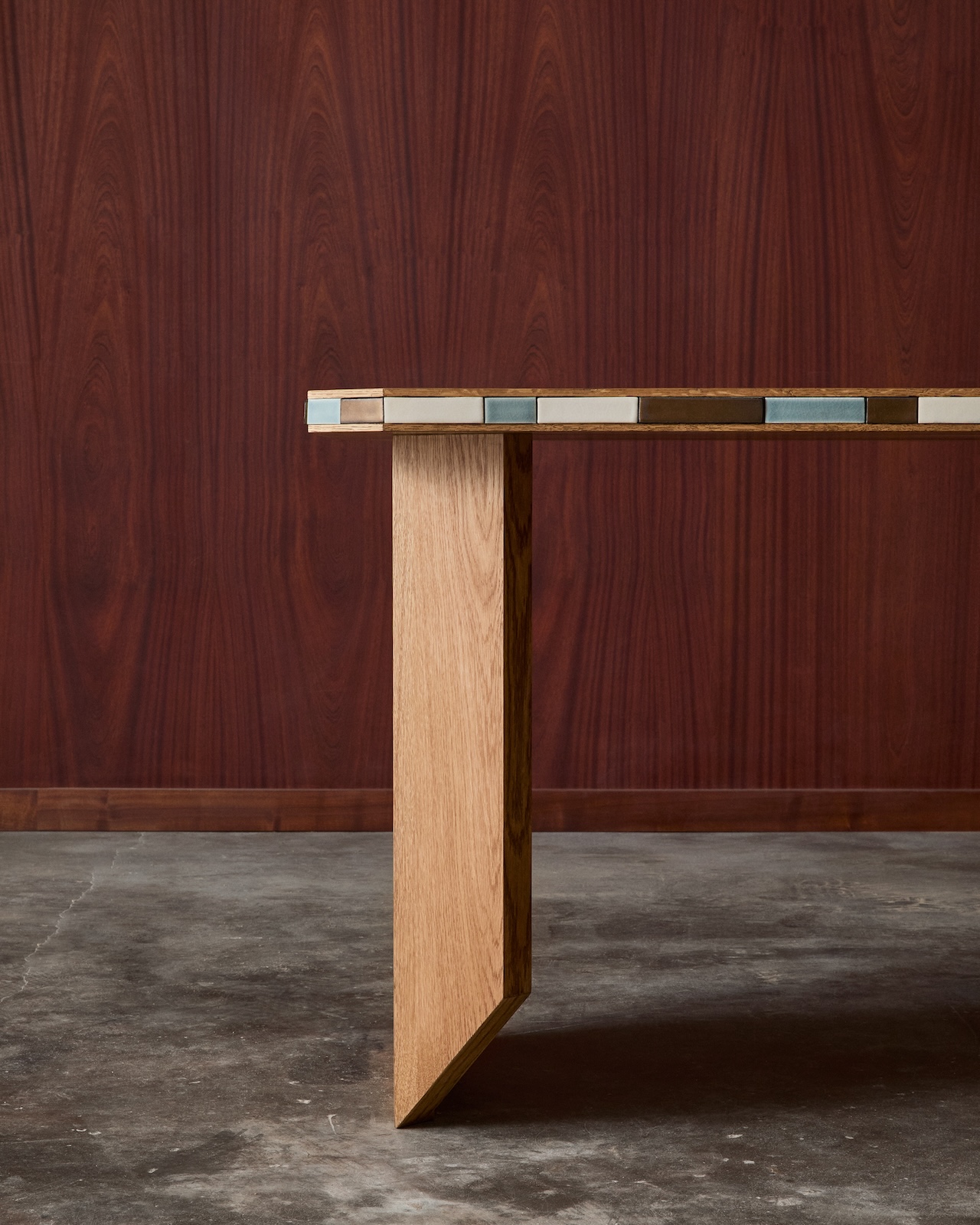
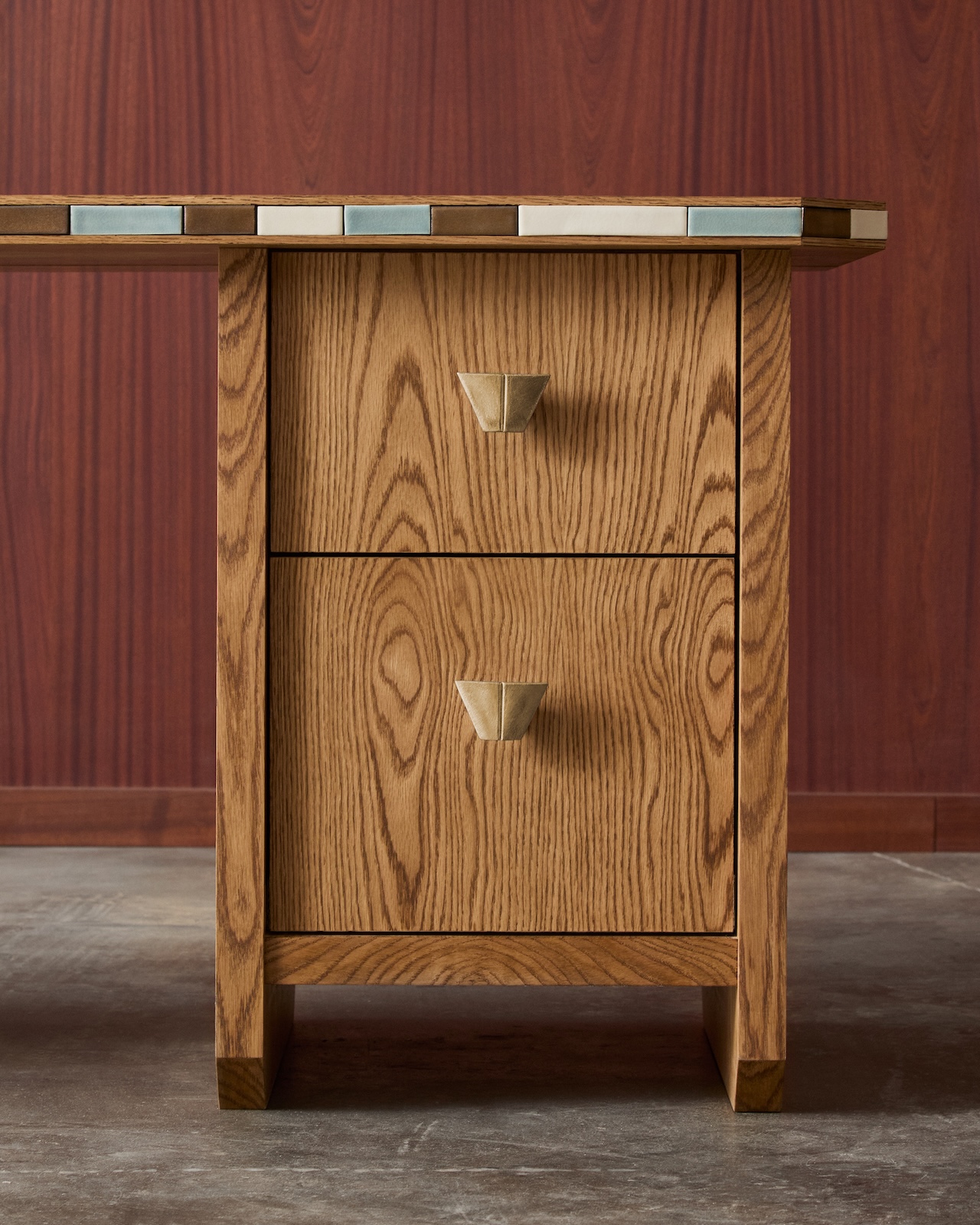
The relationship between wood and ceramic remains central to the collection. Each piece is crafted from white oak and accented with hand-built ceramic, the pairing that defined the original bed and inspired the collection’s name. Delf derives from delven, the Dutch verb meaning to mine or to dig, a reference to the channels carved into the wood and filled by hand with ceramic tile inlays.
Photography by Brent Goldsmith
Kaplan, a self-taught ceramicist who founded his studio in 2015, creates the tilework, drawing inspiration from the pottery of Vallauris, a region in southern France known for its ceramics. It is offered in the studio’s signature glazes: Stone, Anthracite, Terrasig, Ivy, Lapis, Agate, Bronze, and Chestnut, along with a new Navy. Around the tile, the oak takes modernist architectural forms softened by rounded edges and subtle curves.
Photography by Brent Goldsmith
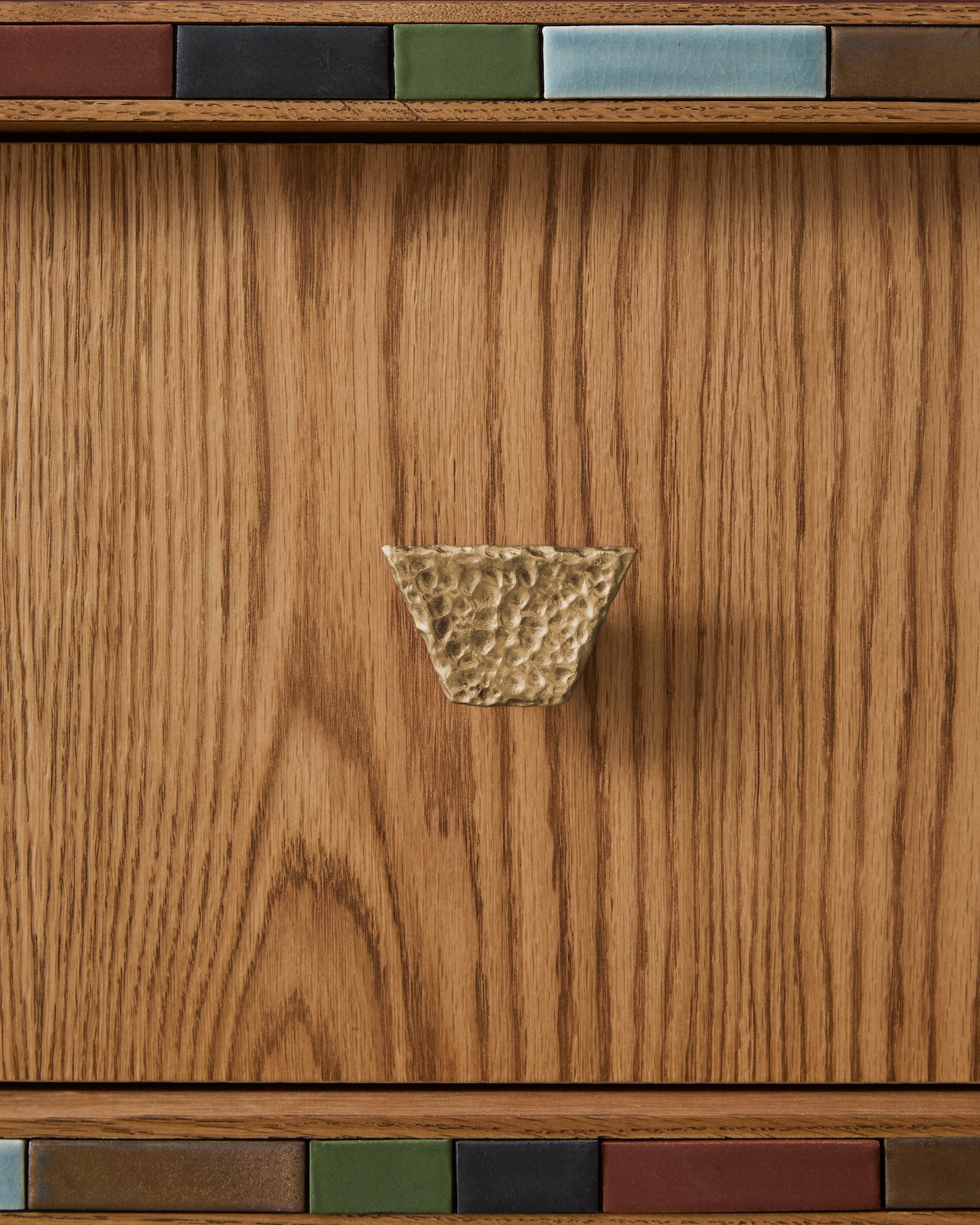
Bringing the two materials together requires a carefully sequenced production process. The ceramic components are fired separately, then individually fitted into the hand-built wooden structures. The drawer hardware is first modeled in clay, then cast in brass and aluminum. A single piece in the collection takes weeks to produce.
Photography by Brent Goldsmith
As with the original collection, the design process begins with Kaplan’s hand sketches before moving through drawing, discussion, prototyping, and digital modeling between the two studios.
Photography by Brent Goldsmith
For Kaplan, the expansion was an opportunity to explore how the original design language could translate to different furniture forms. The new pieces allowed the pair to continue “developing that language while thinking about how the collection could live throughout an entire interior.”
Photography by Brent Goldsmith
Patti sees the expansion as a natural evolution of their collaboration. The Brooklyn-based designer, whose practice draws on 1970s pulp fantasy, Timurid architecture, and the work of Frank Lloyd Wright, says the new collection “builds on the same principles as the original pieces, but with greater confidence and complexity.”