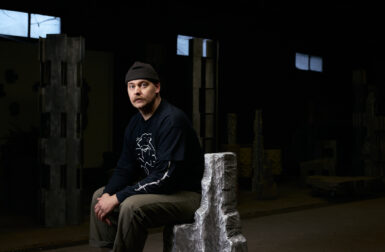
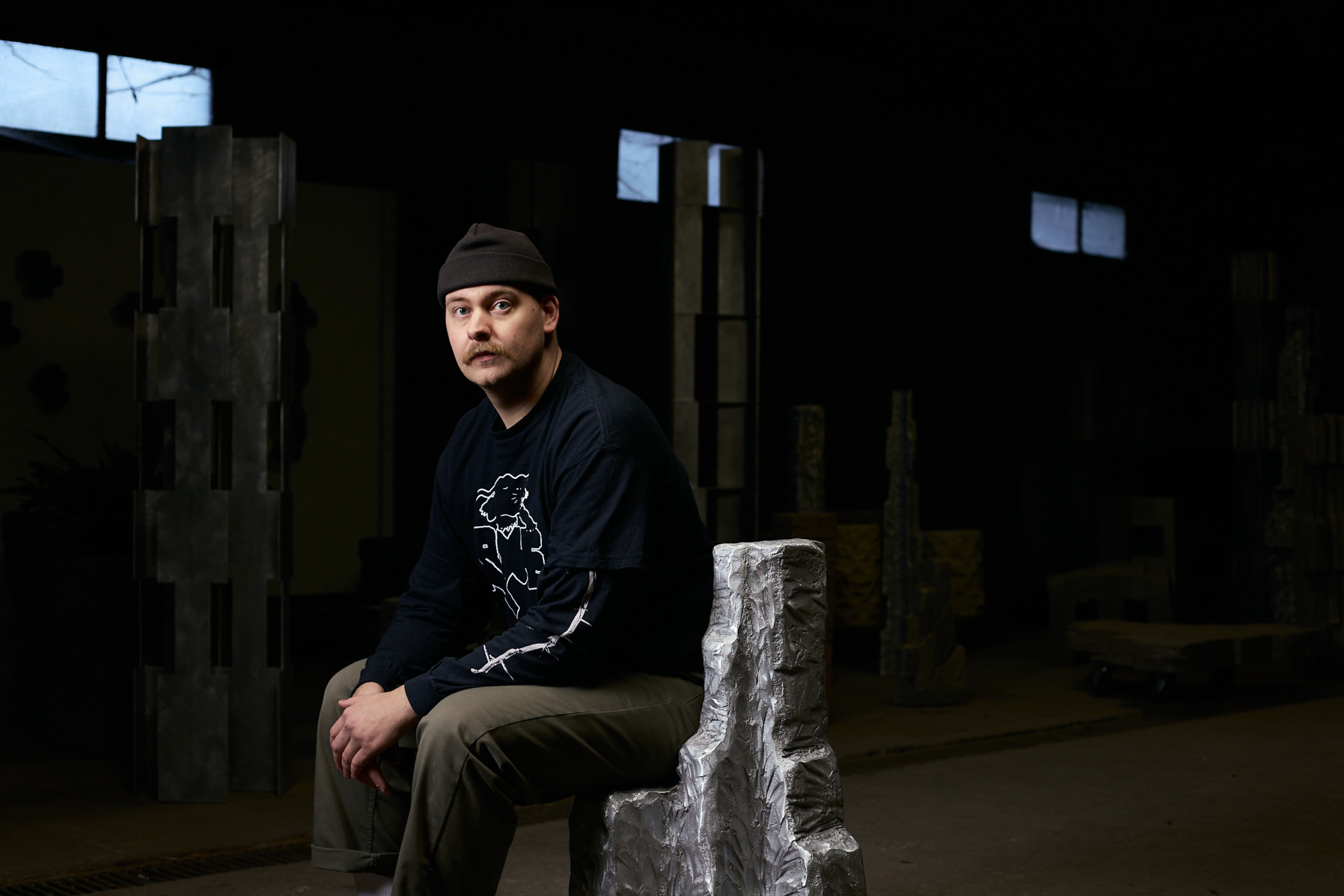
As a kid, Bram Vanderbeke wanted to be a bricklayer, so studying woodwork and construction made sense. But after studying design at the Royal Academy of Fine Arts in Ghent and graduating from Design Academy Eindhoven, he took his hands-on talents in a different direction, pursuing a career as an artist and designer in his hometown.
Vanderbeke explores the relationship between an object, its architectural environment, and its user, with a focus on raw materiality, form, and function. The result is tactile, sculptural work that often blurs the boundaries between art, design, and architecture.
“I just loved how architecture, art, and nature can merge so well with each other,” he says, citing Insel Hombroich, a museum and sculpture park in Neuss, Germany, as a lasting influence. Returning in different seasons, he was struck by how the changing landscape transformed the experience.

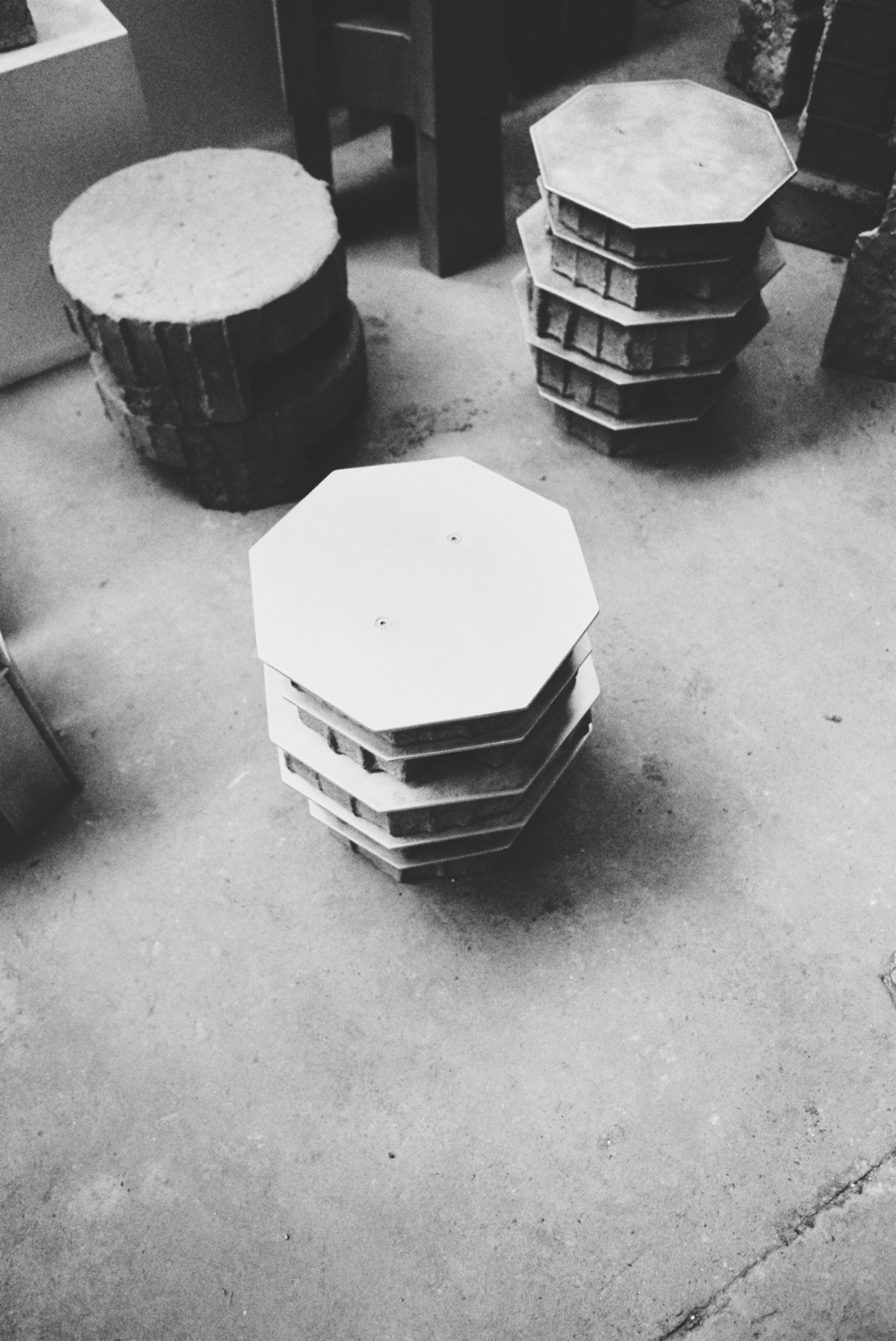
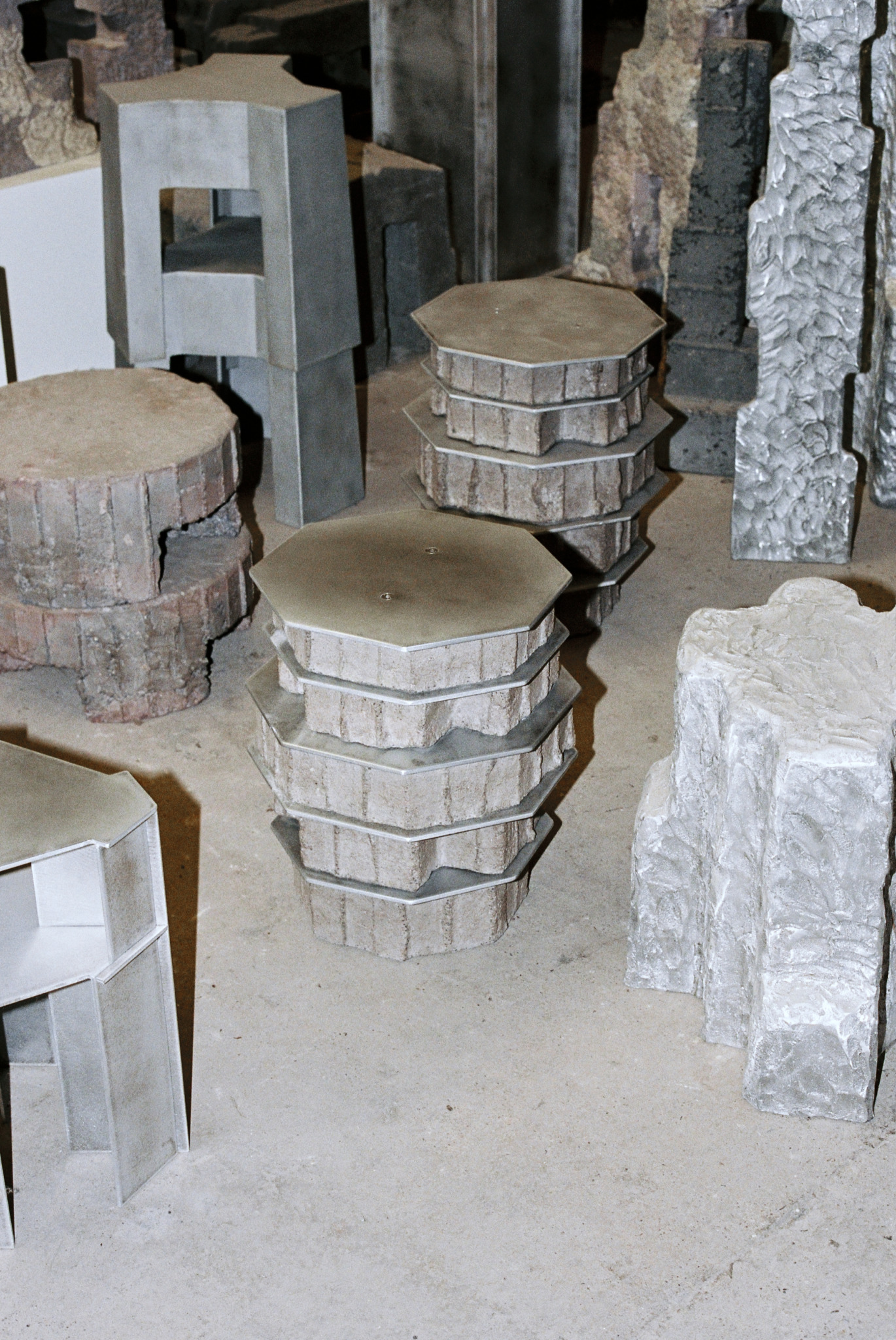
Bram Vanderbeke’s Anthology Side Table/Stool, designed in collaboration with Belgian jeweler Lore Van Keer, combines layers of cast concrete and aluminum. Photography by Amber Vanbossel.
Perhaps surprisingly, hardcore punk also informs his creative practice. “I grew up in this subculture, which is built on DIY shows and a very close community,” he says. Its DIY ethos and motivation to make things happen resonate with his own approach.
This fall, Vanderbeke presented Cavea, a group exhibition featuring more than 70 works by more than 40 designers, organized by Brut Collective, the Belgian collectible design group he cofounded in 2018, and DesignUnDisciplined. His recent work also includes designs for the newly reopened museum shop at Design Museum Gent and commissions for Bottega Veneta, Kelly Wearstler, Pieter Mulier and Lore Van Keer.
For today’s Friday Five, we spent five minutes with Bram Vanderbeke discussing the inspiration behind his collaboration with Lore Van Keer on the Anthology Side Table/Stool.

Photography by Amber Vanbossel
Anthology Side Table/Stool from the LVK x BV collection
Vanderbeke and Belgian jeweler Lore Van Keer bring together furniture and jewelry design in a collaboration that explores form, structure, and material: the LVK x BV collection of a silver necklace and sculptural stool, produced in limited editions of 20 and eight pieces, respectively.
The tactile stool features alternating layers of cast concrete and aluminum. Handcrafted in Vanderbeke’s Belgian atelier, each piece uses a new mold, making every one unique. Designed for indoor or outdoor use, the stool/table is made to order.
What Inspired LVK x BV Anthology Side Table/Stool?

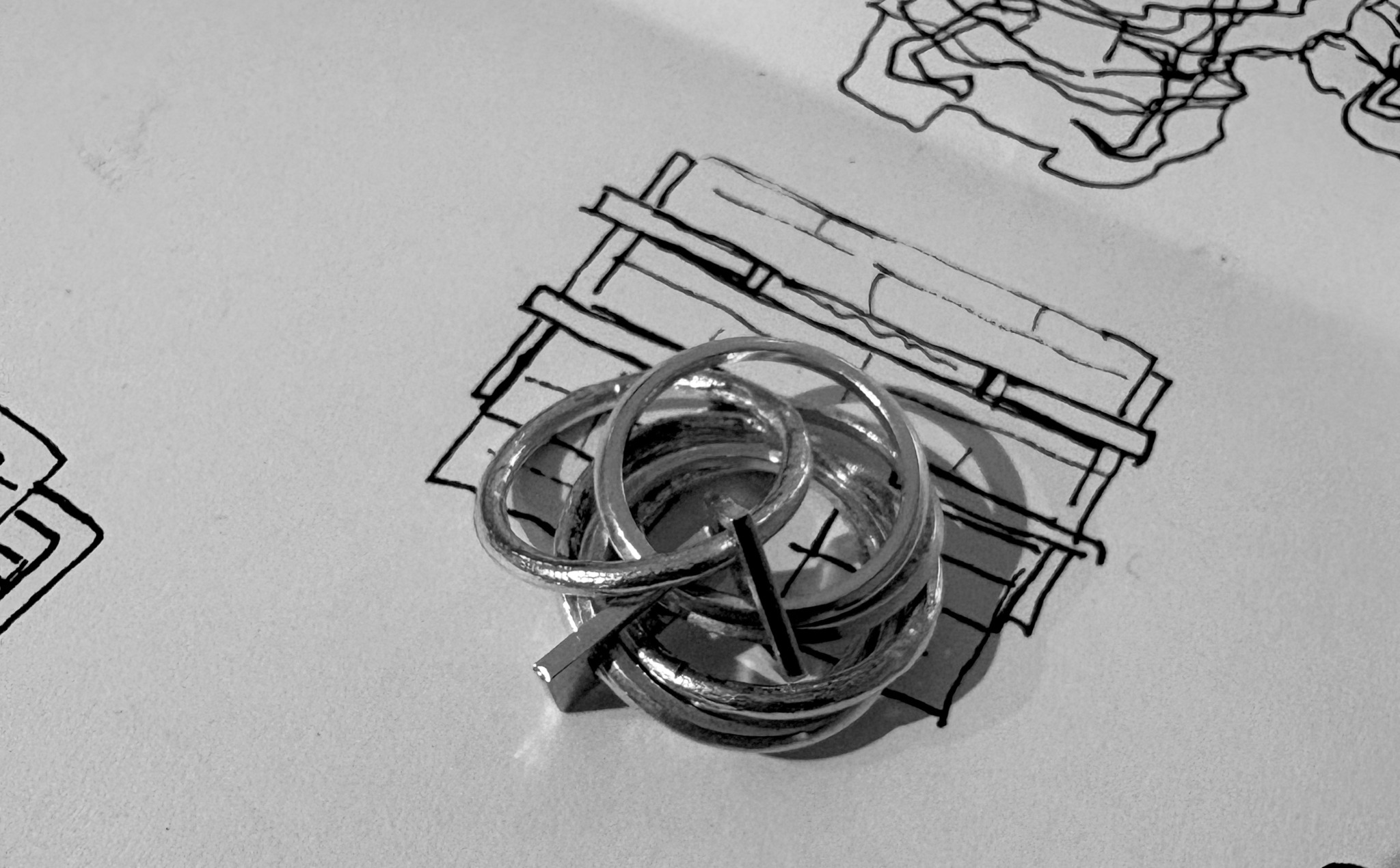
Lore Van Keer’s Anthology 10 ring, with its stacked geometric forms, inspired Bram Vanderbeke’s sculptural side table/stool. Photography courtesy of Bram Vanderbeke.
Stacked Geometry
Lore Van Keer invited Vanderbeke to reinterpret her Anthology jewelry collection as a furniture piece. “I liked the stacked shapes of the collection,” he explains. “She also plays with circles and hexagon shapes, which I translated into the shapes of the Anthology Side Table.”
Specifically, the Anthology 10 ring inspired Vanderbeke to translate its rhythm of stacked forms and structures into a 3D object. Alternating concrete and aluminum create a layered composition that defines the form.

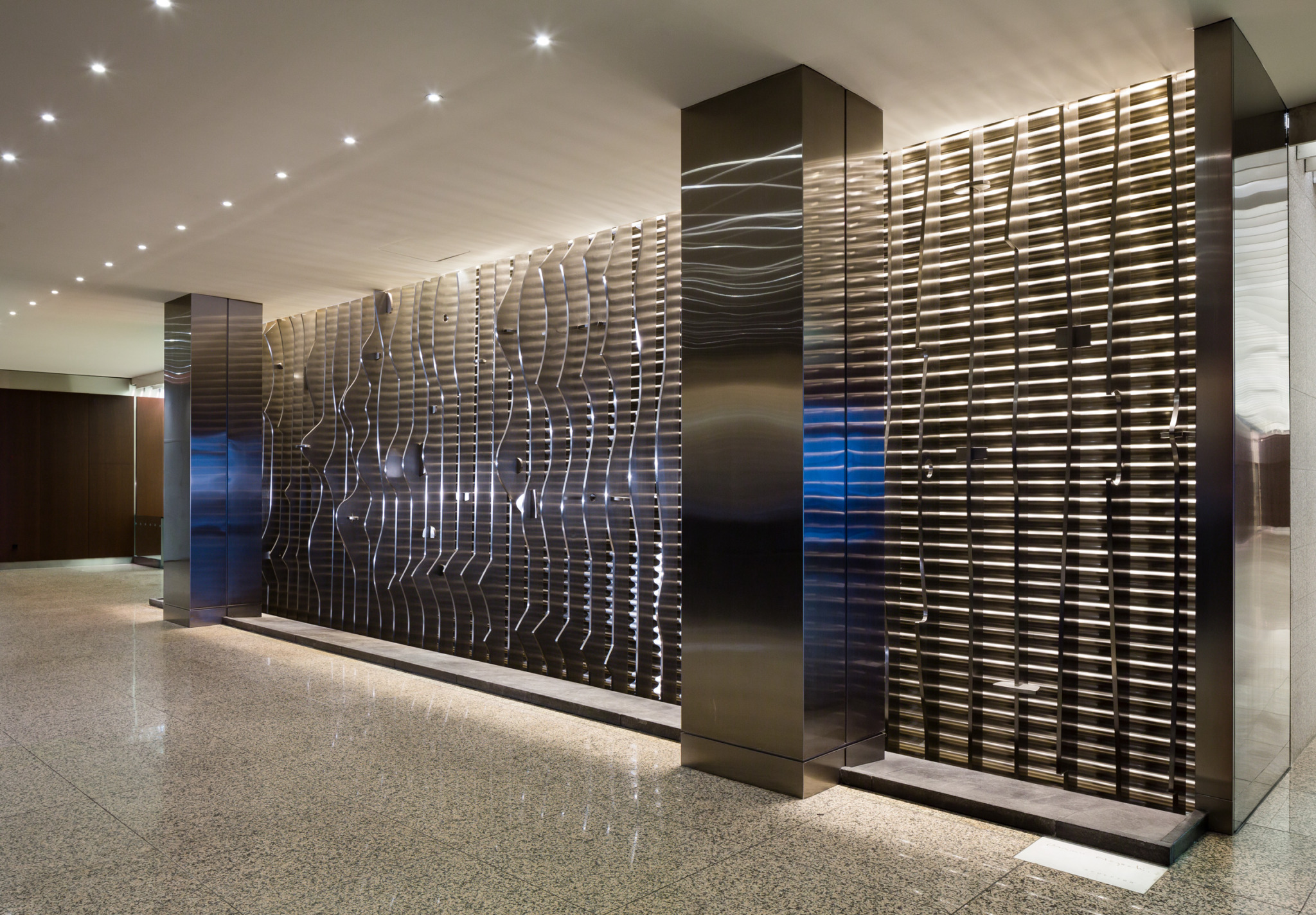
Waterfall for 666 Fifth Avenue, New York, just before its removal in 2020. Photography by Nicholas Knight © The Isamu Noguchi Foundation and Garden Museum, New York / Artists Rights Society (ARS), New York
Architectural Layers
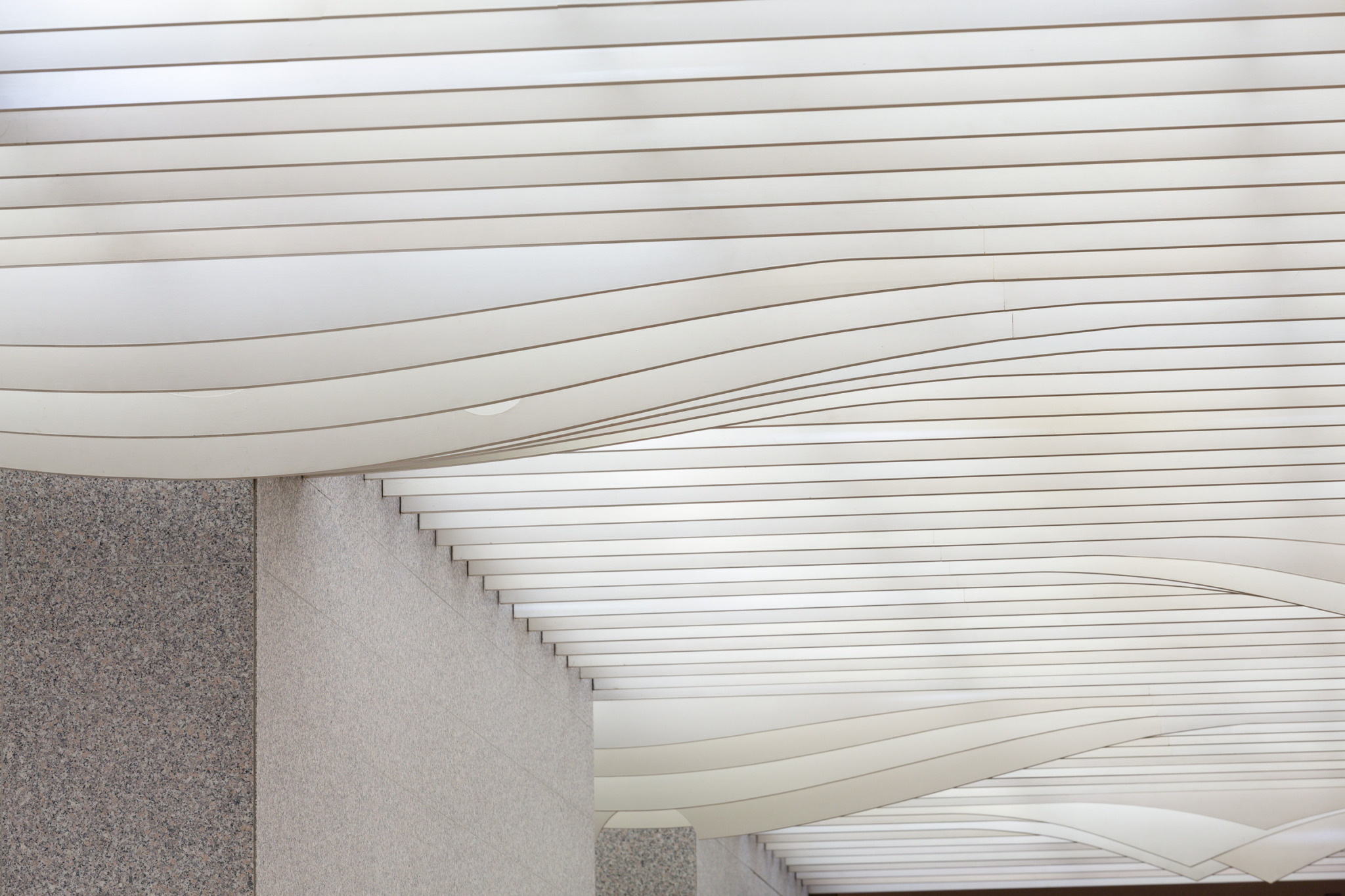
For inspiration, Vanderbeke browsed a tome he keeps in his atelier: Isamu Noguchi’s monograph A Sculptor’s World. The book features the spectacular ceiling and waterfall Noguchi designed for the lobby of 666 Fifth Avenue in New York. Noting the ceiling’s layers of aluminum, Vanderbeke incorporated a similar approach into the Anthology piece.

Ceiling for 666 Fifth Avenue, New York, just before its removal in 2020. Photography by Nicholas Knight © The Isamu Noguchi Foundation and Garden Museum, New York / Artists Rights Society (ARS), New York
Ancient Forms
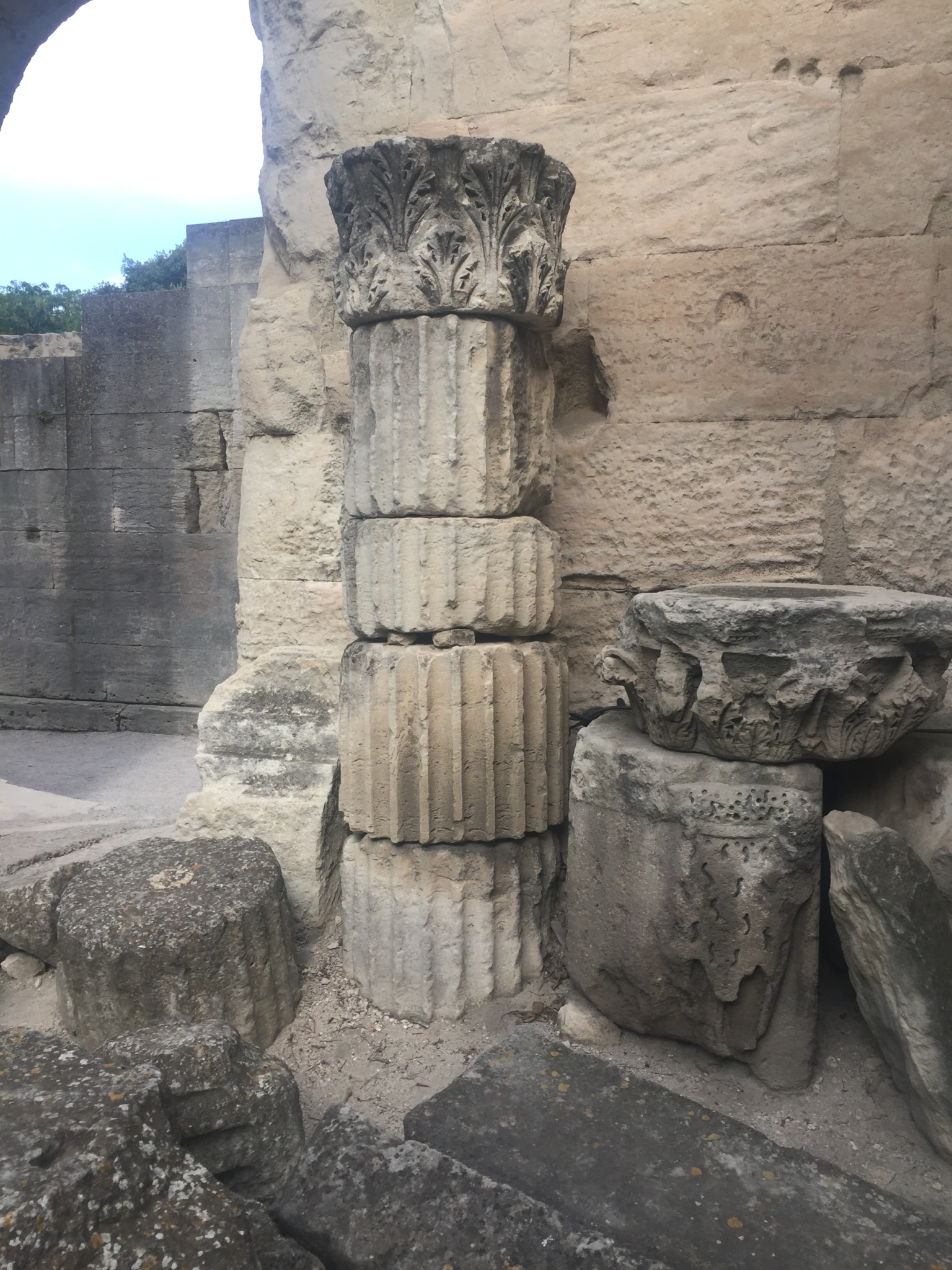
“I’m always inspired by excavations and ruins,” Vanderbeke says, “especially the rough stacked shapes of the Roman columns and their textures.” This influence connects directly to his Cast Bricks collection, which also informs the Anthology side table.

Ancient Roman columns and their stacked forms and textures are among the architectural influences behind Bram Vanderbeke’s sculptural designs. Photography courtesy of Vanderbeke.
Building Blocks
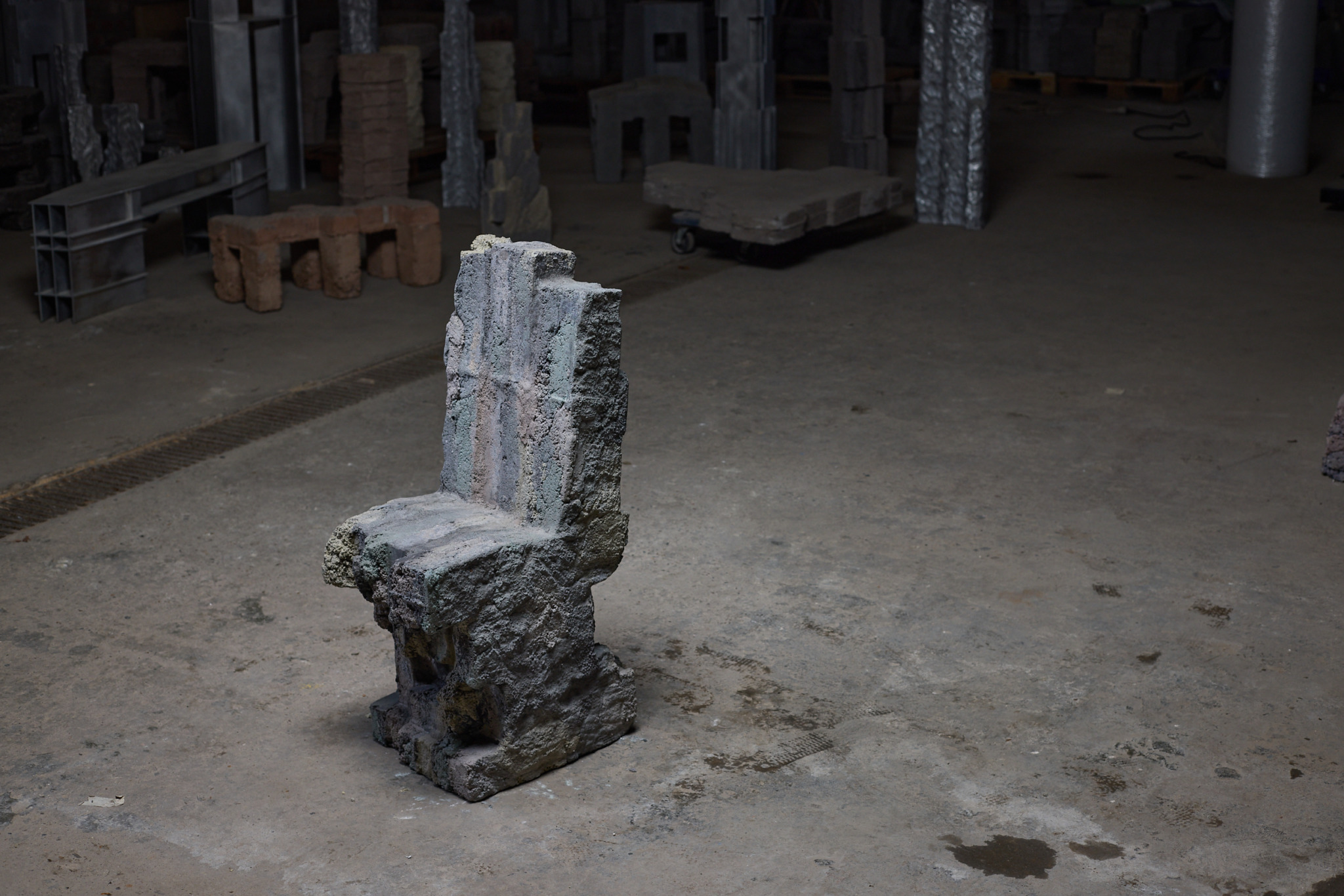
Vanderbeke also drew on his own work, incorporating elements from his Cast Bricks collection into the Anthology piece. For the Brick Chair, he arranged regular bricks in methodical yet intuitive compositions that create negative spaces, which serve as molds for his architectural furniture. The straightforward technique references how construction workers lay the foundations of a building, connecting back to Vanderbeke’s childhood fascination with bricklaying.

Bram Vanderbeke’s Brick Chair uses carefully arranged bricks to create negative spaces that serve as molds for his sculptural furniture. Photography by Alexander Popelier.