Toronto is growing at an incredible rate—spreading across the vast lakeside plain it anchors and rising in dense vertical pockets. In just a few years, its population has surpassed that of other burgeoning urban centers, making it the fourth-largest city in North America. Real estate prices are soaring. In response, downtown has become a collage of bombastic architectural statement pieces—futuristic spires contorting in all directions or stacked like offset pixels. With each structure vying for attention, a dizzying jumble of styles and scales has emerged among the few historic buildings that remain. The most successful new developments, however, are those that build upon—rather than erase—existing architecture.
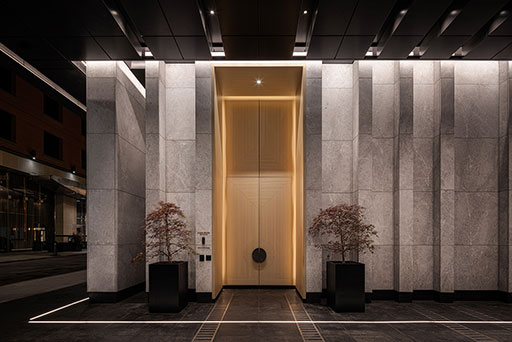
Take the newly opened Nobu Residences and Hotel, a Teeple Architects–designed complex that fully incorporates the iconic façade of the Pilkington Glass building that long stood in its place. Its defining feature: glass bricks. Preserved as the skin of the original structure, these elements reappear throughout the multipronged, city-within-a-city destination. Rising from this foundation are two 45-story towers with angled window bays and gently sculpted façade fins. As they ascend, a 15,000-square-foot Nobu restaurant and surrounding retail spaces give way to 660 residential units and, above, 36 “villas in the sky” guestrooms. In between, a two-story amenities podium is carved through by a near temple-like circular void.
Responsible for the comprehensive outfitting of these spaces is Miami- and Toronto-based multidisciplinary practice Studio Munge, a firm that prides itself on crafting immersive experiences. “The dramatic opening between the 9th and 10th floors allows daylight to cascade deep into the interior spaces below,” says founding principal Alessandro Munge. “From the gym that encircles it, guests can observe natural light, rainfall, and snowfall descending, while upper-level rooms look down into this illuminated core.” It offers a more unified, calming counterpoint to the hurried streets cutting across the city beyond.
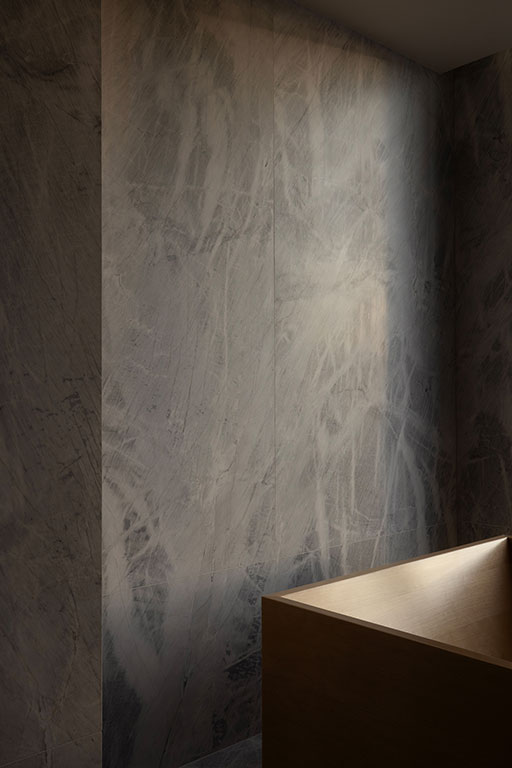
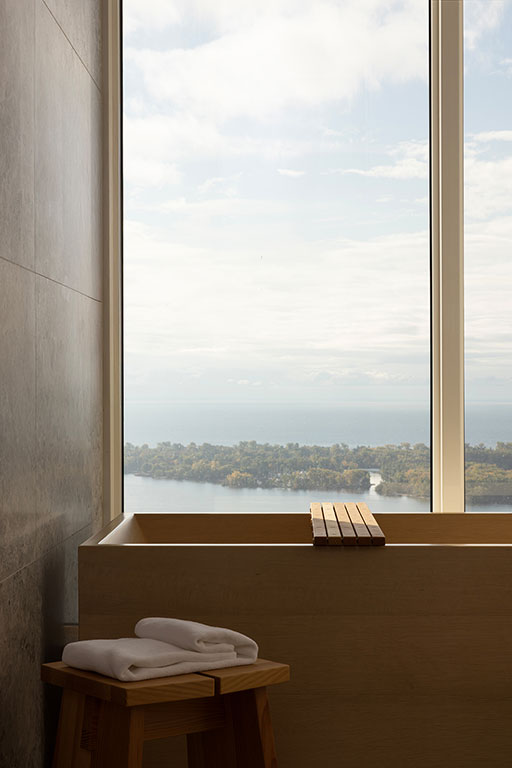
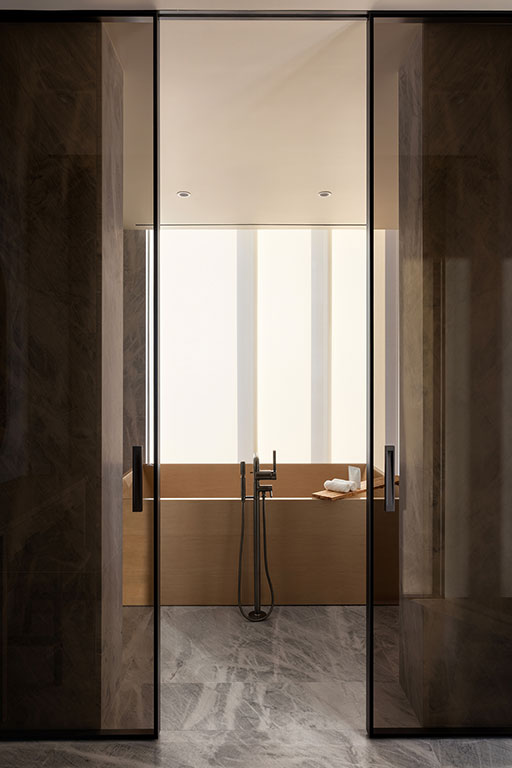
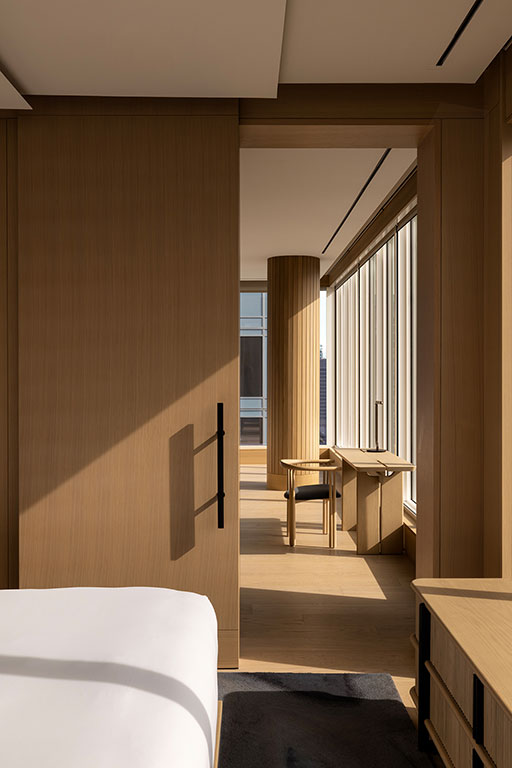
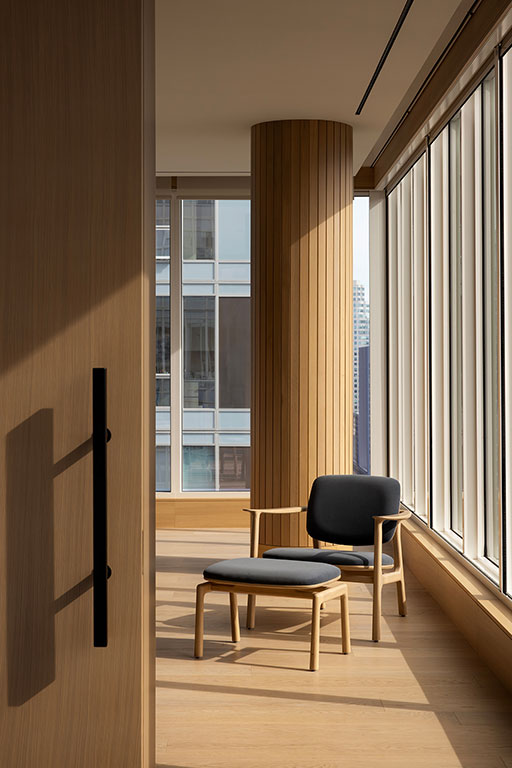
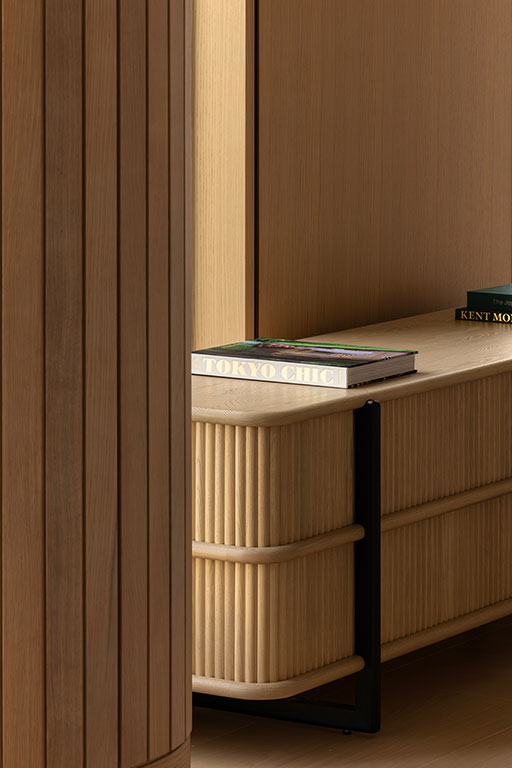
Though exclusive and limited in number, the accommodations range widely in size and features. Strategic spatial planning ensures a consistent set of priorities throughout: bed orientations that frame views; walk-in closets; generous living areas; and window-side soaking tubs. These traditional wooden elements subtly reference Nobu Hospitality’s Japanese origins.
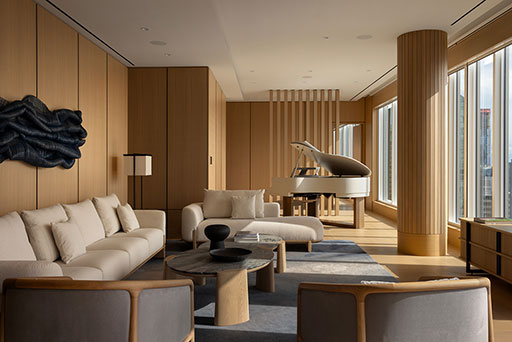
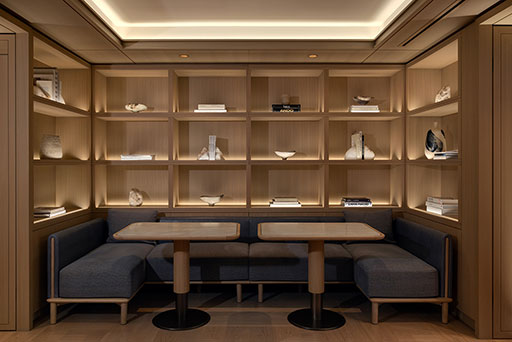
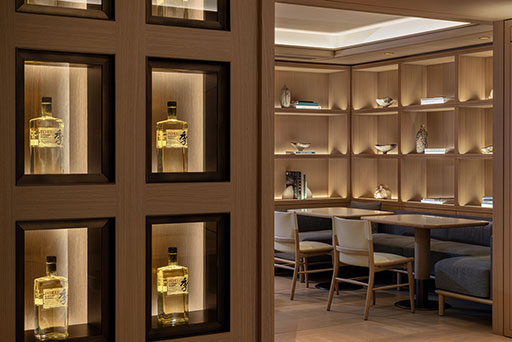
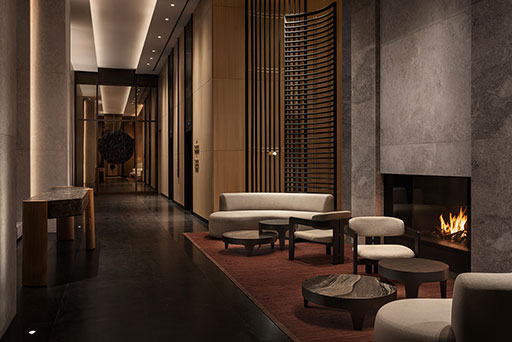
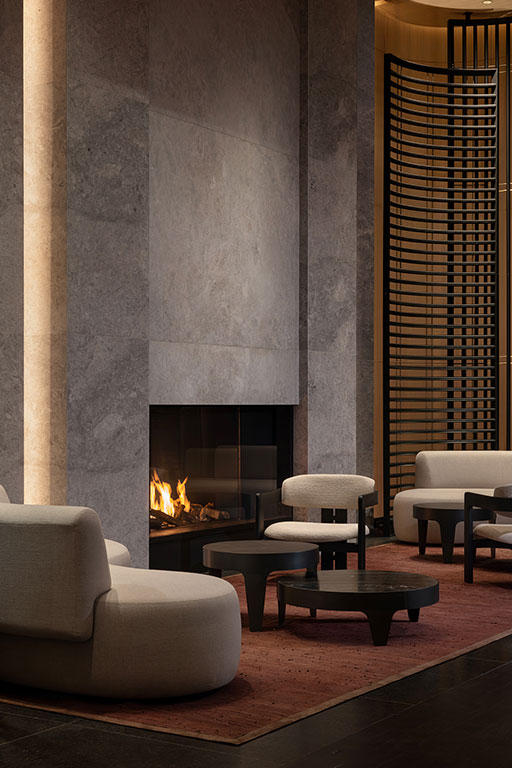
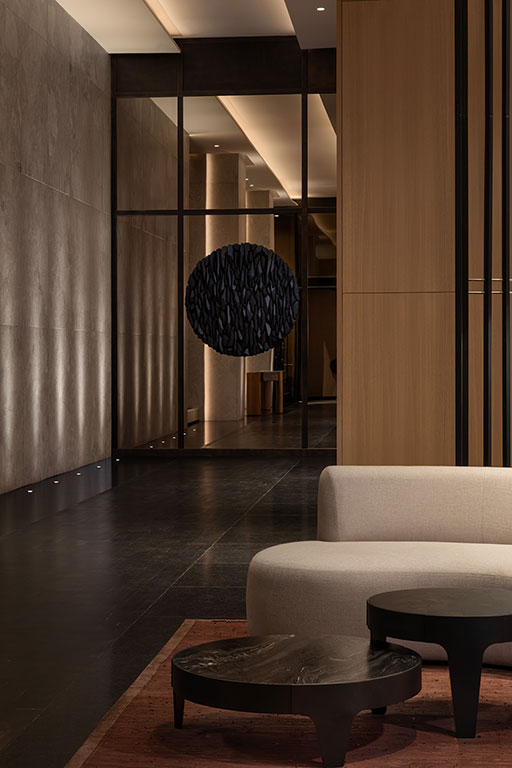
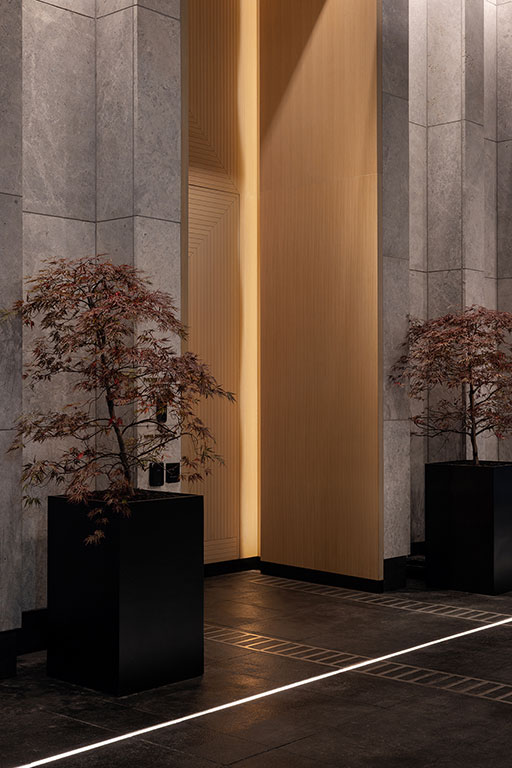
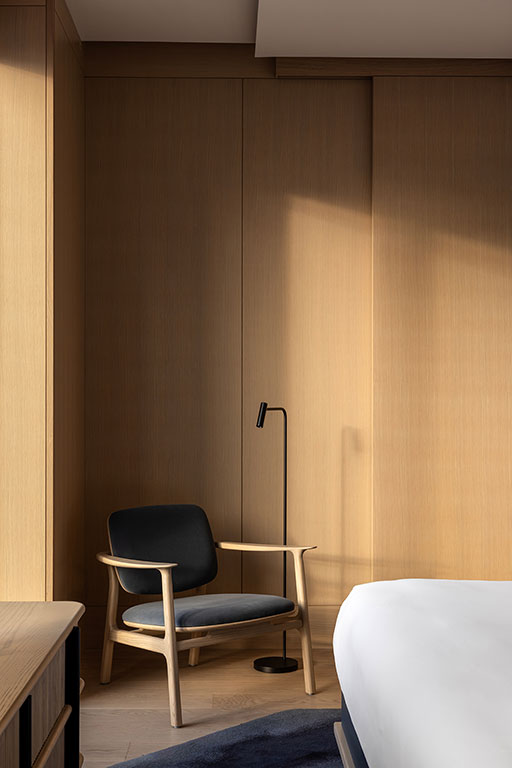
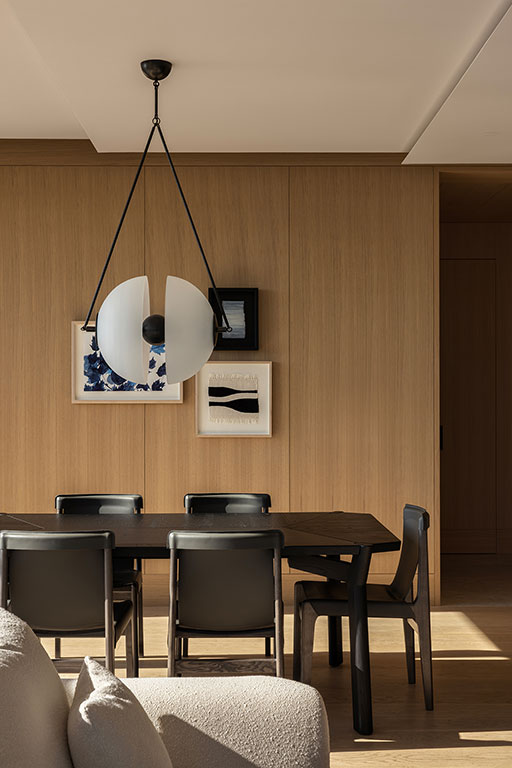
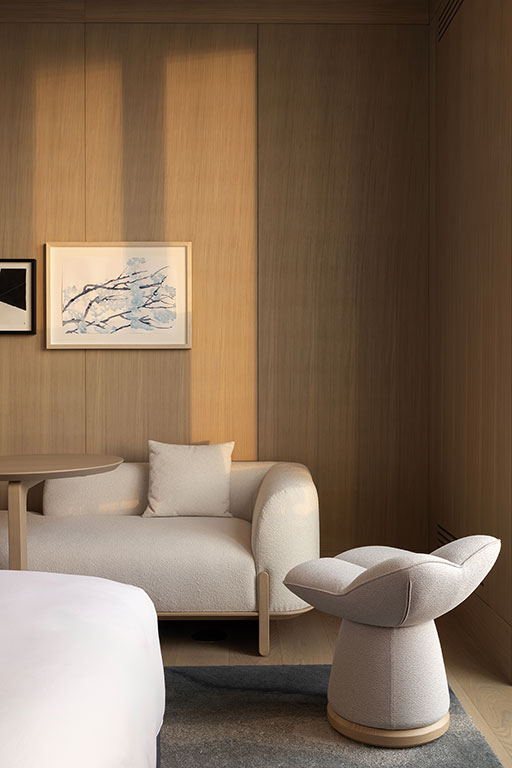
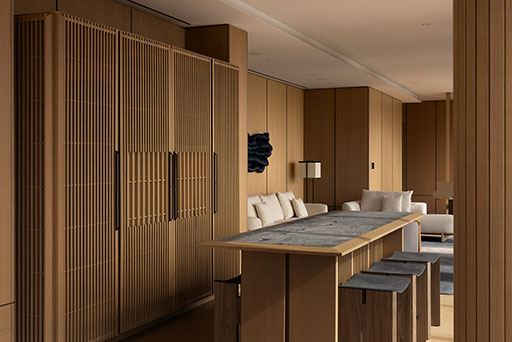
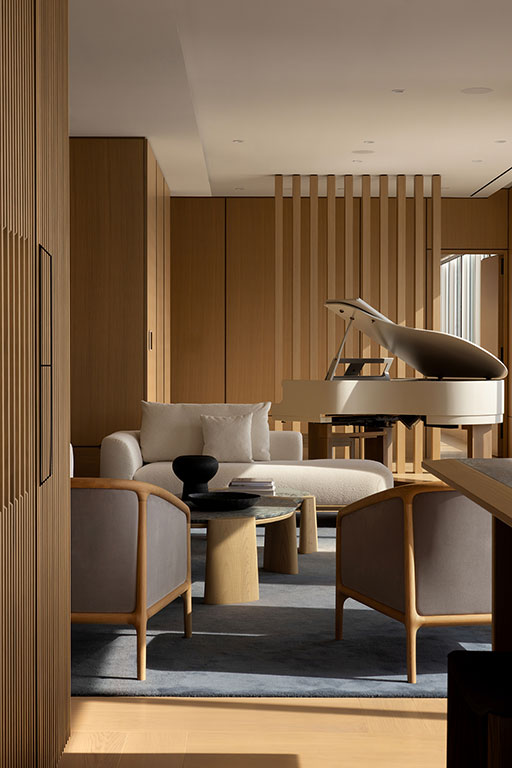
That cultural cue informs the entirety of the interior styling. The calming, restorative qualities of ryokans—traditional Japanese inns with tatami-matted rooms—serve as a thoughtful point of departure for finishes and furnishings. It’s a deliberate counterbalance to the energy of the city outside. “Rather than interpreting the hotel through a conventional luxury lens, this cue was complemented by subtle Canadian influences,” Munge adds. In the lobby, nods to the local landscape are abstracted and rendered through traditional Japanese metalwork.
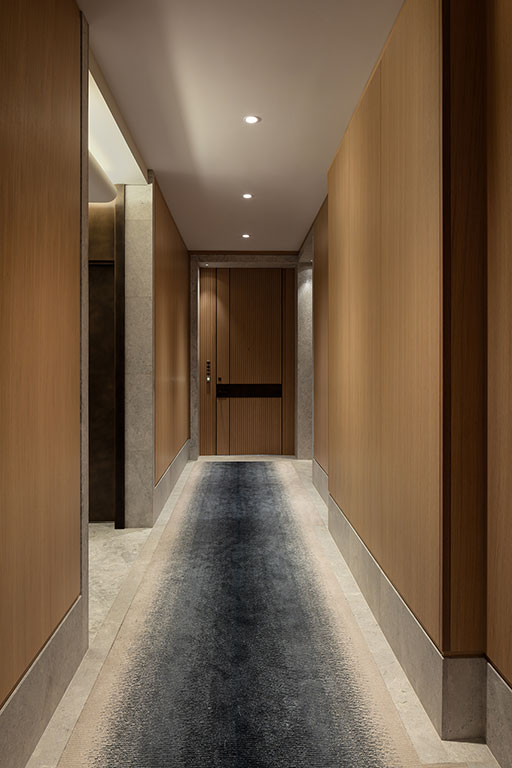
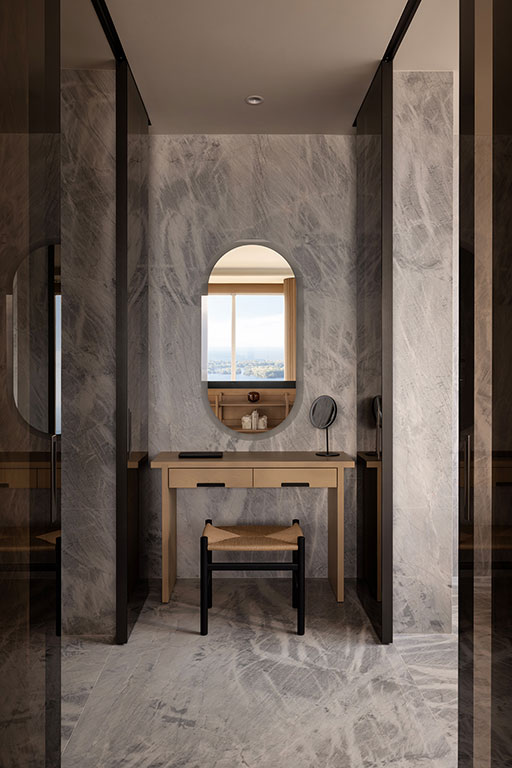
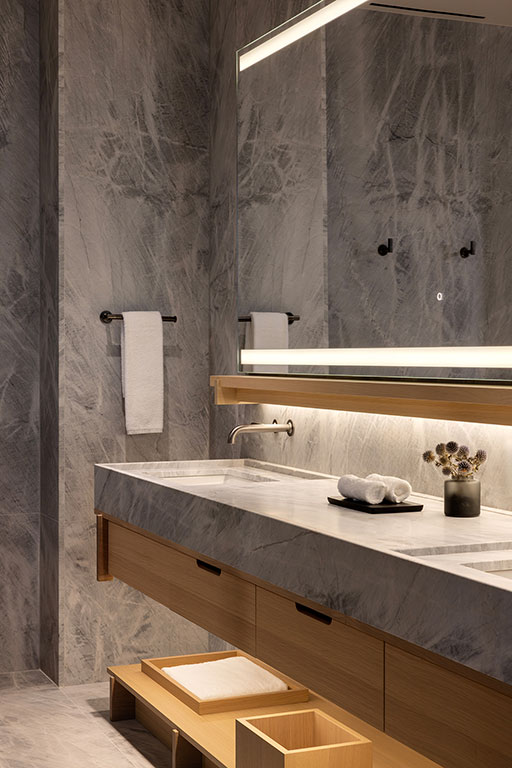
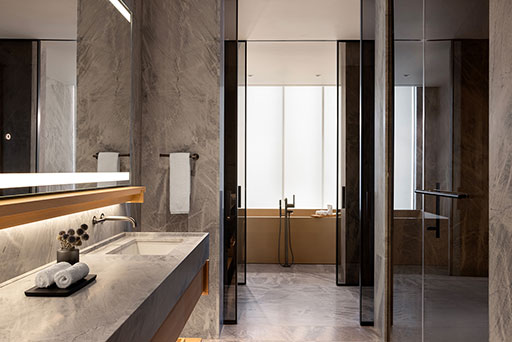
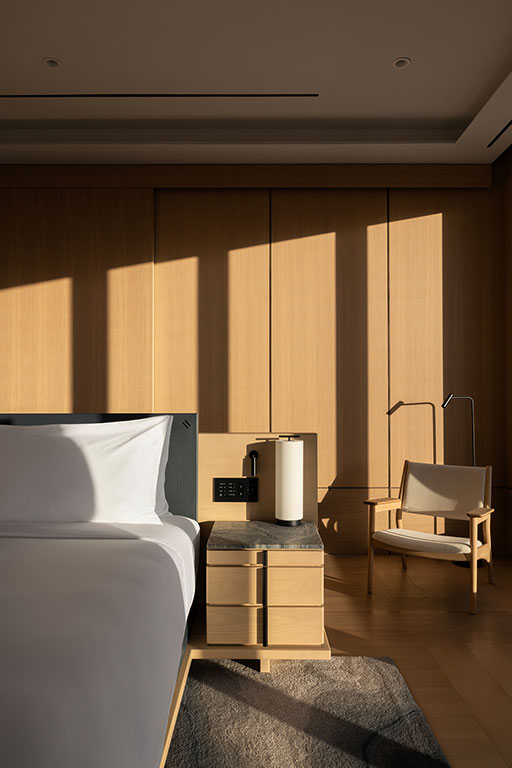
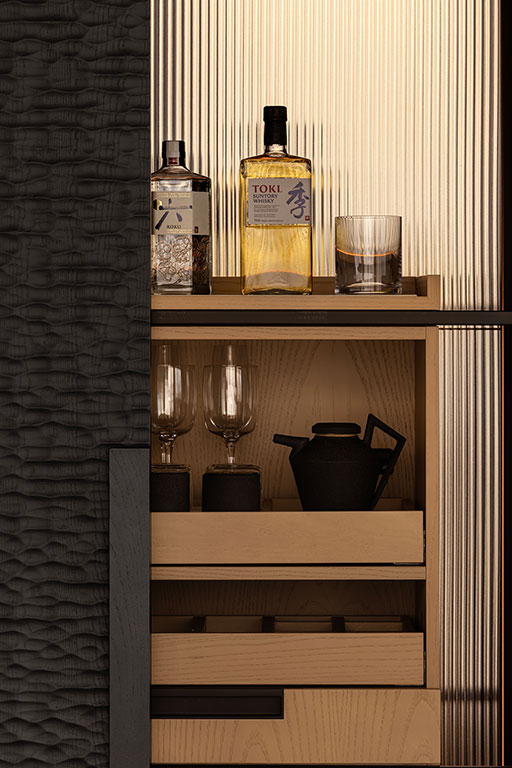
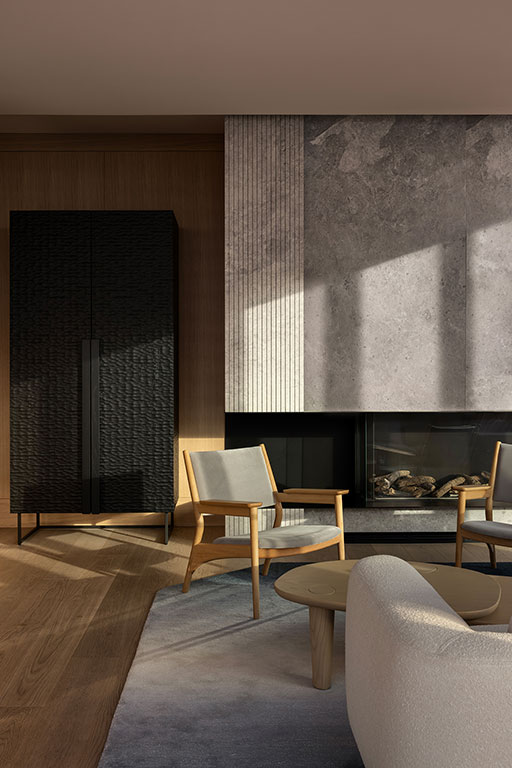
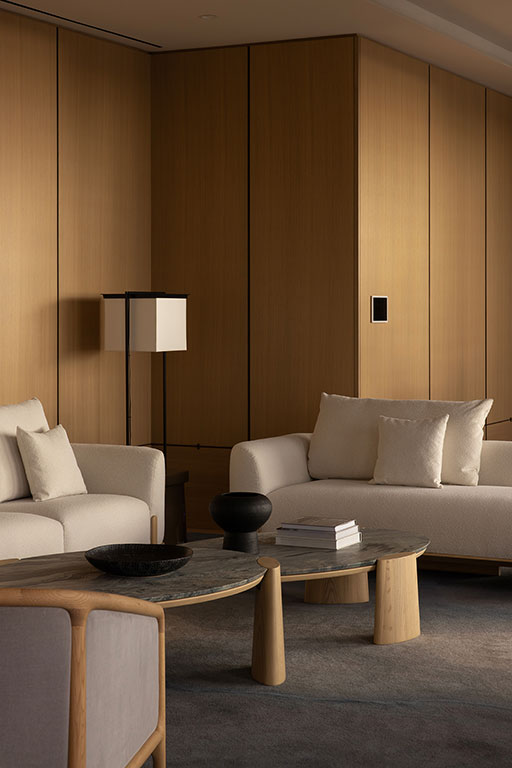
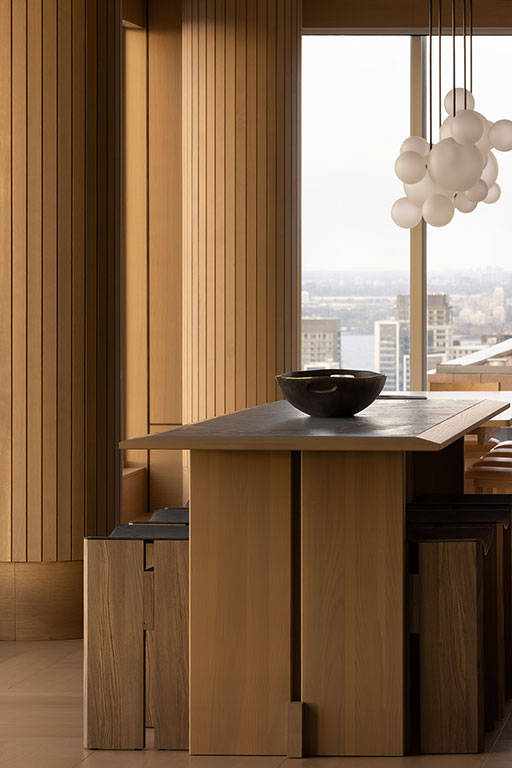
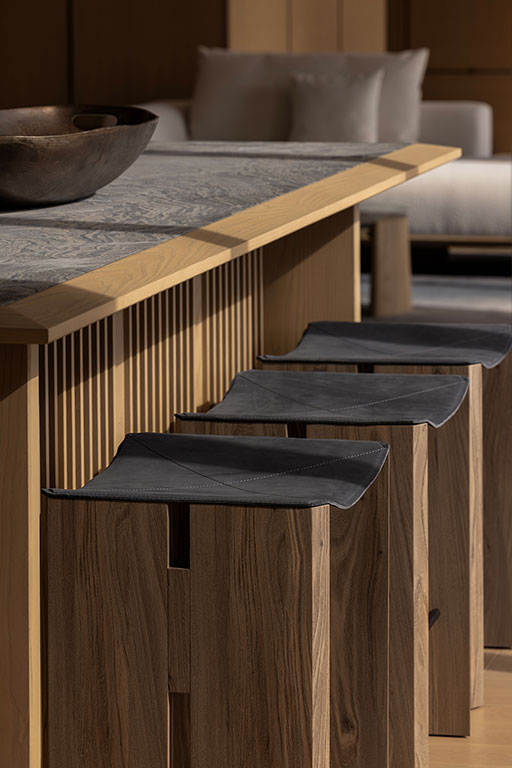
In the guestrooms, soft blue spectrums suggest serenity, referencing sky and water—Lake Ontario, just visible through the thicket of nearby towers—while also evoking escape. Framing this palette, Munge and his team employ a restrained material selection: Tundra Grey stone with a leathery finish, rift-cut white oak, hand-dyed indigo textiles, and handcrafted Kawara tiles.
The finishing touch is a carefully curated suite of furnishings from leading brands and designers, including B&B Italia, Gallotti & Radice, Henge, Piet Boon, Christophe Delcourt, The Rug Company, Apparatus, Giopato & Coombes, Holly Hunt, Karimoku Case Study, and Carl Hansen & Søn.
What: Nobu Hotel Toronto
Where: Toronto, Canada
How much: $2,700 per night
Design draws: A Japanese ryokan-style retreat high above ever-expanding Toronto outfitted with muted tones and natural materials. A residential tower hotel with a comprehensive two level amenities complex pierced by circular void with cascading natural light, rain, and snow.
Book it: Nobu Hotel Toronto
Photography by Ema Peter,

Now Trending

A 1908 Japanese Prison Finds New Life as a Luxury Hotel
Architect Rie Azuma transforms a Meiji-era prison into 48 luxury suites, preserving its brickwork and radial layout while opening former cells into generous living spaces Architect Rie Azuma transforms Keijiro Yamashita’s landmark 1908 Meiji-era structure into a 48-room destination, harnessing adaptive reuse as a fresh, viable strategy for cultural preservation