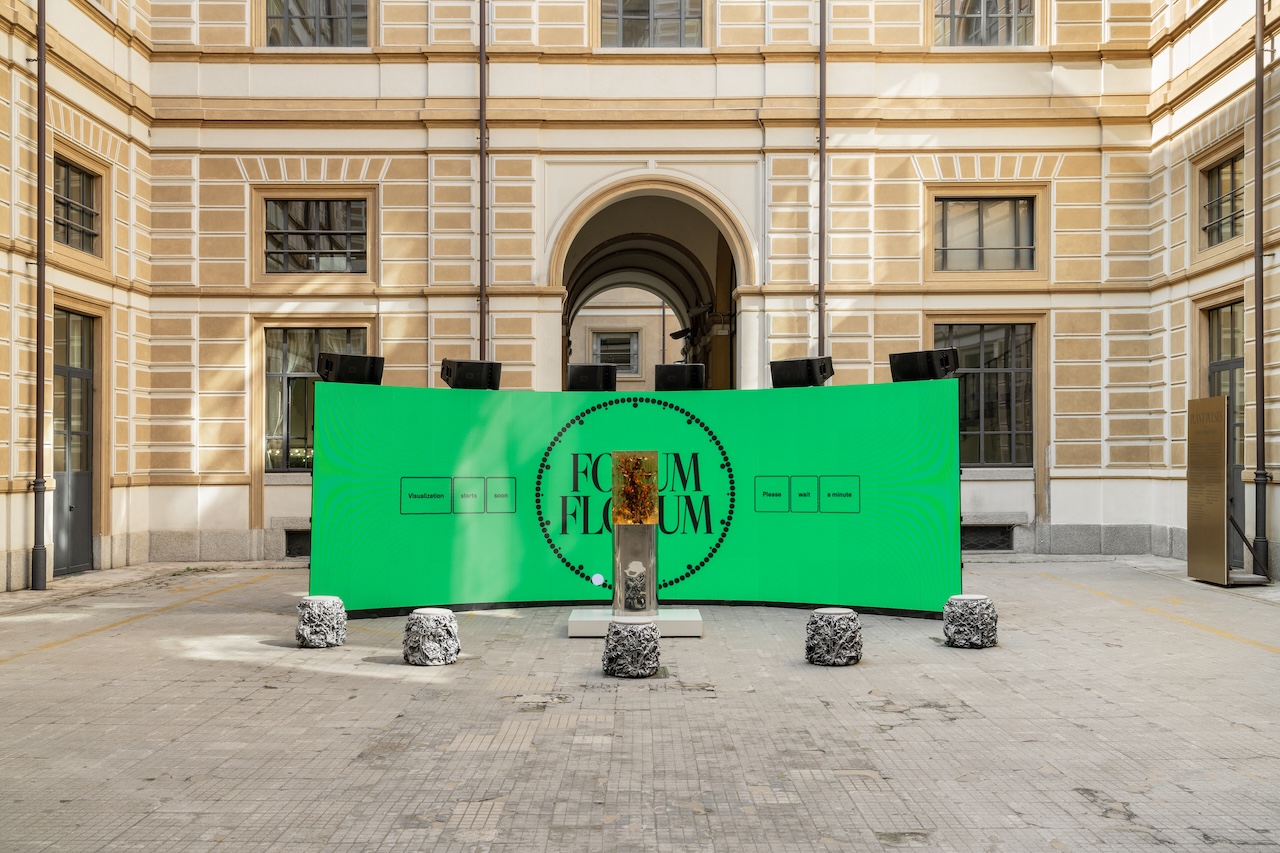
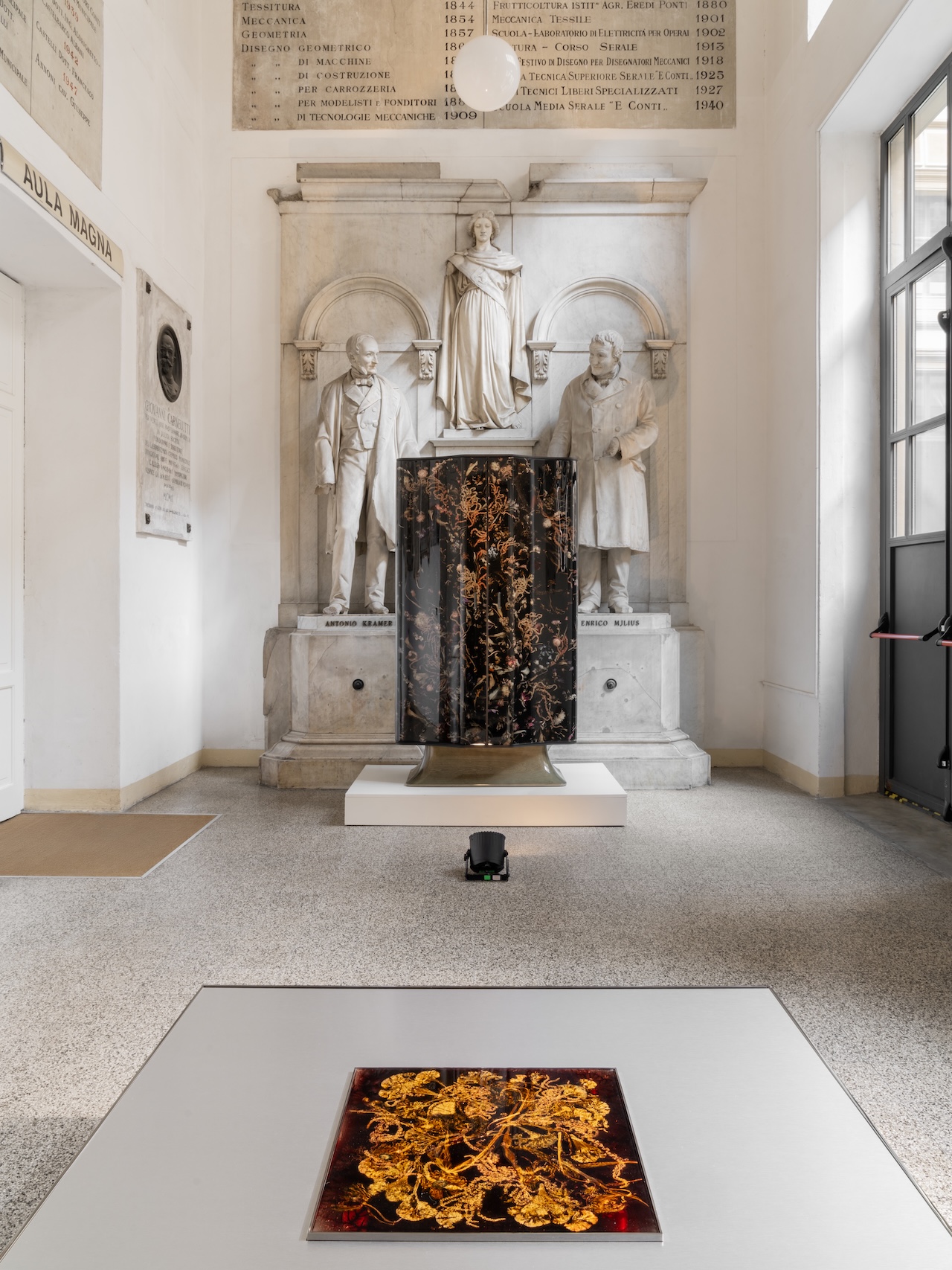
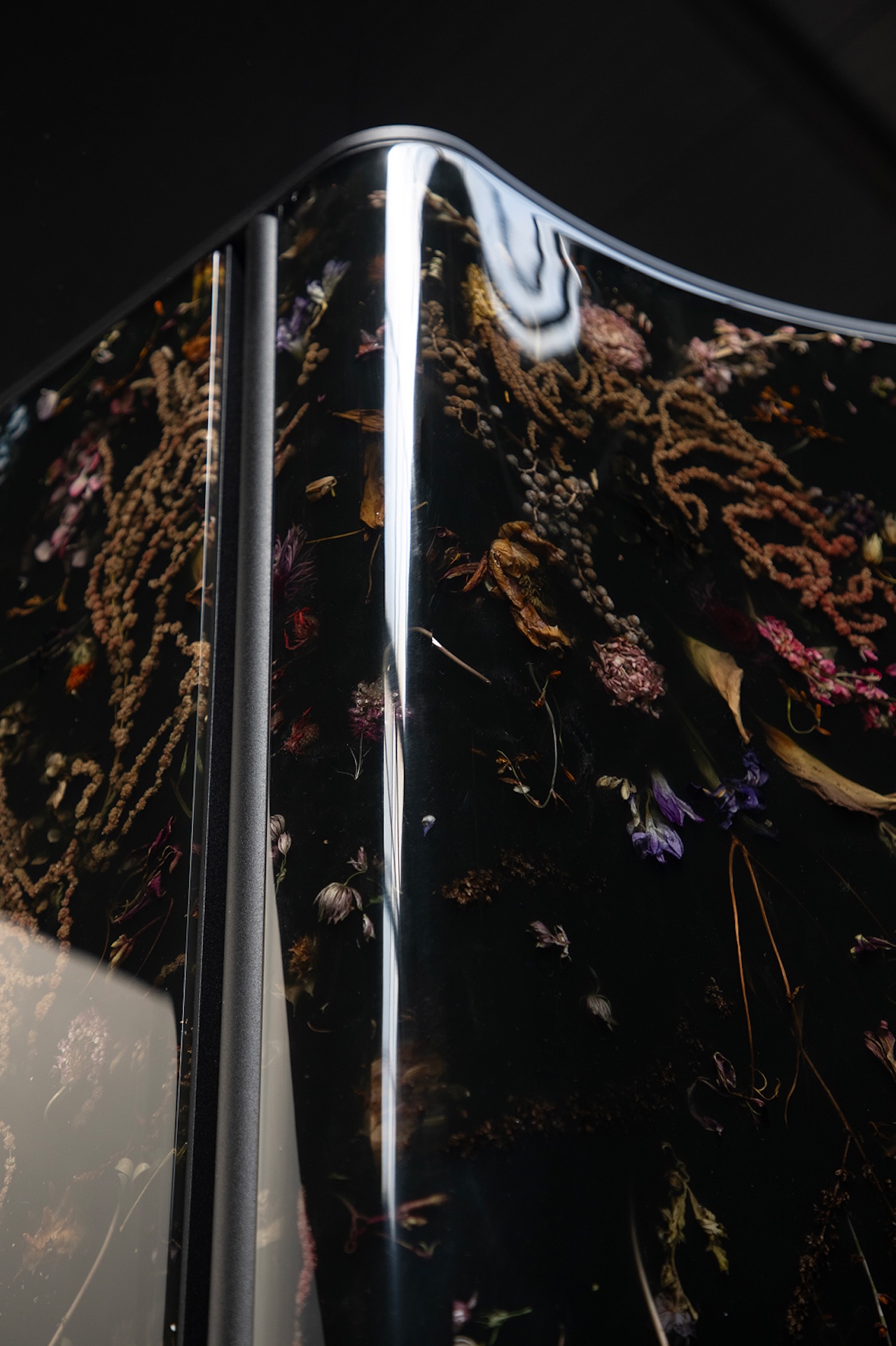
Milan Design Week operates on a tempo that rewards velocity over reflection, with hundreds of installations competing for attention across a single compressed week. Marcin Rusak Studio’s Forum Florum: Herbarium of the Present sets itself against that current. Staged at SIAM, the Società d’Incoraggiamento d’Arti e Mestieri founded in 1838, the exhibition trades the commercial showroom format for a 19th-century educational institution, and the spectacle economy of Salone for something closer to a study hall.

SIAM was established to encourage arts and crafts among Milanese workers, and it remains a public cultural institution serving students, designers, and a culturally engaged audience rather than collectors and buyers. Rusak’s decision to mount his new body of work here, rather than in a Brera gallery or a Tortona warehouse, reframes the exhibition as a pedagogical platform. The Latin title, which translates roughly to ‘flower market,’ doubles as an invitation to gather and exchange ideas.

Forum Florum unfolds across SIAM’s courtyard and two historic interior rooms, with the Flower Journey installation opening the sequence. The monumental portal traces the global history of the cut flower industry, an extractive trade that scaled from 19th-century Dutch greenhouse cultivation into today’s Kenyan and Colombian export agriculture. Partially 3D-printed and partially cast in bronze, the structure draws formal cues from unfinished Medieval cathedrals and ornamental Art Nouveau thresholds.

Beyond the portal sits Plant Pulses, an immersive installation developed with Perrier-Jouët that translates ultrasound recordings of plant activity, captured by AGH University researchers Bartłomiej Chojnacki and Klara Chojnacka, into a multisensory environment. Composer Justyna Stasiowska and digital artist Eli Magaziner shaped the data into sound and image, giving form to a register of plant communication that sits below human perception.
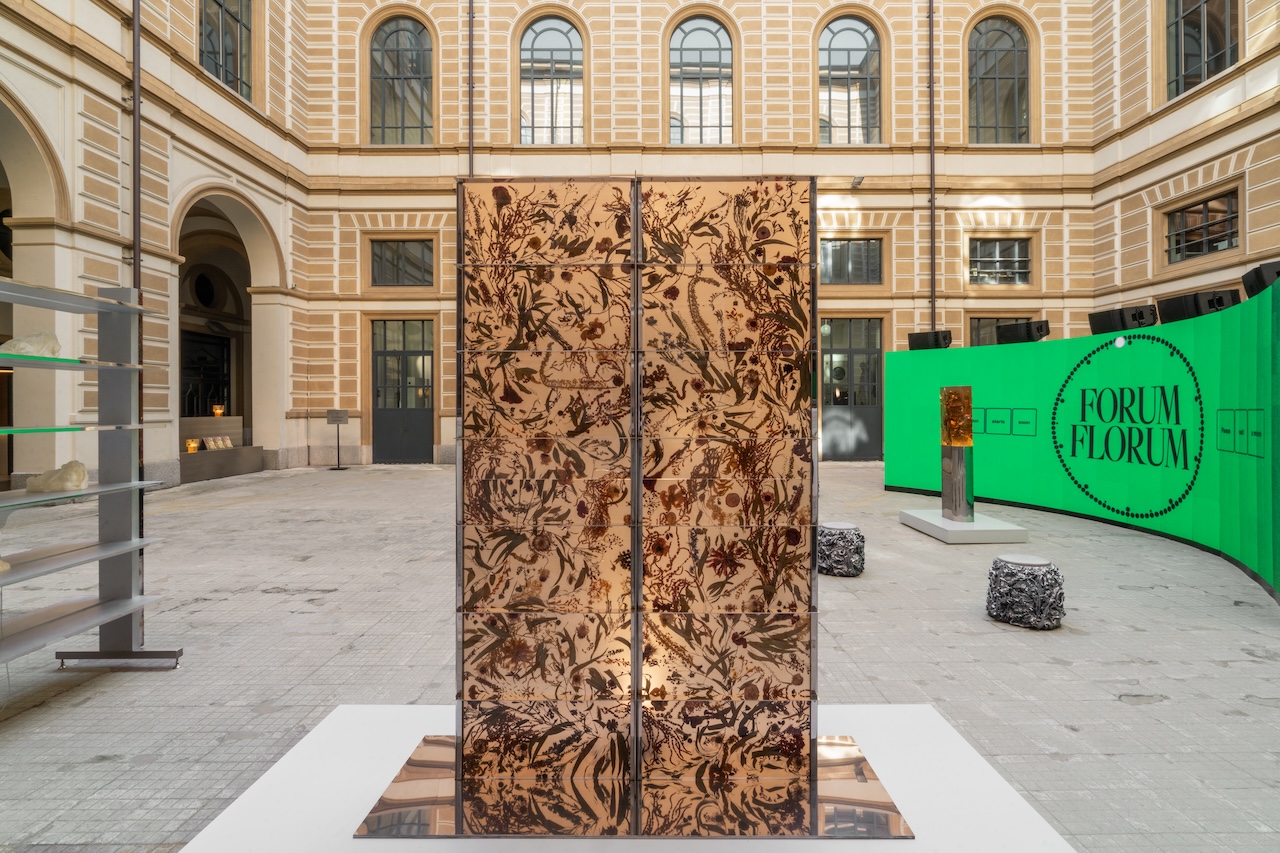
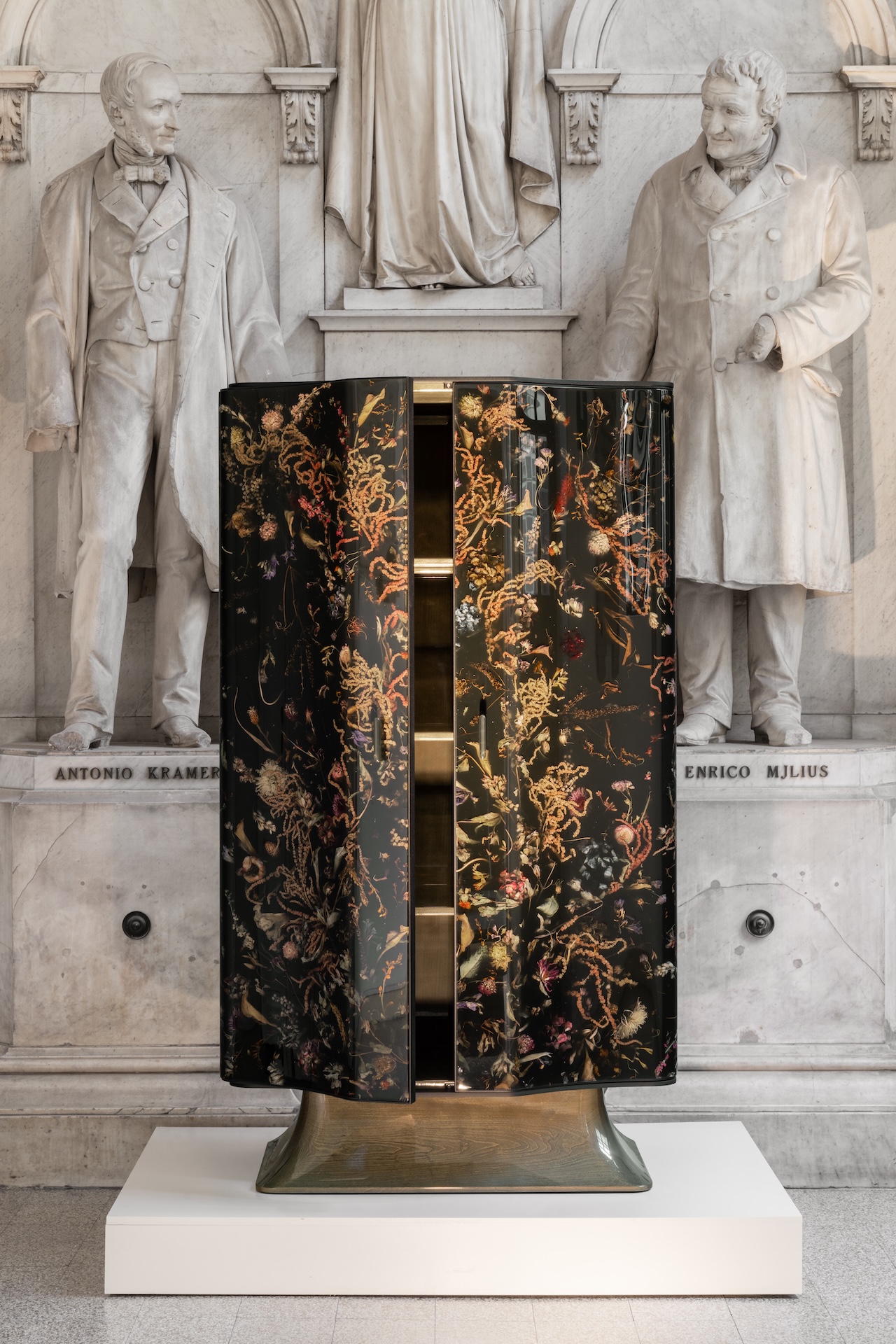
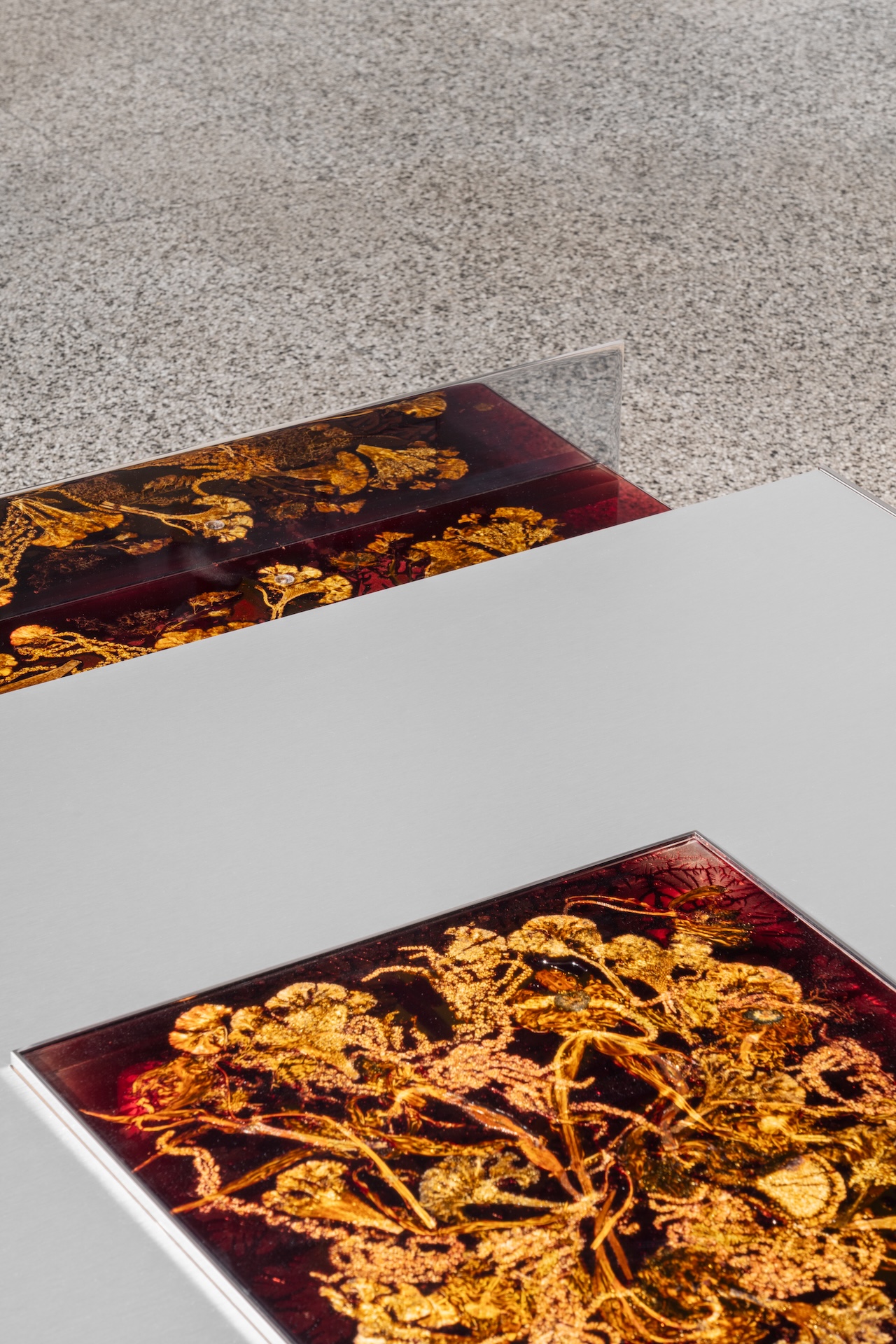
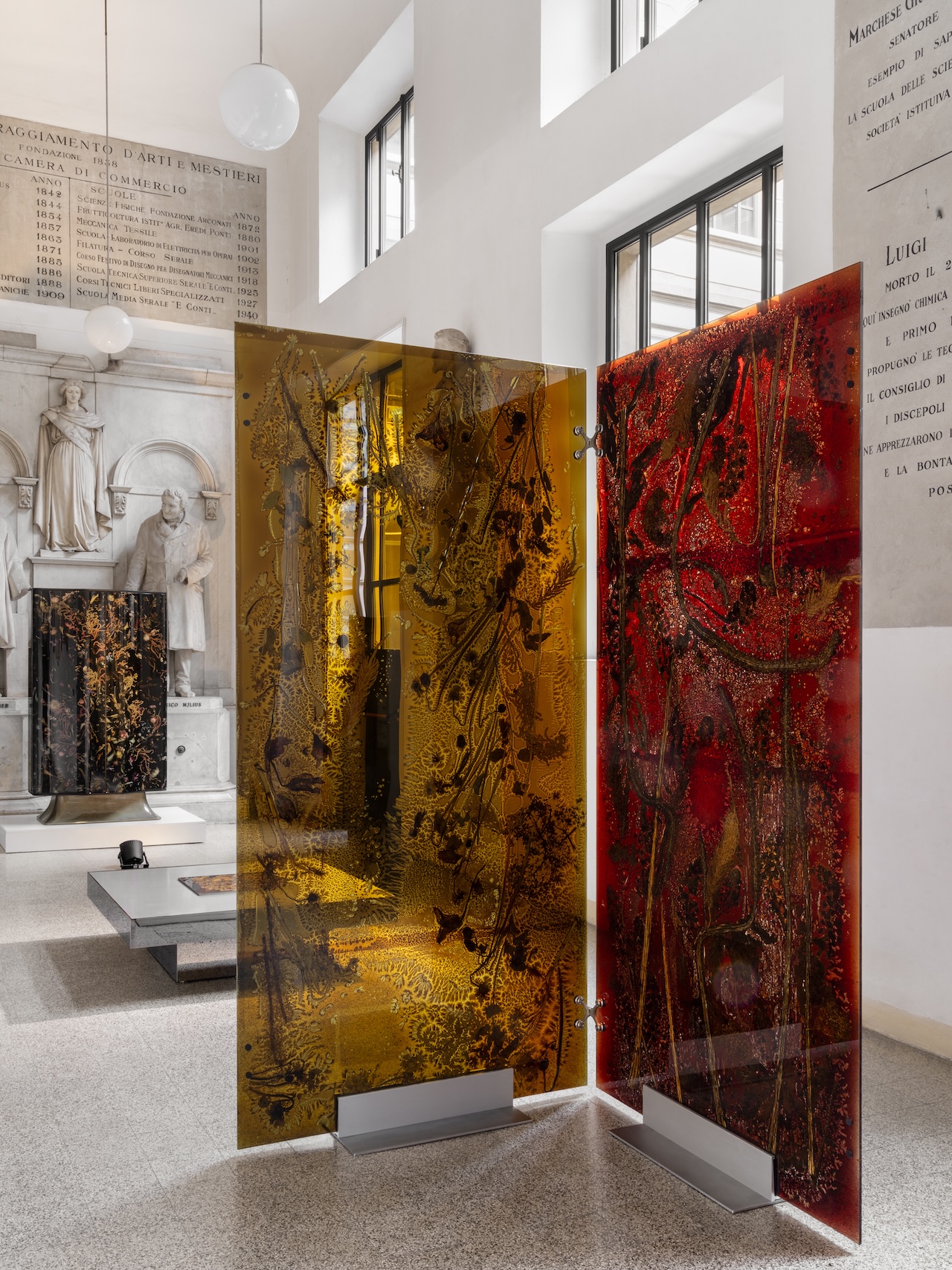
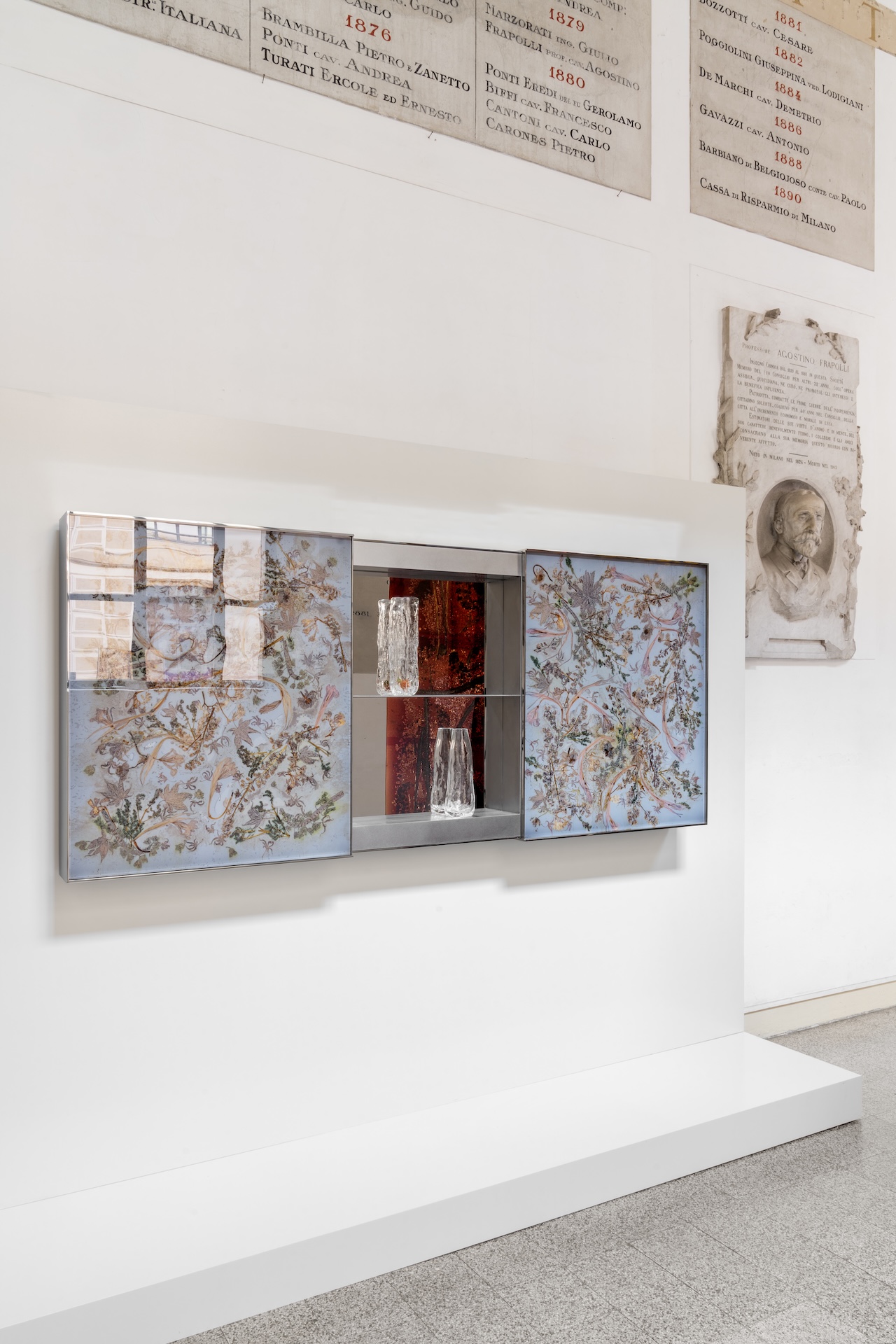
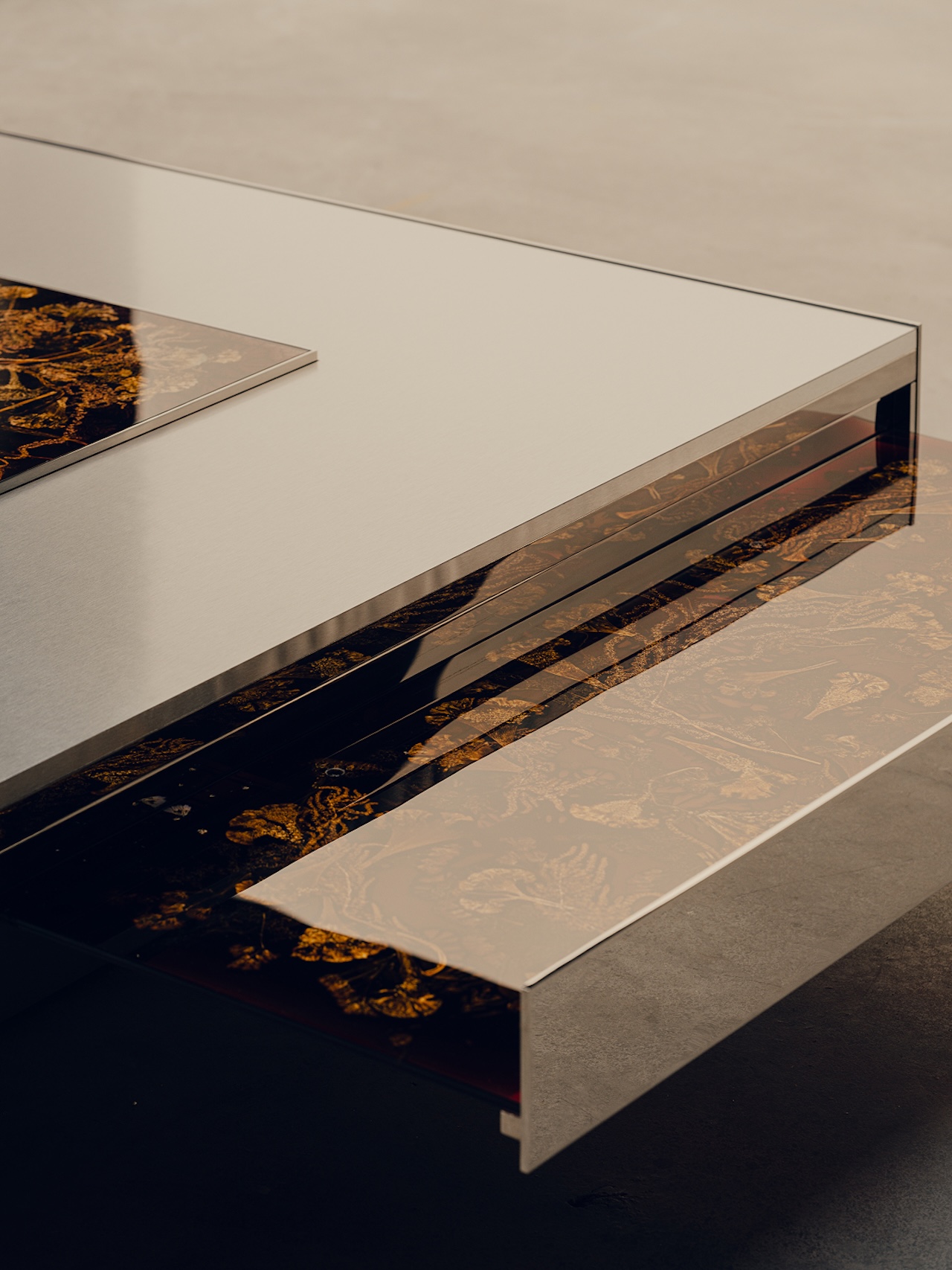
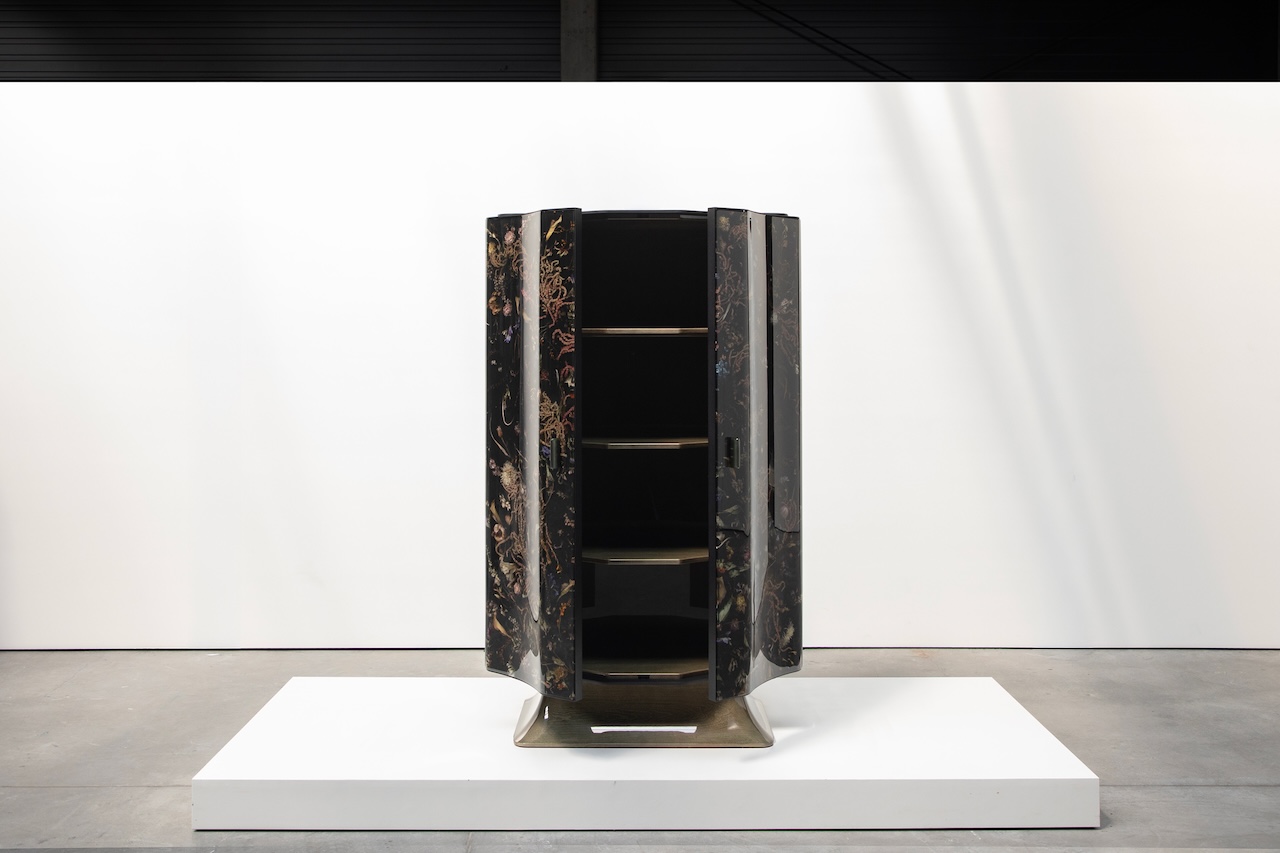
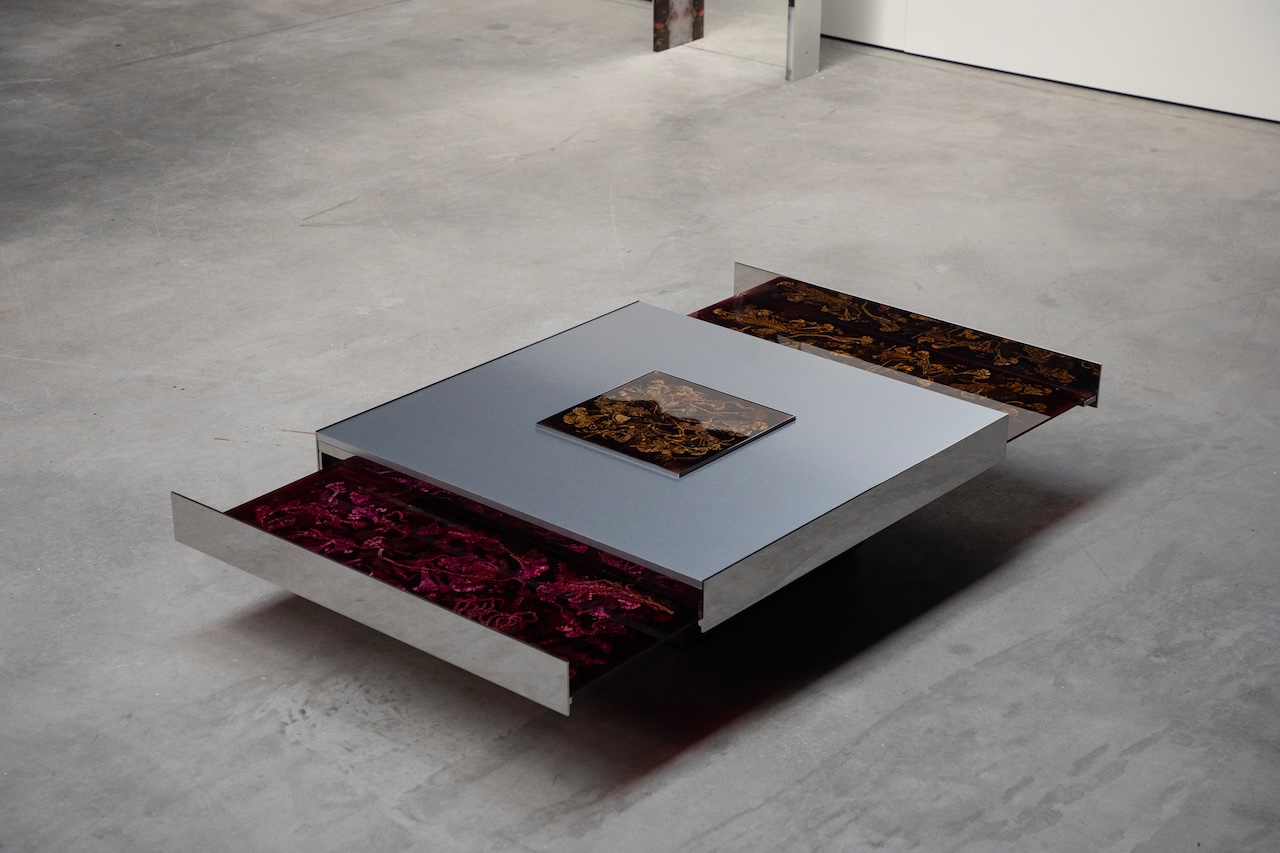
The exhibition debuts several new statement pieces, including 2.5-meter herbarium panels that laminate selected flowers and plants between sheets of glass. Alongside a new shelving system, coffee table, and mirror that extend Rusak’s flagship Flora series, the works mark a stylistic and technological shift for the studio. Custom 3D-printed biodegradable sconces complete the staging. Visitors were encouraged to sit, recline, and linger.
Marcin Rusak continues by saying, “Forum Florum is an invitation to see plants as carriers of memory, knowledge, and interdependence—living archives through which we can rethink our relationship with materials, time, and nature,”


View more information on Marcin Rusak Studio’s website.
Photography by Alessandro Saletta.